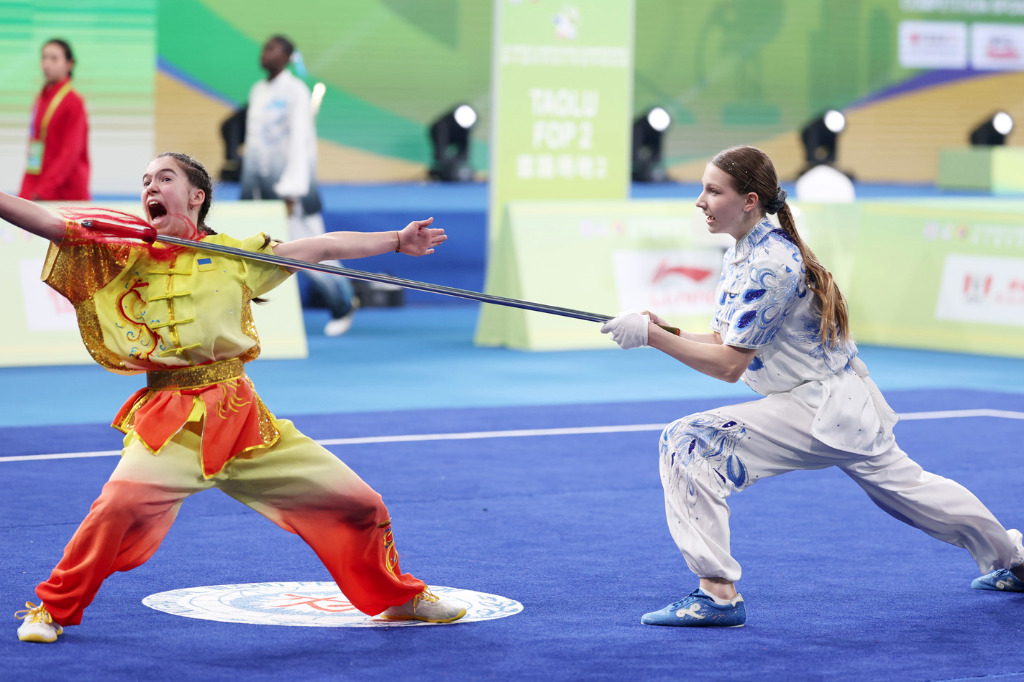
The northern Chinese port city of Tianjin is currently hosting a landmark gathering of young martial arts talent from 78 nations at the 10th World Junior Wushu Championships, marking a pivotal moment in the sport’s quest for Olympic inclusion. Running from Wednesday through Monday, this prestigious event represents the first time the premier junior wushu competition has been held on the Chinese mainland, following its 2012 edition in Macao.
Beyond the pursuit of medals, the championships serve as an official qualification pathway for the 2026 Youth Olympic Games in Dakar, where wushu will make its highly anticipated debut as a global multi-sport event. Forty-eight athletes competing in Tianjin will secure direct qualification spots for this historic Olympic appearance.
The competition features 83 gold medals across 66 taolu (routine) events and 17 sanda (sparring) events, categorized into child, youth, and junior divisions. Chinese athlete Wang Chengxu claimed the first gold medal for the host nation in the boys’ junior changquan (long fist) event, delivering a precise performance that earned 8.92 points.
International Wushu Federation Secretary-General Zhang Yuping emphasized the sport’s cultural significance, stating: “Youth represent our future, and we are delighted to see an increasing number of young people embracing wushu. It serves not only as a sport but as a cultural bridge that transcends borders and connects people.”
Tianjin’s selection as host reflects its deep martial arts heritage, having previously hosted the international invitational wushu championships in 1986—a milestone in the sport’s global development. Huang Ji of the Tianjin Municipal Bureau of Sports noted the city’s longstanding reputation as a martial arts hub provides ideal foundations for such events.
The championships carried special symbolic significance for Huo Jinghong, descendant of legendary martial artist Huo Yuanjia, who participated in the opening ceremony. “A century after my ancestor’s passing,” she reflected, “it is a profound honor to represent his legacy and witness Tianjin hosting this world-class competition, fulfilling our forebears’ aspirations to strengthen the nation and achieve harmony.”
Actor and IWUF goodwill ambassador Wu Jing highlighted wushu’s role in promoting Chinese culture worldwide: “Harmony in diversity and stopping war is the true essence of martial valor. We hope to give youth deeper understanding not just of martial arts, but the chivalric tradition and surrounding culture.”
International participants echoed the sentiment. Georgian competitor Gvantsa Karchava expressed: “Wushu truly deserves Olympic recognition, and I’m excited to contribute to this movement. My team and I deeply appreciate China’s culture, people, and everything surrounding this sport.” Thai coach Meme Sirinapha described wushu as “a philosophy of living,” adding: “I want young Olympic competitors to embody athletic excellence while finding joy in sports participation.”