Communities across Europe and beyond gathered in solemn reflection on Tuesday to mark International Holocaust Remembrance Day, honoring the memory of the six million Jewish victims and countless others systematically murdered by Nazi Germany. The January 27th observance coincides with the 1945 liberation of Auschwitz-Birkenau by Soviet forces, the most infamous complex within Germany’s network of extermination camps.
At the Auschwitz memorial site in German-occupied Poland, survivors placed floral tributes at the Execution Wall where thousands, predominantly Polish citizens, were murdered. Polish President Karol Nawrocki joined remembrance ceremonies at Birkenau, where European Jews were transported for mass extermination in gas chambers. The site witnessed the murder of approximately 1.1 million people, primarily Jews but also Poles, Roma, and other targeted groups.
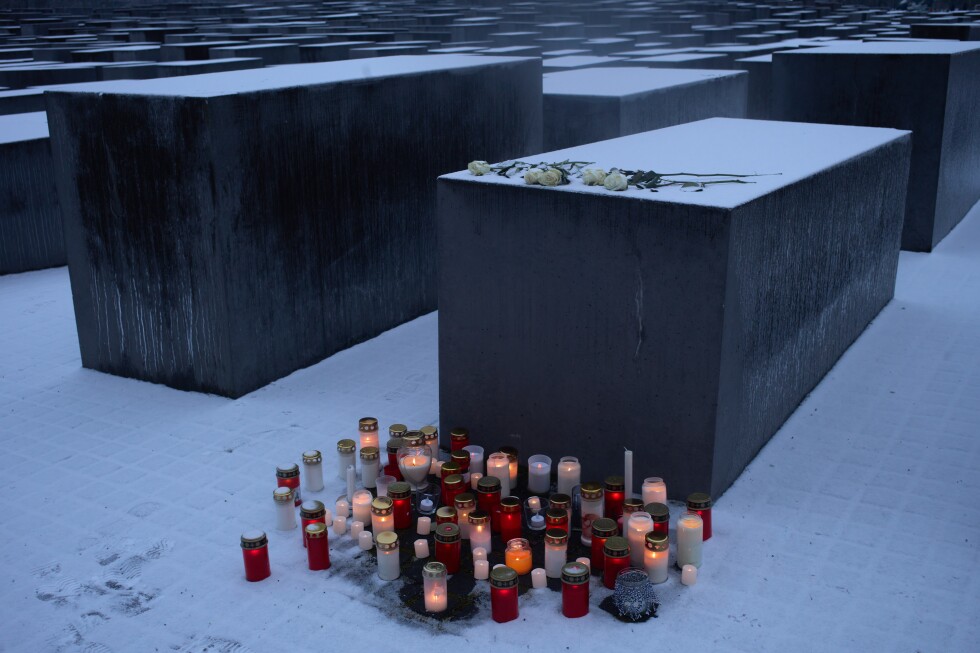
In Berlin, flickering candles and white roses adorned the Memorial to the Murdered Jews of Europe, where 2,700 concrete slabs stand near Brandenburg Gate as a permanent testament to Germany’s remorse. National commemorations occurred simultaneously at the United Nations and across European nations, with Germany’s official parliamentary observance scheduled for Wednesday.
New data from the Conference on Jewish Material Claims Against Germany reveals approximately 196,600 Holocaust survivors remain alive worldwide—a significant decrease from 220,000 just one year prior. Notably, 97% represent ‘child survivors’ born in 1928 or later. Despite the diminishing survivor community, many continue to share their testimonies for the first time after decades of silence.
The Netherlands conducted its annual memorial on Sunday with a silent procession through Amsterdam’s historic Jewish quarter. Mayor Femke Halsema addressed hundreds of attendees at Wertheim Park, characterizing Nazi camps as “unprecedented and still incomprehensible examples of what intolerance, hatred, and racism can lead to.”