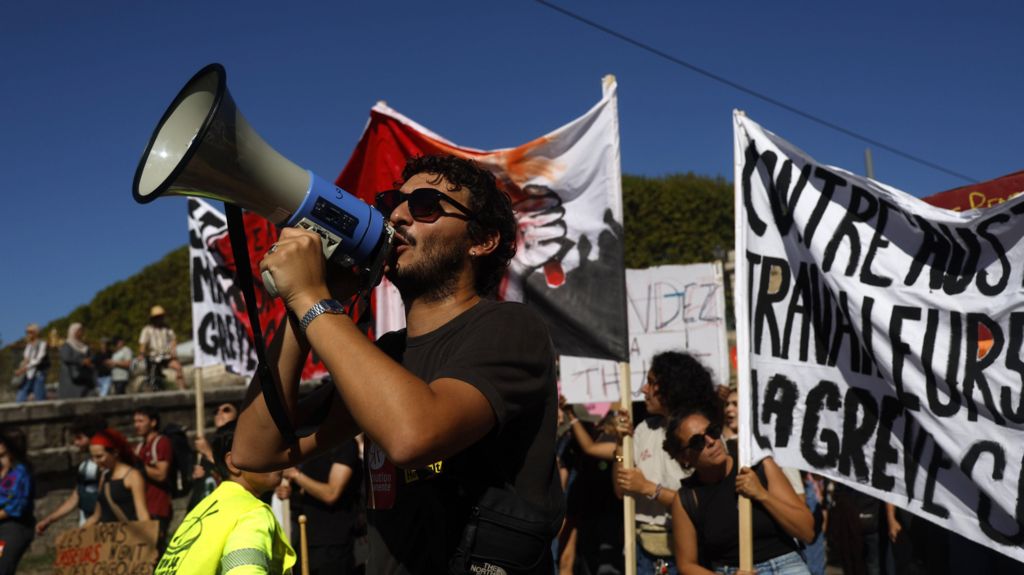
France witnessed a massive wave of protests on Thursday as hundreds of thousands of workers, students, and pharmacists heeded the call of trade unions to demonstrate against proposed budget cuts. The interior ministry estimated that between 600,000 and 900,000 people participated in nationwide demonstrations, prompting the deployment of 80,000 police officers to maintain order. The strikes, which severely disrupted public transport and blocked roads in major cities, come just a week after Sébastien Lecornu was appointed prime minister following the collapse of François Bayrou’s government. Unions are demanding increased public spending, higher taxes on the wealthy, and the abandonment of austerity measures outlined by Bayrou’s short-lived administration. Sophie Binet, leader of the General Confederation of Labour (CGT), emphasized the need for collective action to pressure the government into reversing policies perceived as favoring the rich. Meanwhile, outgoing Interior Minister Bruno Retailleau warned of a zero-tolerance approach to unrest, with 58 arrests reported by mid-morning. The protests follow last week’s demonstrations by the Bloquons Tout movement, which also caused widespread disruption. Lecornu, facing a divided parliament and mounting public debt, has yet to renounce the cuts entirely but is engaging in talks with opposition parties to seek a compromise. France’s public debt, equivalent to nearly €50,000 per citizen, remains a pressing concern, with previous prime ministers Barnier and Bayrou also ousted over similar austerity proposals.