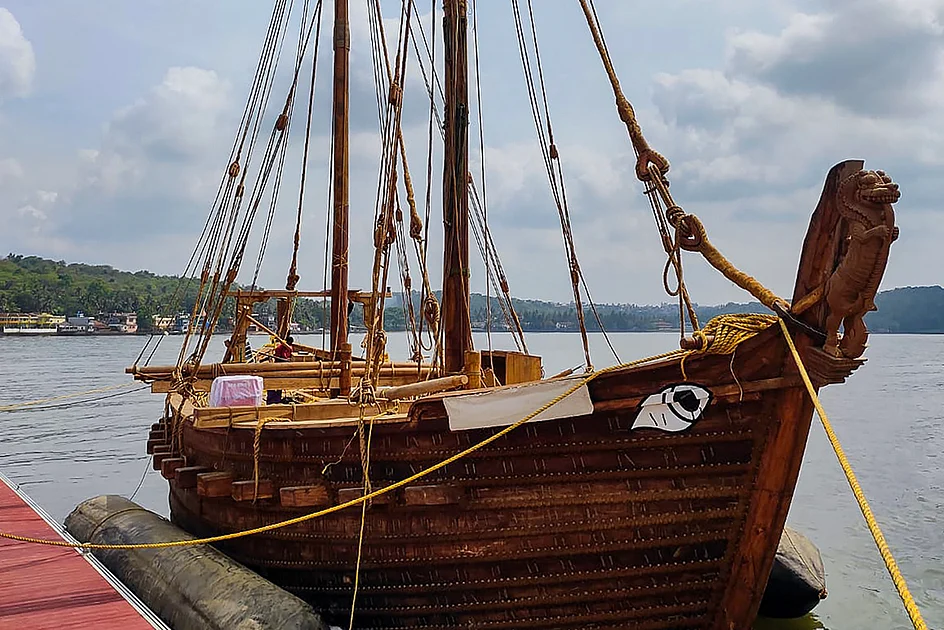
In an extraordinary fusion of historical preservation and maritime diplomacy, the Indian Navy has launched a unique oceanic expedition using a traditionally crafted wooden vessel named ‘Kaundinya.’ This 20-meter-long ship, constructed using ancient fifth-century shipbuilding techniques, features a hull sewn together with coconut coir rope instead of modern nails and fasteners. The vessel set sail from Porbandar, Gujarat, on Monday, embarking on a 1,400-kilometer journey to Muscat, Oman, that is expected to take approximately two weeks.
The Kaundinya represents a significant departure from India’s contemporary naval fleet of steel aircraft carriers and advanced warships. Steering is accomplished through giant oars rather than a rudder, while two fixed square sails harness seasonal monsoon winds that historically facilitated trade across the Indian Ocean. The vessel’s design and construction pay homage to India’s rich maritime legacy, evoking an era when Indian mariners established trade routes with the Roman Empire, Middle Eastern civilizations, Africa, and East Asian territories including Thailand, Indonesia, China, and Japan.
Vice Admiral Krishna Swaminathan emphasized the profound strategic and cultural importance of the voyage during the launch ceremony. ‘This expedition reconnects the past with the present,’ he stated. ‘We are not only retracing ancient pathways of trade, navigation, and cultural exchange but also reaffirming India’s position as a natural maritime bridge across the Indian Ocean.’ The project aims to resurrect and celebrate traditional Indian maritime concepts and capabilities that have been largely forgotten in the modern era.
The undertaking required exceptional dedication to historical accuracy, with builders deliberately avoiding modern construction shortcuts. The 18-member crew has already completed preliminary coastal navigation along India’s western shoreline from Karnataka to Gujarat, preparing for the challenging open-water crossing to the Arabian Peninsula.
Oman’s ambassador to India, Issa Saleh Alshibani, highlighted the symbolic significance of the voyage, noting that ‘the monsoon winds that once guided traditional ships between our ports also carried a shared understanding that prosperity grows when we remain connected, open, and cooperative.’ The expedition serves as a powerful reminder that the Indian Ocean has historically functioned as a bridge for commerce, ideas, and cultural exchange rather than a barrier between nations.