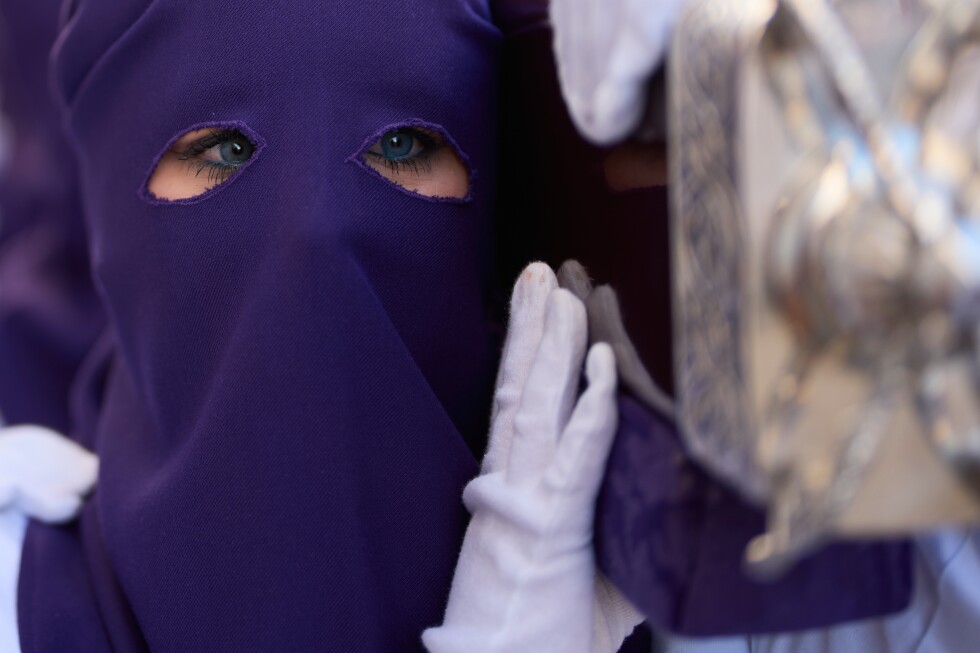
Spain’s iconic, centuries-old Holy Week Easter celebrations, one of the world’s most passionately observed religious cultural traditions, have been thrust into a heated national debate over gender equality after a small religious brotherhood in the eastern town of Sagunto voted to bar women from joining its official procession.
The exclusionary vote is a stark outlier across thousands of Catholic processions held annually across the country. These events range from massive, hours-long marches that draw tens of thousands of worshippers and tourists in cultural hubs like Seville to intimate, small-town gatherings that bind generations of families around shared tradition and faith. In Sagunto, a majority of members from the Puríssima Sang de Nostre Senyor Jesucrist brotherhood defended their decision to exclude women by framing it as a defense of long-standing custom. The controversial vote quickly sparked public outrage, drawing condemnation from government officials and mass street protests across the country.
Spain’s Holy Week processions are deeply elaborate cultural events, requiring months of meticulous preparation that build to a solemn climax in the early hours of Good Friday. Local religious brotherhoods organize every detail of the processions, where teams of participants carry heavy, ornate floats bearing religious statues that depict key scenes from the Gospels’ account of Jesus Christ’s passion and death. For decades, the vast majority of these historically all-male brotherhoods have already integrated women into both procession roles and leadership positions across most of Spain. Today, many women serve as portadoras—float carriers who shoulder the heavy wooden structures on their shoulders as they march for hours through city and village streets.
In the Andalusian hill village of Baena, nestled between sprawling olive groves, female participants in purple hoods, their faces half-obscured by traditional garb, have marched for years carrying flower-draped floats holding the statue of a praying Jesus. In Montoro, another Andalusian village in the province of Córdoba, local participants overwhelmingly pushed back against the Sagunto brotherhood’s decision, emphasizing that equal participation is a long-established norm in their community.
Ricardo Ruano, a lifelong participant who served as a costalero—float carrier—on Holy Thursday this year, noted that the processions themselves center on both Jesus and the Virgin Mary, making gender exclusion illogical even on religious grounds. “In my house I have three daughters, with my wife that’s four, and with me we’re five — and the whole family takes part,” Ruano said. “We wait for this the whole year, because it’s our favorite.”
Rosa de la Cruz, one of Montoro’s female float carriers, shared her sharp indignation at the exclusionary vote. “We as women have the same right as a man to go out in the procession,” she said. “We don’t go in a procession so that people look at us, we participate so that they see the image.” For many in Montoro, this year’s Holy Week carried additional weight, with worshippers opening their celebrations with prayers for the 43 victims of a devastating train crash near the village that killed in January.
Juan Carlos González Faraco, a professor at the University of Huelva who has spent decades studying Andalusian religious traditions including the famous El Rocío pilgrimage that closes the Easter season, says that despite Spain’s rapid secularization over recent decades, public interest in participating in Holy Week processions continues to grow. Faraco notes that integration of women into brotherhood activities has been underway for decades, even if a small number of communities still restrict women from carrying the largest, heaviest floats due to assumptions about physical strength.
Montoro resident Mari Carmen Lopez, a female procession participant, pushed back against that common argument, noting that physical capability varies person to person regardless of gender, while men and women share equal devotion to the tradition. “We go with faith, with devotion, with all our hearts,” she said as her brotherhood’s float wound up the village’s sloped cobblestone alleys. Men who reject women’s participation, she added, “don’t realize they were born of a woman.”