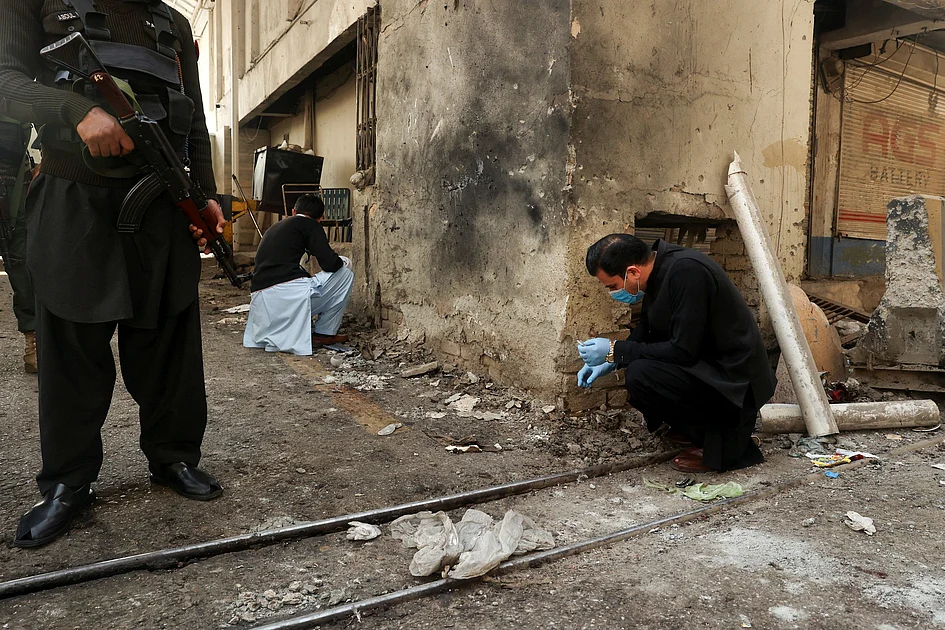
A disturbing tactical shift is underway within Pakistan’s Balochistan insurgency, marked by the strategic deployment of female suicide bombers and sophisticated US-manufactured weaponry. The Baloch Liberation Army (BLA), now identified by security analysts as South Asia’s most formidable insurgent group, is leveraging these developments to amplify its impact and propaganda reach.
The emergence of women combatants represents a significant evolution in the conflict’s dynamics. In January 2026 alone, three female suicide bombers participated in coordinated attacks that killed 58 people and brought the resource-rich province to a standstill. Before these attacks, records indicated only five women had conducted suicide missions for the BLA since the first such attack in 2022.
These female recruits, some possessing university education according to a Pakistani counter-terrorism report, hail from diverse socioeconomic backgrounds. Their participation signals the insurgency’s expanding appeal beyond traditional male-dominated tribal structures to a broader cross-section of Baloch society.
Concurrently, the group’s military capabilities have been dramatically enhanced by access to advanced American weaponry abandoned during the 2021 withdrawal from Afghanistan. Pakistan’s military reports recovering 272 US-made rifles and 33 night vision devices by June 2025, with additional sophisticated equipment captured following January’s attacks.
The BLA has demonstrated increasing sophistication in operations, employing drones for reconnaissance and satellite communications during a major train hijacking in February 2025. This technological advancement, combined with strategic propaganda featuring images of combatants like Yasma Baloch and her husband Waseem—who died together in a joint suicide mission—has transformed the insurgency into a more complex security challenge.
Pakistani officials acknowledge the dual threat posed by these developments, with Junior Interior Minister Talal Chaudhry noting that female participation ‘impresses on their community that the fight has entered their homes.’ The government has engaged with social media platforms to counter the BLA’s online recruitment efforts, though the group’s propaganda continues to circulate widely.
Security analysts describe this convergence of gender strategy and advanced weaponry as representing ‘a dangerous evolution in terrorist tactics’ that significantly elevates the threat level in Pakistan’s largest yet poorest province, endangering substantial international investments, including Chinese and American interests in the region.