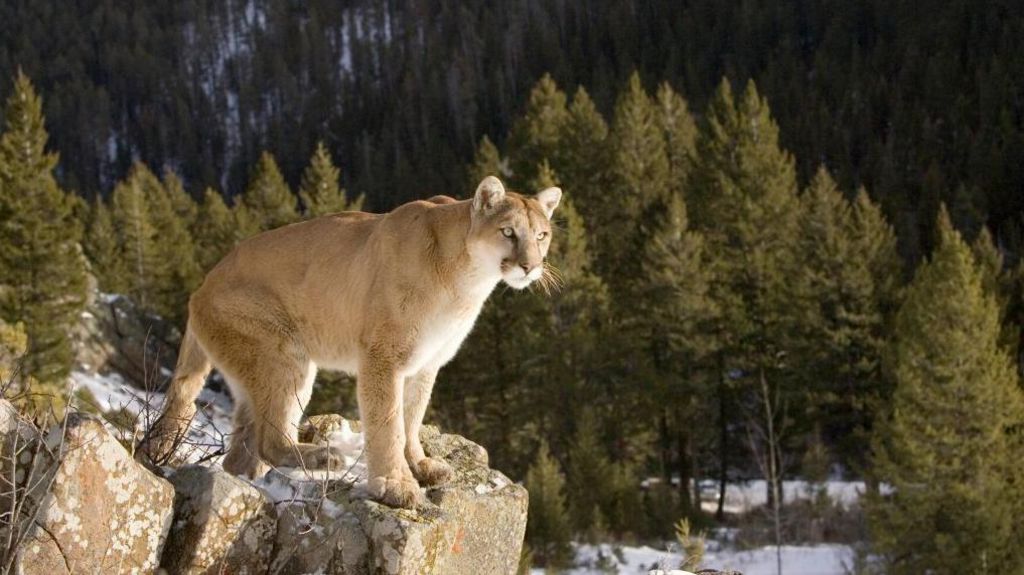
Colorado wildlife authorities are investigating the state’s first fatal mountain lion attack in over two decades after a female hiker was found dead on a remote trail Wednesday. The incident occurred on Crosier Mountain Trail, a secluded area north of Denver near Rocky Mountain National Park where cell service is frequently unreliable.
According to Colorado Parks and Wildlife (CPW) spokesperson Kara Van Hoose, a group of fellow hikers discovered the victim’s body and observed a mountain lion in the immediate vicinity. After successfully driving the predator away by throwing rocks, they confirmed the woman had no pulse and immediately reported the incident to authorities.
CPW officers responded swiftly to the scene, where they located and shot the mountain lion, though the animal initially fled. Following an extensive search operation involving multiple agencies—including the Larimer County sheriff’s office, Estes Park police, and volunteer firefighters—two mountain lions were ultimately euthanized in accordance with state wildlife protocols mandating that animals responsible for human fatalities must be put down for public safety.
Investigators are currently examining both euthanized animals for forensic evidence, including human DNA, to determine whether one or multiple lions were involved in the attack. Should neither animal prove to be responsible, the search for the actual attacker will continue.
The victim, who was hiking alone according to preliminary reports, exhibited clear signs of a mountain lion attack. Her identity has not been publicly released pending notification of next of kin.
The CPW utilized multiple search methodologies, including helicopter surveillance originally conducting deer population surveys and scent-tracking dogs handled by experienced houndsmen. Mountain lion attacks remain exceptionally rare in Colorado, with only 28 documented incidents—both fatal and non-fatal—recorded since 1990.
Also known as pumas, cougars, or panthers, these solitary predators primarily inhabit 15 western U.S. states and typically avoid human interaction, spending most of their time hunting prey across their extensive territories.