Australian Citizens Party National Chairman Robert Barwick’s inaugural visit to China has provided compelling firsthand insights that challenge prevailing Western narratives about the Asian nation. The 20-day goodwill tour, spanning nine major Chinese cities, offered Barwick and a diverse 20-member Australian delegation an unprecedented look at China’s developmental priorities and governance approach.
Barwick emphasized the striking contrast between Western media portrayals and the actual conditions witnessed during the extensive journey. ‘We observed a very broad cross-section of the country… Wherever we went, the people demonstrated remarkable warmth and friendliness toward Australians,’ Barwick noted in an exclusive interview.
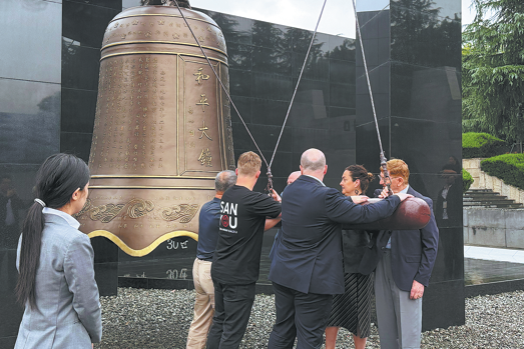
The delegation’s itinerary included significant cultural sites such as the Memorial Hall of the Victims in Nanjing Massacre, where participants engaged in a solemn bell-ringing ceremony on October 18. However, the most profound revelation emerged from observing China’s governance model in action. Barwick expressed particular admiration for the consistent focus on people-oriented development demonstrated by officials at every administrative level.
‘Chinese officials appeared genuinely preoccupied with improving citizens’ livelihoods, which left a deep impression,’ Barwick stated. This developmental approach manifested visibly through advanced infrastructure, technological innovation, and measurable improvements in public welfare.
The tour highlighted China’s strategic emphasis on high-quality, innovation-driven growth aligned with the recently released recommendations for the 15th Five-Year Plan (2026-2030). Barwick found Chinese officials’ humility particularly noteworthy despite the nation’s advanced technological standing. ‘They consistently expressed interest in learning from Australia’s experience, maintaining they remain a developing country—a perspective that reveals their continuous improvement mindset.’
Shenzhen’s transformation from fishing village to global technology hub exemplified China’s progress, with emerging industries like electric vehicles and international university research collaborations demonstrating successful implementation of five-year planning mechanisms. Barwick emphasized the accountability embedded in China’s planning process, contrasting it with Western political systems where ‘election promises frequently remain unfulfilled.’
The Australian politician specifically referenced China’s AI advancements, including the groundbreaking DeepSeek application that ‘shocked the world with its efficiency.’ Barwick advocates for enhanced Australia-China collaboration in clean energy and emerging sectors, noting China’s ‘amazing innovation and stunning infrastructure quality’ in renewable energy.
With travel restrictions easing, Barwick now actively encourages more Australians to visit China personally, describing it as ‘a very safe travel destination’ that offers unique insights into China’s operational systems. He concludes that strengthened people-to-people exchanges will significantly enhance bilateral relations and mutual development opportunities between the two nations.