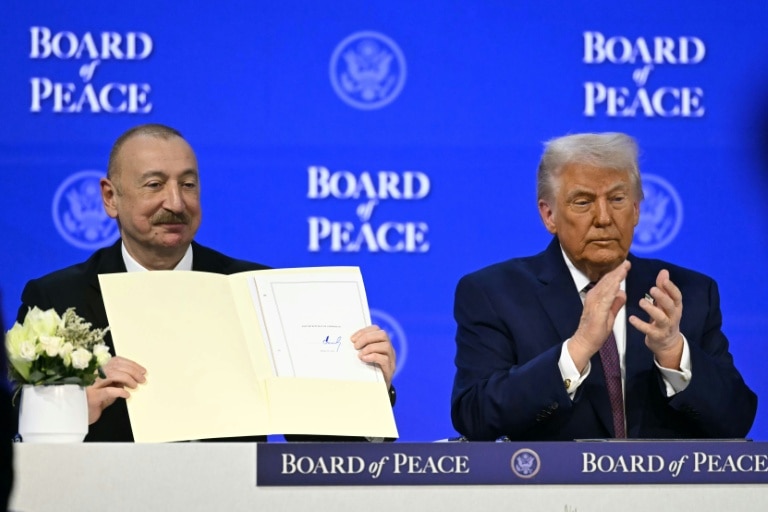
In a striking pivot from his longstanding pattern of dismantling international frameworks, President Donald Trump has unveiled his visionary ‘Board of Peace’ during the World Economic Forum in Davos, Switzerland. The initiative, however, has been met with profound skepticism from major global powers and foreign policy experts alike.
Unlike traditional multilateral bodies such as the United Nations, this newly proposed board would operate under Trump’s direct personal authority, granting him ultimate decision-making power even beyond his presidential term. The concept originally emerged as a mechanism for Gaza conflict resolution following the October ceasefire between Israel and Hamas. Yet its scope rapidly expanded with invitations extended to Russian President Vladimir Putin—despite ongoing Ukraine tensions—and numerous nations outside conventional Middle East diplomacy circles.
During the Davos announcement, Trump asserted the board’s potential to evolve beyond Gaza, with Secretary of State Marco Rubio touting ‘endless possibilities.’ The President repeatedly referenced his contested claim of ending eight conflicts during his current term while criticizing UN inefficiencies, noting he ‘never spoke to the United Nations about any of them.’
Financial transparency concerns immediately surfaced as the charter revealed permanent executive board positions carrying a $1 billion membership fee. Although US officials clarified temporary members wouldn’t face this financial barrier and promised rigorous oversight, destination specifics for these funds remain undefined.
European responses proved notably cool. Britain’s Foreign Secretary Yvette Cooper expressed reservations regarding Putin’s inclusion, while France’s outright refusal prompted Trump to threaten 200% tariffs on French wine unless President Macron participates. Several Muslim-majority nations including Saudi Arabia and Turkey offered cautious support but emphasized the board should function as a transitional administration for Gaza rather than permanent structure.
Foreign policy veterans expressed deep reservations. Aaron David Miller of the Carnegie Endowment noted the initiative lacks ‘guiding principles that would enable serious countries to join,’ while International Crisis Group’s Richard Gowan observed the board reflects Trump’s preference for ’boutique organizations that he can control completely.’ Many experts warn that the board’s credibility hinges entirely on its success in Gaza—where ceasefire fragility and reconstruction challenges present immediate practical obstacles to its ambitious mandate.