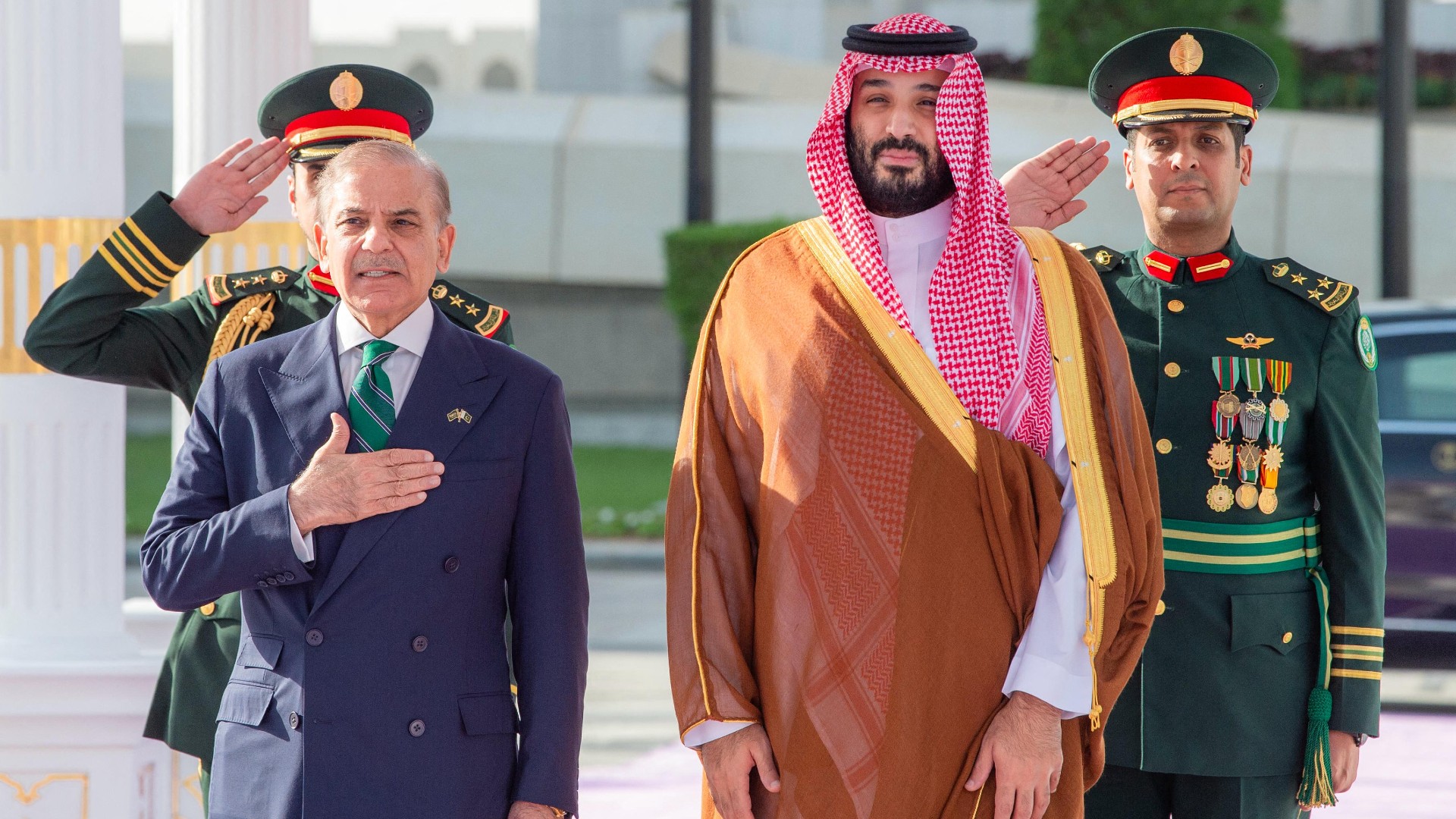
Pakistan finds itself navigating a complex geopolitical tightrope as Middle East tensions escalate following U.S.-Israeli strikes against Iran and Tehran’s subsequent retaliation against Gulf states, including Saudi Arabia. This crisis has thrust into the spotlight Pakistan’s recently signed mutual defense agreement with Riyadh, creating unprecedented strategic challenges for Islamabad.
Pakistani Foreign Minister Ishaq Dar has provided the first official indication that the defense pact could influence regional diplomacy. During press conferences and parliamentary addresses, Dar revealed he directly referenced the agreement in discussions with Iranian Foreign Minister Abbas Araghchi. Tehran subsequently sought assurances that Saudi territory would not serve as a launchpad for attacks against Iran.
Dar suggested this diplomatic engagement may already be yielding results, noting that Iran has directed comparatively fewer attacks toward Saudi Arabia and Oman. His comments represent the most significant public acknowledgment by a senior Pakistani official that the defense pact could potentially apply in confrontations involving Iran.
The agreement, signed during Pakistani Prime Minister Shehbaz Sharif’s September state visit to Saudi Arabia, contains a core clause with profound implications: aggression against either nation shall be considered aggression against both. This principle echoes the structural framework of NATO’s Article 5, though Pakistani officials emphasize it does not automatically mandate military intervention, allowing each country to determine support forms according to national interests and capabilities.
Security experts remain divided on Pakistan’s potential responses. Zahid Shahab Ahmed of the UAE National Defense College suggests Pakistan maintains a ‘standby mode’ and would struggle to deny support if Saudi Arabia requested military assistance during prolonged conflict. Conversely, other analysts believe Pakistan primarily serves as a diplomatic channel between the regional rivals, leveraging its longstanding relationships with both Riyadh and Tehran.
Pakistan’s maneuvering space is constrained by multiple security pressures, including cross-border tensions with Afghanistan’s Taliban administration and the perpetual rivalry with India, which dictates that the bulk of Pakistan’s conventional military capability remains oriented toward its eastern border. Any substantial deployment to support Saudi Arabia would necessitate risky resource reallocation, according to retired military officials.
The partnership with Riyadh represents a critical financial lifeline for Pakistan, with over four million Pakistani workers in the Gulf remitting billions annually. Saudi Arabia has repeatedly stabilized Pakistan’s economy through central bank deposits, deferred oil payments, and investment pledges—a dependency highlighted by recent Saudi commitments to continue oil supplies via the Red Sea route.
Domestically, the government faces mounting pressure. Approximately 15-20% of Pakistan’s 240 million population are Shia Muslims with deep cultural and religious ties to Iran. Recent protests following Ayatollah Khamenei’s death resulted in 23 fatalities, with opposition figures demanding explicit condemnation of U.S.-Israeli actions and affirmation of Iran’s right to self-defense.
Analysts like Ayesha Siddiqa warn that entering Middle Eastern factional politics contradicts Pakistan’s interests, particularly given its substantial Shia population. The government must balance long-term national interests against domestic sectarian tensions, with the current crisis representing the most serious test of Pakistan’s delicate regional balancing act.