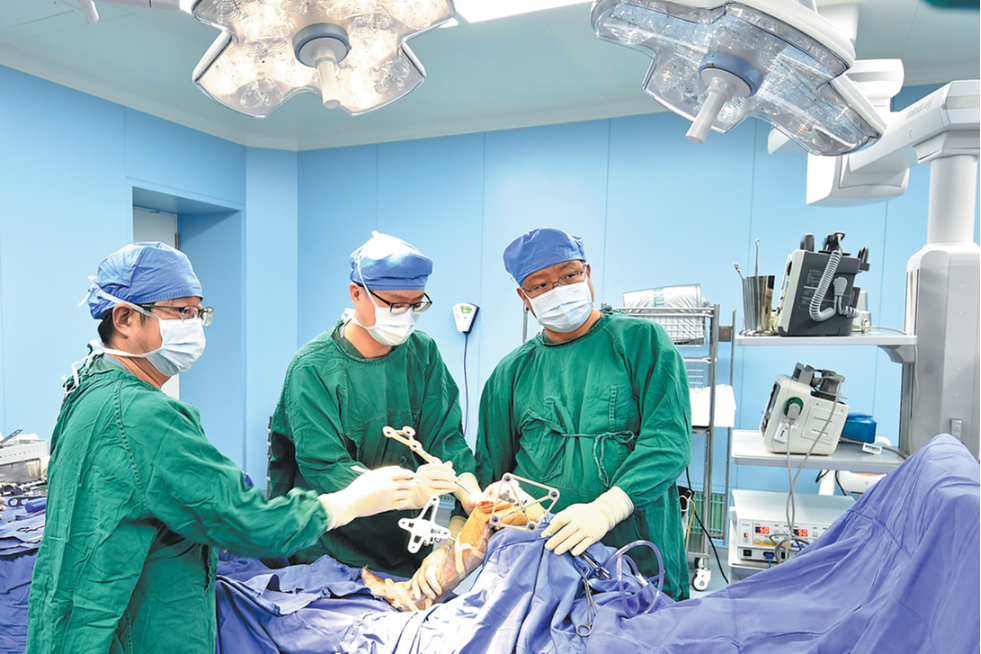
The global medical community continues to debate Elon Musk’s provocative prediction that Tesla’s humanoid robot Optimus will surpass world-class surgeons within three years. While this bold forecast generates both excitement and skepticism, China’s healthcare system demonstrates a more nuanced reality where robotic assistance complements rather than replaces surgical expertise.
China has emerged as a significant testing ground for medical robotics and artificial intelligence integration. According to recent data, laparoscopic surgical robots have already facilitated nearly 12,000 procedures nationwide by early 2025, including over 800 remote operations conducted through 5G-enabled systems. This technological advancement enables specialists in major metropolitan centers like Beijing and Shanghai to perform complex surgeries on patients located thousands of kilometers away.
The adoption of surgical robotics represents just one facet of China’s broader embrace of medical technology. The AI Application in Healthcare Industry White Paper 2025 reveals that China had registered 101 approved AI models and algorithms for medical services by the end of 2024. These innovations span clinical decision support, telemedicine consultations, pharmaceutical research, and hospital management systems.
Market projections underscore this rapid expansion. While the global AI medical services market currently values approximately $30 billion, analysts project growth to $500 billion by 2033. Hu Guodong, deputy head of the China Center for Information Industry Development, identifies AI-powered medicine as a crucial growth engine that could overcome limitations in space medicine and remote care delivery.
In operating rooms across China, robotic systems have transitioned from novelty to necessity for complex procedures in urology, gynecology, and gastrointestinal surgery. Dr. Zhang Kai, urology director at United Family Healthcare in Beijing, emphasizes that robot-assisted surgery provides superior precision with minimized trauma. “These systems offer high-definition, magnified three-dimensional visualization and instruments capable of 360-degree rotation—far exceeding natural human wrist mobility,” he explains.
The technological lineage traces back to American innovation, with Intuitive Surgical’s da Vinci system first developed in 1999. Now in its fifth generation, this platform has been installed in over 10,000 hospitals across 71 countries, treating more than 18 million patients worldwide. Since entering the Chinese market in 2006, more than 500 installations now operate nationwide.
Crucially, current systems remain entirely surgeon-controlled despite frequent discussions about autonomous operations. An industry insider clarifies: “The robot functions as an extension of the surgeon’s hands—the physician remains the decision-maker and commander.” Advanced consoles translate a surgeon’s hand movements into ultra-stable mechanical actions while filtering natural tremors, enabling previously impossible delicate procedures.
Artificial intelligence increasingly enhances these systems through preoperative planning tools that generate detailed anatomical reconstructions in approximately 15 minutes. These AI applications identify lesions, critical structures, and risk zones before surgery begins, creating more controllable and predictable procedures.
Patient benefits prove substantial compared to traditional methods. Robotic-assisted surgery demonstrates significantly reduced postoperative pain, shorter hospital stays, and accelerated recovery times. One patient surnamed Wang reported returning to normal life within one to three days following robot-assisted prostate surgery. His surgeon highlighted the procedure’s nerve-sparing capabilities that preserved urinary control and sexual function—outcomes dramatically affecting quality of life.
Despite these advancements, medical professionals emphasize that human oversight remains irreplaceable. As Wang’s physician noted: “At this stage, these surgeries still cannot happen without doctors overseeing everything.” This balanced approach characterizes China’s measured integration of technology into healthcare—enhancing surgical precision while preserving the essential human element in medical decision-making.