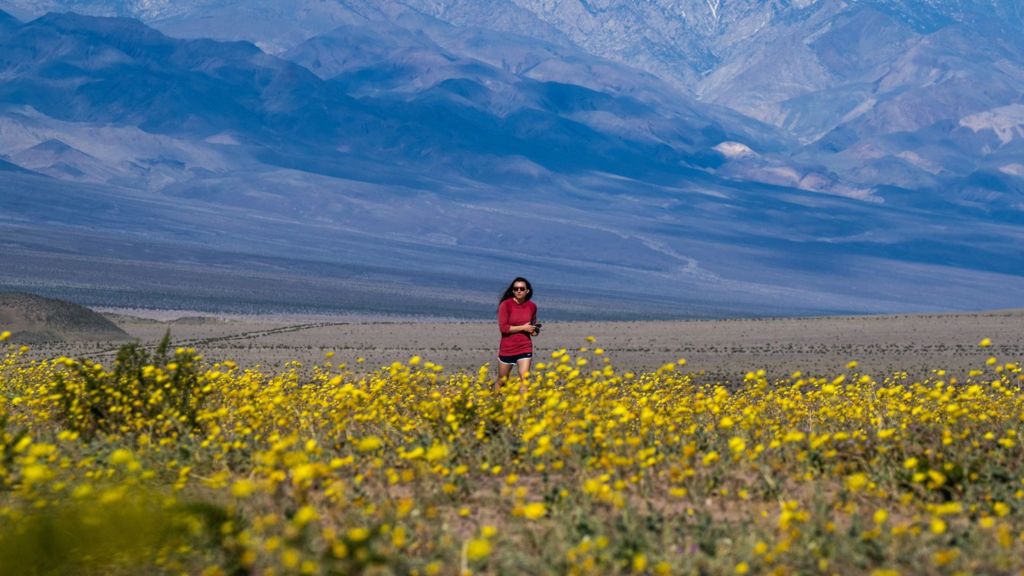
Death Valley National Park, renowned as one of Earth’s most extreme and arid environments, is currently experiencing a spectacular natural phenomenon—its most vibrant wildflower superbloom since 2016. This extraordinary floral display has transformed the typically stark desert landscape into a breathtaking tapestry of color, attracting botanists, photographers, and nature enthusiasts from across the globe.
The ecological catalyst for this remarkable event was an unusually intense wet season during autumn 2022. Exceptionally heavy rainfall penetrated the park’s parched soils, effectively hydrating millions of long-dormant wildflower seeds that had lain dormant for years. The substantial precipitation not only provided crucial moisture but also served to wash away the protective coatings that naturally inhibit premature germination in desert seeds.
Botanists specializing in desert ecosystems note that this particular superbloom exhibits exceptional density and diversity, with species including the golden desert sunflower (Geraea canescens), vivid purple sand verbena (Abronia villosa), and delicate white gravel ghost (Atrichoseris platyphylla) creating striking visual contrasts against the desert backdrop. The phenomenon represents a sophisticated survival mechanism where desert plants rapidly complete their entire life cycle during brief windows of favorable conditions.
Park officials report that the bloom has progressed through elevation gradients, with lower elevations peaking first followed by successive waves at higher altitudes. The biological significance extends beyond visual splendor, as the abundant flowers provide critical nourishment for pollinators including native bees, butterflies, and migratory birds, creating a temporary but vital ecosystem boom in this challenging environment.