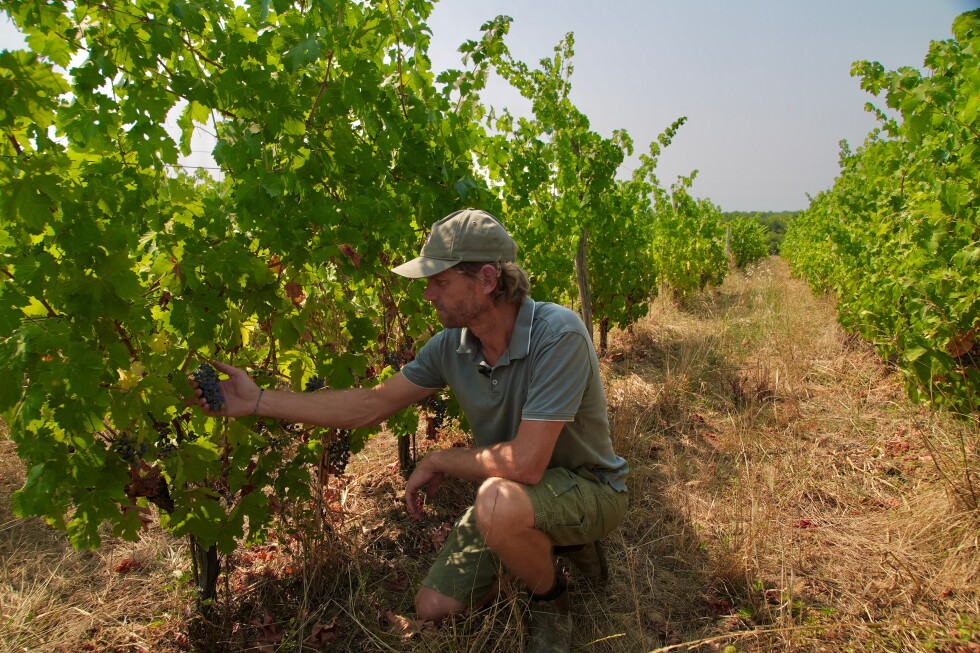
In the sun-dappled vineyards of Bordeaux, one of France’s most celebrated wine-producing regions, local winemaker Edouard le Grix de la Salle catches a disconcerting scent on the wind these days: the acrid tang of burning forests, carried from massive wildfires that have ripped through the Gironde department in southwest France. For this region, where wine, tourism and natural beauty form the backbone of local livelihoods, that smoke isn’t just an unpleasant reminder of environmental destruction — it’s a harbinger of deep economic pain for a community already on the edge.
The current wildfire season has scorched an expanse of land four times the total area of Paris, forced 220,000 people to evacuate their homes, and shuttered multiple popular tourist destinations across southern France. For France’s already strained national economy, the disaster is shaping up to be a major new setback.
Patrick Seguin, president of the regional chamber of commerce, described the dual crisis of environmental and economic collapse in raw, emotional terms during a recent phone interview. “It’s a physical apocalypse when you see all these sites where there’s nothing left aside from burnt homes and forests, and then there’s the economic apocalypse,” he said, adding that the disaster is “going to be a stab in the back for what remains of our economy.”
Le Grix de la Salle, whose family-owned Grand Verdus wine estate sits just 35 kilometers from the fire line on the opposite bank of the Garonne River, counts himself among the regional entrepreneurs bracing for severe losses. The French government’s official public appeal urging travelers to avoid the Gironde region has sparked outrage and anxiety among local business owners, who rely heavily on summer tourist traffic to prop up annual revenues.
Bordeaux’s iconic wine industry was already struggling long before the first wildfire ignited. Shifting consumer preferences have led to plummeting domestic wine consumption, as younger generations of French drinkers turn to alternative beverages, while intensifying global competition from new wine-producing regions has cut into export market share. Former U.S. President Donald Trump’s punitive trade tariffs on European wine added another layer of financial stress for producers years ago, and broader global pressures have worsened the crisis.
“The wine business has been in crisis for several years now and it’s worsening with the geopolitical problems, the now widespread problems of inflation and the fact that wine is falling out of fashion among younger people,” Le Grix de la Salle explained. For the local industry, tourism had emerged as the only reliable growing segment of the market — a lifeline that the wildfires have now cut short. “Tourism was really the only dynamic part of the business that was still growing, both for us and, more generally, for Bordeaux wines,” he said. “And now this comes along as a brake.”
While the wildfires have only burned a small percentage of the Gironde region — which is the largest department in mainland France — the reputational damage to the area’s global brand as a top travel destination has already been extensive. Le Grix de la Salle questioned why regional and national authorities failed to prioritize protecting the tourism and cultural sectors that drive so much of the local economy. “How did they not think about protecting that sector? And the cultural sector, too. There is so much to visit in Bordeaux. There are so many museums, there are châteaux. It’s unbelievable,” he said.
Southwest France draws millions of domestic and international tourists each year, who come to explore its powdery Atlantic beaches, centuries-old winemaking châteaux, vast ancient pine forests, and the historic UNESCO World Heritage city of Bordeaux itself. The oyster-producing Arcachon Bay is a major draw for culinary travelers, but the wildfires and mass evacuation orders have turned many popular vacation hotspots into ghost towns this summer.
The regional chamber of commerce estimates that 39,000 businesses across Gironde have been impacted by the crisis, beyond the core wine and tourism sectors. The region is also a major global hub for defense and aerospace manufacturing, home to major industry players including Airbus, Dassault and Thales. Even before the wildfires broke out, regional businesses were reeling from skyrocketing energy costs that had already squeezed profit margins. A mid-July survey of regional enterprises found that 94% of respondents were already facing severe operational difficulties.
“We’re getting more and more calls from heads of small- and medium-sized businesses, tiny businesses and craft businesses that are calling for help and saying, ‘What am I going to do tomorrow?’” Seguin said. He also noted that commercial courts in Bordeaux and Libourne have already recorded a 37% increase in business liquidations when comparing June this year to June 2024.
Bordeaux Mayor Thomas Cazenave has pushed back against the national government’s appeal for travelers to avoid the region, stressing that the city itself has not faced evacuation orders and remains open for visitors. “The museums are open, the cafes and restaurants are open,” he said. “Life also goes on in our beautiful city.” Even so, local restaurateurs have already told the mayor that advance reservations have dropped dramatically, a sign that the reputational damage is already hitting local revenue.
Reporting for this article was contributed by Keaten from Lyon, France, and Leicester from Paris.