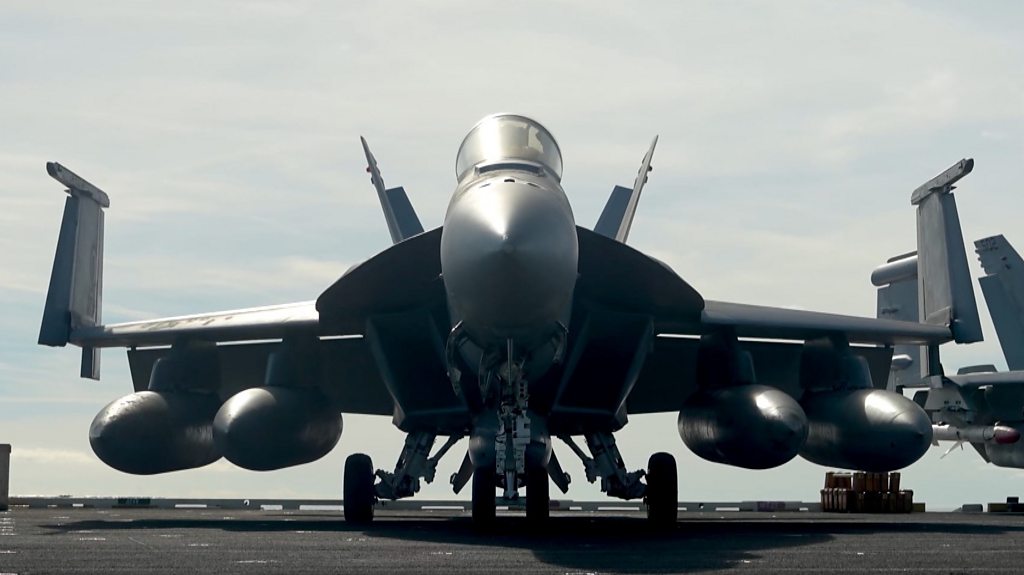
Two U.S. Navy F/A-18 Super Hornet fighter jets executed a prolonged surveillance mission in close proximity to Venezuelan territory, according to flight tracking data. The advanced aircraft appeared on public flight monitoring systems near Maracaibo, Venezuela’s second-largest city and crucial economic hub, before initiating an extensive 40-minute circular pattern over the Gulf of Venezuela.
The operation, which occurred in international airspace, represents the latest development in ongoing tensions between the United States and the administration of Venezuelan President Nicolás Maduro. Aviation experts confirmed the aircraft were operating at standard surveillance altitudes and patterns consistent with intelligence-gathering missions.
This aerial activity follows previous U.S. military deployments in the region, including recent naval exercises and increased surveillance operations aimed at monitoring Venezuelan military movements and alleged illicit activities. The Gulf of Venezuela represents a strategically significant maritime corridor for both commercial shipping and regional security operations.
The U.S. Southern Command has maintained an increased presence in the Caribbean region, citing concerns about drug trafficking, regional stability, and the humanitarian situation in Venezuela. Venezuelan officials have repeatedly condemned such operations as violations of their sovereignty and examples of U.S. aggression.
Military analysts note that such flights typically serve multiple purposes: demonstrating regional commitment to allies, gathering intelligence on potential security threats, and maintaining operational readiness in strategically important regions. The extended duration of this particular mission suggests comprehensive surveillance objectives rather than mere presence demonstration.