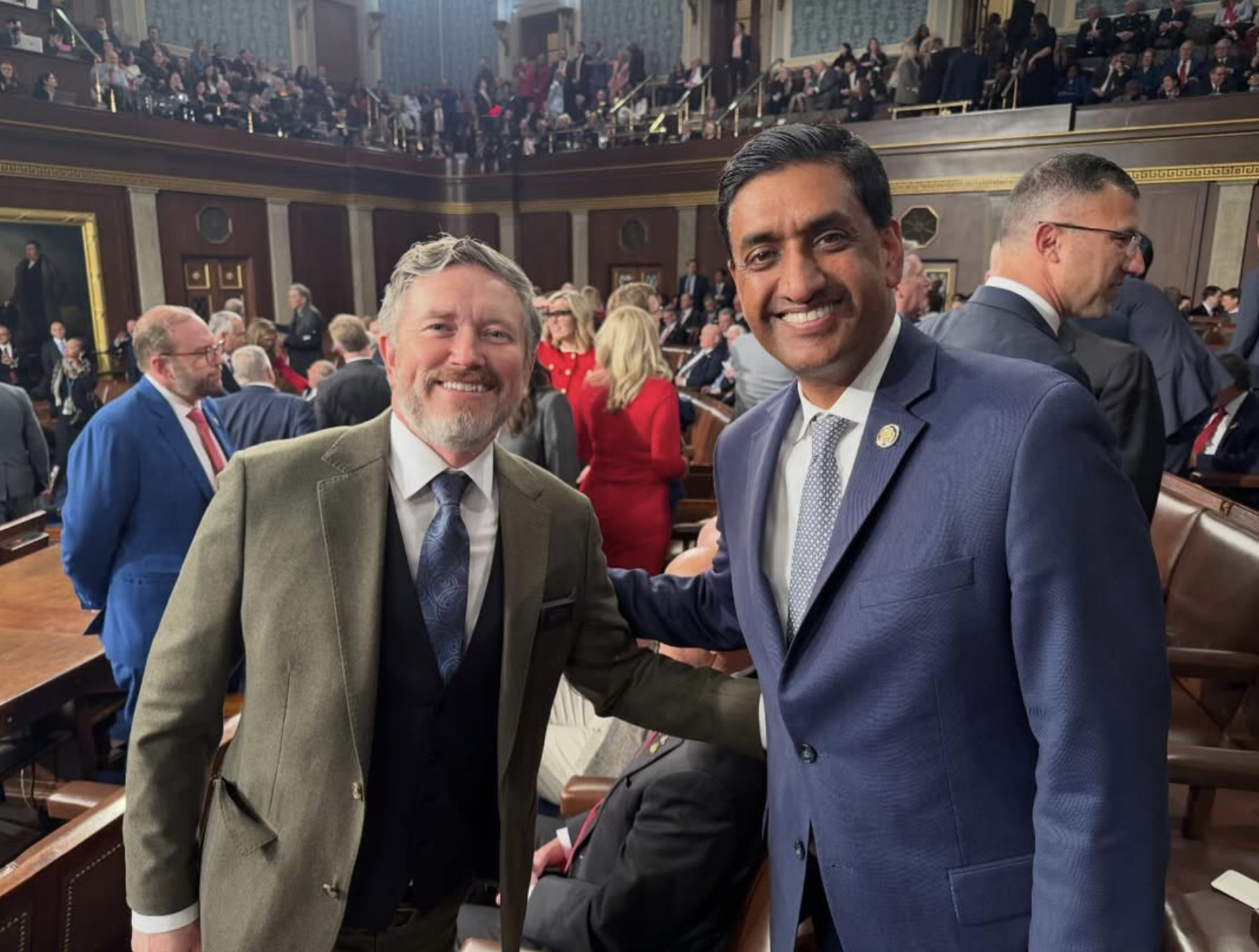
In a remarkable display of cross-aisle cooperation, Democratic Representative Ro Khanna and Republican Representative Thomas Massie sat together during Tuesday’s State of the Union address, demonstrating rare bipartisan unity against potential military action in Iran. This unusual pairing occurred as President Trump simultaneously threatened Iran with military force while claiming the U.S. had already destroyed Iranian nuclear sites in June.
The two legislators, despite their divergent political ideologies—Khanna being a progressive who has denounced the situation in Gaza as genocide, and Massie an anti-war Trump critic—have collaboratively initiated a War Powers Resolution to force congressional accountability regarding potential U.S. strikes on Iran. Their effort seeks to compel every member of Congress to formally declare their stance on military engagement with Iran.
However, this legislative maneuver has encountered delays amid reports that Democratic leadership is attempting to curtail the effort. The 1973 War Powers Act enables any senator to introduce resolutions withdrawing U.S. armed forces from unauthorized conflicts, emphasizing that congressional approval—not executive authority—should determine military engagements.
Since the 9/11 attacks, the ambiguous nature of the global “war on terror” has permitted successive administrations to conduct military operations from Somalia to Pakistan without formal congressional declarations of war. Khanna emphasized the urgency of their resolution in a February 18 social media post, noting Trump officials allegedly estimated a 90% probability of strikes against Iran.
Establishment Democrats, many of whom have consistently condemned Iran while hesitating to criticize Israel’s actions in Gaza, appear reluctant to support the resolution. Meanwhile, Iran has expressed preference for diplomatic solutions that preserve its sovereign defense capabilities, despite preparing for potential conflict with the United States—tensions largely fueled by Israeli influence.
Following closed-door briefings on Iran developments with Secretary of State Marco Rubio and CIA Director John Ratcliffe, Senate Democratic leader Chuck Schumer described the situation as “serious,” requiring the administration to justify its position to the American public. Schumer’s previous statements acknowledge Iran’s concerning activities but stress the necessity of enforcing the War Powers Act to ensure congressional consultation and public transparency.
The political calculus becomes increasingly complex as lawmakers approach midterm elections, which will serve as the first significant referendum on Trump’s second term. Historical precedent exists for limiting presidential war powers, as both chambers voted to restrict Trump’s authority after the 2020 killing of Iranian commander Qassem Soleimani—a measure Trump ultimately vetoed.