In the heart of Kyiv, Ukraine, every Russian ballistic missile launch creates a race against time. With flight times measured in minutes — and sometimes just seconds — air defense crews have barely any window to detect, track, and intercept these deadly, high-speed threats before they strike their targets.
This compressed timeline has left major Ukrainian population centers increasingly vulnerable to catastrophic strikes, as Ukrainian military officials confirm that only the American-made Patriot air defense system is capable of reliably stopping these steep-diving, supersonic projectiles. The stark reality, however, is that Ukraine currently operates far too few Patriot batteries and interceptor missiles to cover the entire country’s populated areas.
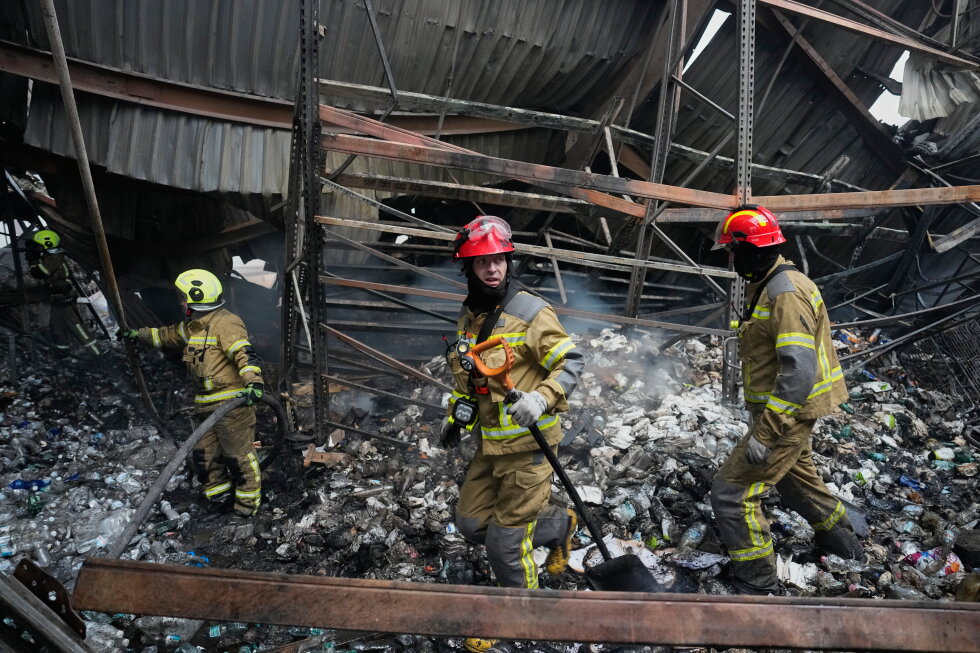
Ballistic missiles operate on a fundamentally different flight profile than the slower, aircraft-like cruise missiles Russia also uses extensively in its attacks. Launched like rockets, they arc high into the atmosphere before plunging toward their targets at multiple times the speed of sound, drastically cutting the window for defensive response. The most recent major barrage on Kyiv underscored this danger: strikes hit a commercial brewery, a civilian warehouse, and a national mail sorting facility, leaving at least 17 people dead and dozens injured, President Volodymyr Zelenskyy confirmed Wednesday.
Thomas Withington, an electronic warfare specialist at the UK-based Royal United Services Institute, compared the challenge of intercepting these missiles to catching a fast-moving ball. “When the warhead is hurled toward its target, it’s very, very steep and it’s going at a ridiculous speed,” he explained. “If the ball is going really fast, it’s harder to catch.”
Russia’s primary workhorse ballistic missile is the ground-launched Iskander-M, but the Kremlin has also deployed a range of other high-speed weapons that create identical interception challenges: the air-launched Kinzhal ballistic missile, modified S-300 and S-400 air defense missiles repurposed for ground strikes, and even the Zircon hypersonic anti-ship missile, whose extreme speed produces interception difficulties on par with traditional ballistic missiles.
### Patriots Remain the Only Working Defense
The PAC-3 variant of the Patriot system, the most advanced anti-missile model supplied to Kyiv by Western allies, was purpose-built to counter high-speed ballistic threats. Unlike older defensive systems that detonate explosives near incoming targets to disable them, the PAC-3 uses a maneuverable hit-to-kill interceptor that directly collides with incoming warheads to destroy them mid-flight. Even for the Patriot system, though, timing is critical: the technology must rapidly track the incoming projectile, calculate its projected flight path, launch an interceptor within minutes, and often completes the final engagement in just seconds.
Ukrainian Air Force spokesman Yurii Ihnat confirmed that Patriots are currently the only system in Ukraine’s arsenal capable of intercepting Iskander-M, S-400, and Zircon weapons. While the U.S. and its allies field other capable anti-ballistic systems, including the land-based THAAD and sea-based Aegis defense platforms, none have been transferred to Ukrainian forces to date.
Even when Patriots are available, protection is not guaranteed. When a battery is deployed elsewhere, out of position, or running low on interceptors, most of Ukraine’s other existing air defense systems cannot fill the gap. Compounding this problem, Russia often mixes ballistic missile strikes with cruise missiles, explosive drones, and decoy targets to stretch defensive resources thin, forcing Ukrainian commanders to ration scarce interceptor missiles across multiple simultaneous threats. With too few batteries to cover every major Ukrainian city, large swathes of the country remain exposed.
### A Global Shortage That Cannot Be Fixed Quickly
The shortage of Patriot interceptors is not unique to Ukraine: the ongoing conflict in the Middle East, where U.S. and Israeli forces have expended large numbers of Patriot and THAAD interceptors to counter Iranian attacks, has stretched global inventories thin. An analysis by the Associated Press estimates that U.S. stockpiles of Patriot interceptors have dropped by at least 65% from pre-war levels, a claim the Pentagon has pushed back on, saying it retains a robust strategic arsenal.
Closing the supply gap will take years, even with expanded production. Manufacturer Lockheed Martin delivered more than 600 PAC-3 MSE interceptors in 2025, and is ramping up capacity to reach an annual production rate of 2,000 interceptors by the end of 2030. NATO’s first European Patriot production facility is scheduled to open in Germany this September, but that new capacity will not make up for current shortfalls overnight.
Political uncertainty has further muddled efforts to increase Ukraine’s supply of defensive systems. At last month’s NATO summit held in Turkey, U.S. President Donald Trump announced the U.S. would grant Ukraine a license to produce Patriot systems domestically. Just three weeks later, however, Trump clarified that no final decision had been made. Even if a license is approved, defense officials and industry experts told the AP that establishing domestic Patriot production in Ukraine would take years of work before it can deliver operational interceptors.
### Ukraine Shifts Strategy: Targeting Launchers Instead of Just Intercepting Missiles
With defensive resources stretched thin, Ukraine is pursuing an alternative approach to reduce the threat: targeting Russian missile launchers and production infrastructure before missiles can even be launched — a strategy leaders describe as “shooting the archer instead of the arrow.”
People familiar with ongoing diplomatic discussions told the AP that Zelenskyy has asked the Trump administration to help secure permission from Elon Musk’s SpaceX to expand the use of Starlink satellite communications for Ukrainian strike operations inside Russian territory. Musk has currently restricted Starlink access in Russian border regions to avoid escalating tensions, but expanded connectivity would allow Ukrainian surveillance drones to more accurately target mobile ballistic missile launchers and supporting infrastructure, reducing the number of incoming missiles that Patriot batteries need to intercept. The request has not been publicly confirmed by the White House, Ukrainian Embassy in Washington, or SpaceX.
Kyiv is also working on independent alternatives to Western air defense systems to reduce its reliance on imported Patriots. A key project under development is Freya, a lower-cost indigenous anti-ballistic defense system led by Ukrainian engineers. In July, Ukraine formed a coalition with nine other European countries to advance the joint development of shared mass-produced missile defense capabilities, with Zelenskyy stating that a fully operational system could be ready within 12 months. To date, Freya remains in the development phase, and it is unclear when it will be deployed for operational use.
In comments following the latest deadly ballistic missile attack on Kyiv, Zelenskyy emphasized the growing scope of the shortage: Ukraine received only one-third of the air defense missile deliveries in the first half of 2026 that it received in the same period a year earlier. He called on Western allies that are unwilling to immediately increase interceptor shipments to instead impose new, tougher sanctions on Russia’s ballistic missile production sector, noting that a large share of Russia’s missile manufacturing supply chain has yet to be targeted by existing international sanctions.