European leadership finds itself grappling with profound strategic disarray as the US-Israeli military campaign against Iran enters its critical phase. Despite weeks of observable military buildup and escalating rhetoric from the Trump administration demanding Tehran abandon its nuclear ambitions, European nations have demonstrated fragmented responses that reveal deep structural weaknesses in continental coordination.
The immediate humanitarian crisis looms large as European governments scramble to formulate evacuation plans for tens of thousands of citizens stranded in the conflict zone. Beyond personnel extraction, policymakers confront alarming economic repercussions as energy prices surge to levels unseen since Russia’s 2022 invasion of Ukraine, threatening consumer stability across the continent.
Political divisions have become increasingly conspicuous. While France, Germany, and the UK managed a joint statement warning Iran of potential ‘defensive action’ against missile capabilities, their subsequent actions revealed significant divergence. The UK permitted use of its military bases for US operations despite Trump’s criticism of insufficient support. France enhanced its regional presence after Iranian strikes hit its UAE facility, while Germany emphasized strictly defensive posturing without offensive planning.
Notably absent from European responses has been any substantive challenge to the legality of US-Israeli strikes under international law. This diplomatic caution reflects pervasive concern about alienating the Trump administration, particularly regarding continued US engagement in Ukraine where European security interests remain critically dependent on American support.
Spain emerged as the most vocal dissenter, with Prime Minister Pedro Sánchez declaring opposition to both the Iranian regime and what he termed an ‘unjustified, dangerous military intervention outside international law.’ Madrid subsequently revoked US access to Spanish bases for offensive operations against Iran.
The institutional disunity extends to the highest levels of EU governance. Foreign ministers cautiously avoided advocating regime change in Iran, while European Commission President Ursula von der Leyen publicly called for ‘credible transition’ in Tehran—highlighting the absence of coordinated messaging.
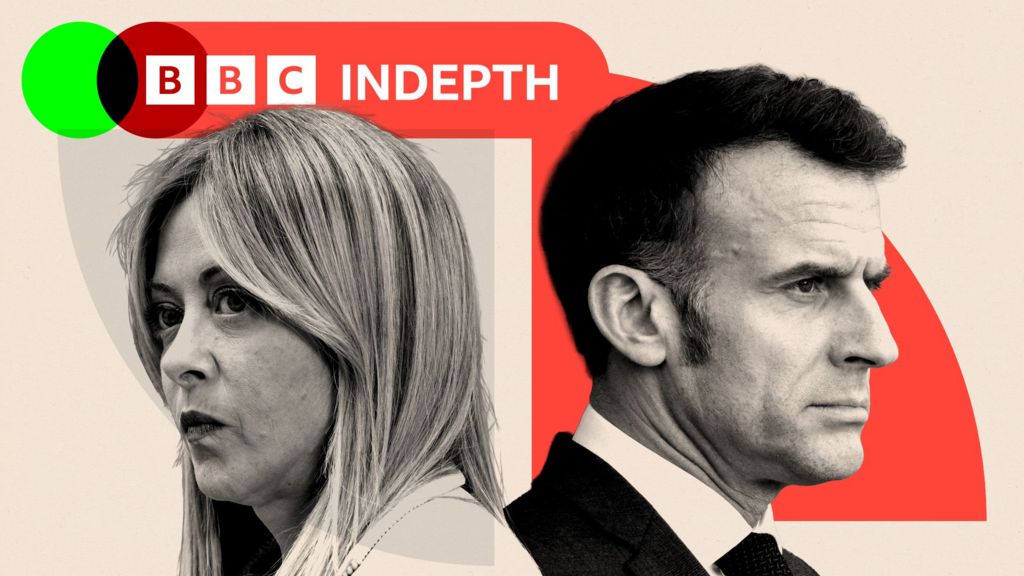
This fragmentation occurs against the backdrop of Europe’s ambitious goals for strategic autonomy. French President Emmanuel Macron announced fundamental changes to France’s nuclear doctrine, increasing warhead production in response to evolving global threats. Meanwhile, Germany, Sweden and Poland have approached France seeking expanded nuclear protection beyond existing NATO arrangements—a significant shift in European security dynamics.
Defense coordination challenges remain starkly evident. While the United States operates approximately 30 weapon systems, European nations maintain 178 frequently duplicated systems—described by European Parliament President Roberta Metsola as ‘inefficient, expensive and slow.’
National historical contexts continue to shape responses. Germany maintains its conflict-averse stance rooted in twentieth-century history, despite becoming Ukraine’s largest military donor. Italy’s Prime Minister Giorgia Meloni navigates delicate balance between her pro-Western commitments and domestic public opinion that overwhelmingly opposes military escalation and increased defense spending.
As ad-hoc coalitions emerge to address specific security challenges—from UK-Norway submarine tracking to Franco-British initiatives supporting Ukraine—European cooperation increasingly extends to like-minded nations beyond the continent, including Canada, South Korea and Japan participating in NATO exercises.
This expanding web of partnerships reflects adaptation to an increasingly multipolar world where ‘might makes right’ dynamics prevail, yet simultaneously compounds the complexity of achieving coherent European action when confronting existential security threats.