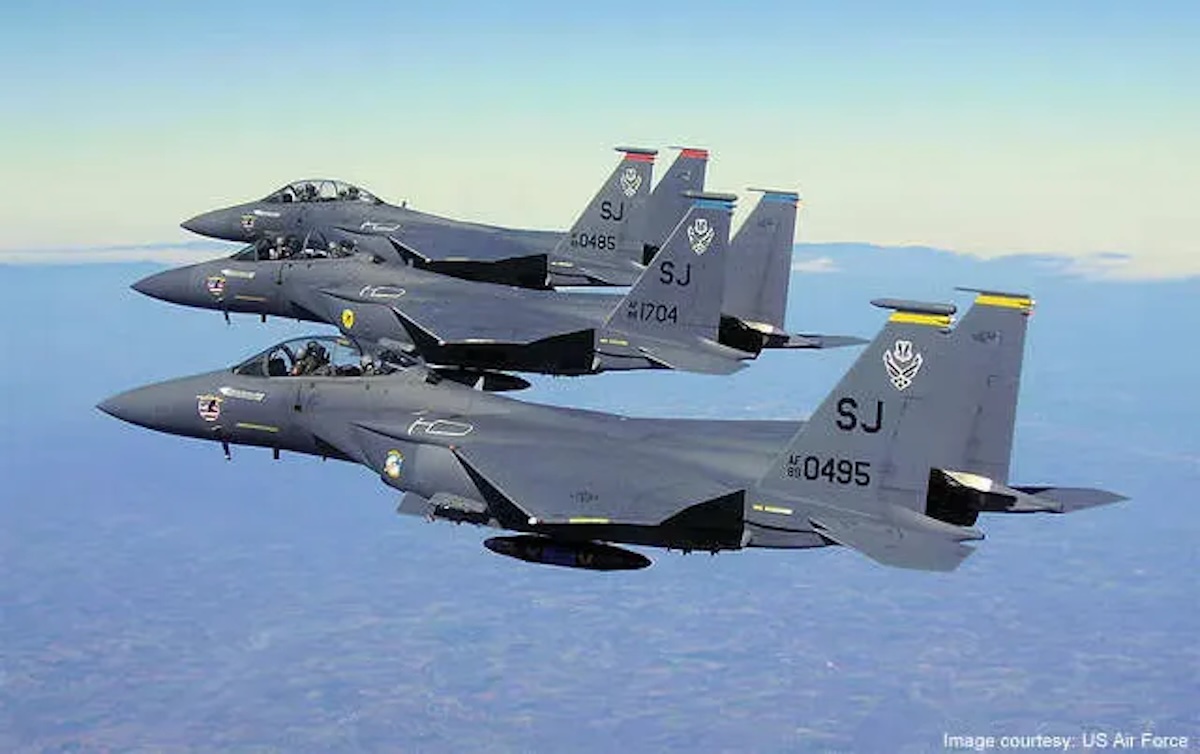
In a significant friendly fire incident, Kuwaiti air defense systems mistakenly shot down three US F-15E fighter jets on Sunday, March 1, during defensive operations against an Iranian missile and drone offensive. While no casualties were reported, the incident has raised serious questions about coordination between allied forces and the operational protocols of integrated air defense networks.
Kuwait employed multiple advanced air defense systems during the engagement, including Patriot PAC-3 MSE, upgraded PAC-2, HAWK (MIM-23), NASAMS, and SPADA 2000 platforms. The sophisticated arsenal is designed to counter diverse aerial threats through various interception methods—from hit-to-kill kinetic impactors to blast fragmentation warheads.
Video evidence shows at least one F-15 in an uncontrolled descent after sustaining critical damage to its vertical stabilizer, suggesting possible engagement by terminal heat-seeking munitions. Technical analysis indicates that the aircraft were likely conducting counter-drone operations against Iranian Shahed-136 and Arash-2 drones when mistakenly identified as threats.
The incident has prompted a US Central Command (CENTCOM) investigation into multiple potential failure points: possible Iranian electronic warfare interference using Cobra V8, Sayyad-4, and Avtobaza-M jamming systems; potential IFF (Identification Friend or Foe) system failures; and questions about operational discipline among Kuwaiti air defense operators. While Iranian jammers were operational from positions approximately 1,000 miles away, their effective range makes direct involvement questionable.
Military experts note that shooting down three advanced fighter jets suggests either systemic technical failures or concerning operational practices. The incident highlights challenges in integrated coalition warfare, particularly regarding communication protocols and threat identification procedures in high-intensity environments.
The broader context involves Iran’s major offensive, during which Kuwaiti defenses engaged 97 ballistic missiles and 283 drones according to official reports. This incident represents one of the most significant friendly fire occurrences in recent Middle Eastern conflict zones and may influence future coalition operating procedures and technology integration standards.