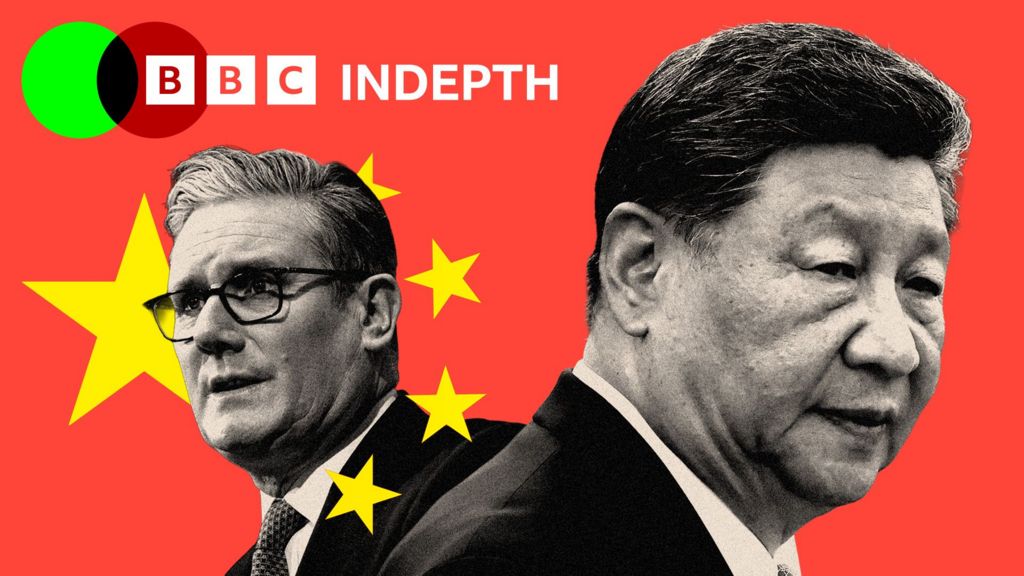
Despite Beijing’s harsh winter conditions, the Chinese capital has become an unexpected hub of diplomatic activity, welcoming a succession of Western leaders seeking to reestablish ties with the world’s second-largest economy. The most notable among these visitors is British Prime Minister Sir Keir Starmer, marking the first UK leadership visit to China in eight years.
This diplomatic flurry comes after China secured approval for a massive new embassy in London, a precondition Beijing officials explicitly tied to announcing Starmer’s visit. The UK delegation arrives with substantial economic ambitions, hoping to secure dozens of new trade agreements to bolster Britain’s economy amid ongoing domestic challenges.
Dr. Yu Jie, Senior Research Fellow at Chatham House, notes that even establishing a reasonable trading relationship would constitute significant progress given current circumstances. The visit represents part of China’s broader charm offensive, positioning itself as a stable, predictable alternative to the United States in global partnerships.
This strategy appeared successful with Canadian Prime Minister Mark Carney, who recently announced a “new strategic partnership with China” during his Beijing visit. However, such overtures risk provoking Washington’s ire, as demonstrated by President Trump’s threat to impose 100% tariffs on Canada should it proceed with Chinese trade deals.
Starmer has attempted to navigate these geopolitical tensions by declaring Britain would not choose between the US and China. Analysts suggest Beijing remains realistic about its limited ability to fracture the special relationship between Washington and London.
The current diplomatic engagement marks a notable shift from what Prime Minister Starmer himself termed an “ice age” in UK-China relations. While a return to the “golden era” symbolized by the 2015 meeting between Xi Jinping and David Cameron remains improbable, experts view these developments as the beginning of a cautious thaw.
Beyond high-level politics, people-to-people connections endure. The story of Bowei Wang exemplifies lasting cultural ties—after studying in Scotland during warmer diplomatic times, he now imports Glasgow-brewed ale to his Beijing pub near Tiananmen Square, creating a cross-cultural experience complete with British historical imagery.
China’s economic leverage provides substantial negotiating power, controlling approximately one-third of global goods manufacturing, over 90% of rare earth mineral processing, and 60-80% of renewable energy components. This dominance has enabled Beijing to employ trade measures against countries that displeased it, as experienced by Australia, Canada, Japan, and South Korea in recent years.
Business leaders like Tom Simpson of the China Britain Business Council emphasize the visit’s importance, noting China’s position as Britain’s third-largest trading partner with £45 billion in annual exports. However, Chinese analysts express concerns about Starmer’s inconsistent follow-through on engagement promises and Britain’s domestic political stability.
The diplomatic movement has practical implications for ordinary citizens. British tour operators in China hope successful negotiations might lead to visa-free travel for UK passport holders, mirroring arrangements Beijing has already extended to 70 other countries.
As Western leaders brave Beijing’s winter chill, they calculate that reengagement with China—despite its complexities and risks—represents a necessary strategic calculation in an increasingly multipolar world.