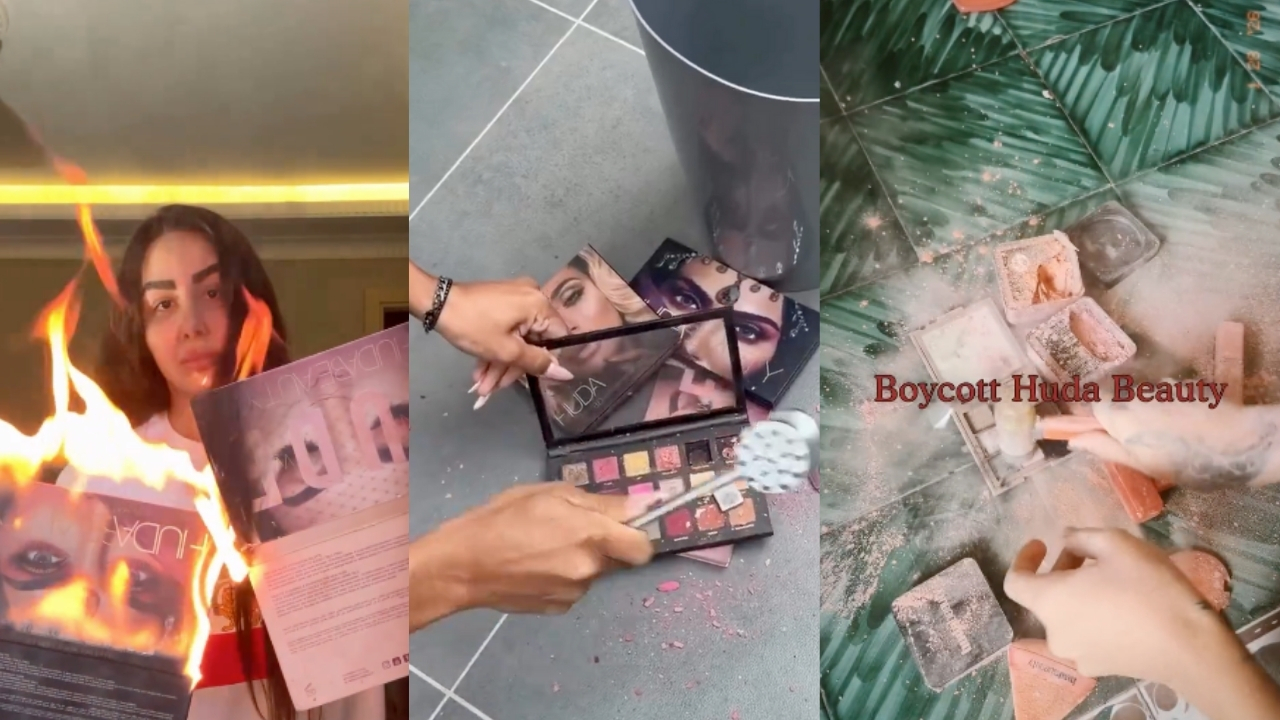
A significant consumer backlash has erupted against cosmetics giant Huda Beauty following controversial geopolitical commentary from its founder. Iranian women have launched a coordinated boycott campaign, flooding TikTok and Instagram with videos demonstrating the destruction of Huda Beauty products through burning, crushing, and disposal.
The controversy originated when Huda Kattan shared content on her Instagram Stories featuring pro-government demonstrators in Tehran burning effigies of Israeli Prime Minister Benjamin Netanyahu, former US President Donald Trump, and Reza Pahlavi, son of Iran’s deposed Shah. This action was widely interpreted as implicit support for Iran’s Islamic Republic regime, particularly during ongoing civil unrest and government crackdowns on protests.
Kattan responded with a series of video statements attempting to clarify her position: ‘Transparently I am not pro-regime, but I also don’t know enough about the regime. I’ve heard mixed things, and I don’t think I have the right to have an opinion on what’s going on.’ The Iraqi-American entrepreneur drew parallels between Iran’s ‘internal issues’ and the catastrophic consequences of US intervention in her native Iraq, stating unequivocally her opposition to external regime change advocacy.
The beauty mogul, who has been vocal in her support for Palestinians during the Gaza conflict, rejected comparisons between Iran’s domestic policies and Israel’s military actions, emphasizing the distinction between internal governance issues and international conflicts. Her comments have ignited intense debate across social media platforms, with prominent Iranian creators challenging her characterization of the situation and continuing calls for retailers like Sephora to remove Huda Beauty products.
While many consumers have condemned Kattan’s statements and endorsed the boycott, others have defended her right to express caution regarding foreign intervention based on her personal experiences with US military action in the Middle East. The incident highlights the complex challenges facing global brands navigating highly charged geopolitical landscapes and the increasing consumer expectation for corporate leaders to adopt informed positions on international human rights issues.