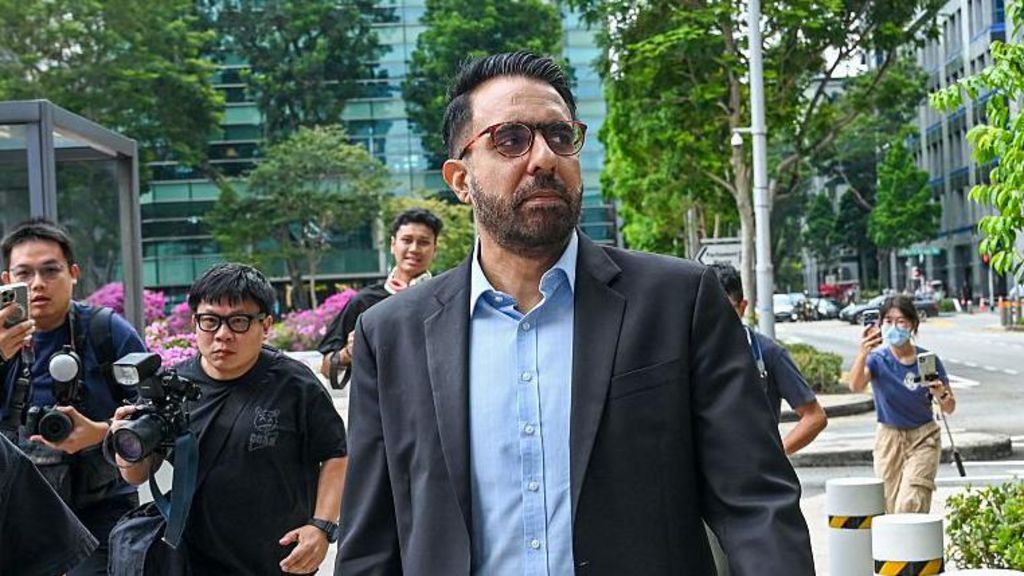
Singapore’s political landscape witnessed a significant shift as Prime Minister Lawrence Wong formally revoked Pritam Singh’s designation as Leader of the Opposition on Thursday. This decisive action follows Parliament’s approval of a motion declaring the Workers’ Party secretary-general “unsuitable” for the role due to his recent conviction for providing false testimony to a parliamentary committee.
The 49-year-old opposition leader, who rose to prominence as part of Singapore’s new generation of politicians challenging the long-dominant People’s Action Party (PAP), maintains his parliamentary seat despite the demotion. The controversy stems from Singh’s handling of former WP lawmaker Raeesah Khan, who admitted to lying in Parliament about a sexual assault case. During subsequent investigations, Khan testified that party leaders, including Singh, instructed her to maintain the false narrative despite knowing the truth.
Singh’s political journey represents both the growth and challenges facing Singapore’s opposition. Educated at the National University of Singapore and King’s College London, the practicing lawyer entered Parliament in 2011 and assumed leadership of the center-left Workers’ Party in 2018. Under his guidance, the party expanded its parliamentary presence to 12 out of 108 seats—the strongest opposition representation in Singapore’s history.
In 2020, Singh achieved a milestone when then-Prime Minister Lee Hsien Loong formally established the Leader of the Opposition position and appointed him to the role. This contrasted with his predecessor Low Thia Khiang’s rejection of an unofficial version of the title in 2011, which he deemed “belittling” without formal recognition.
Despite initially receiving cross-party welcome—including symbolic gestures like appearing in the then-PM’s selfie and joining official delegations—Singh’s tenure has been marred by escalating controversies. Following his February 2025 conviction and failed appeal last December, lawmakers debated for three hours before passing the motion that ultimately cost him his title. The motion argued that retaining Singh would “undermine the standing of parliament and public confidence in the integrity of Singapore’s political system.”
During parliamentary debates, Singh maintained his innocence while accepting the court’s judgment, stating his “conscience will always be clear” regarding the charges. He emphasized that the opposition leader title lacked legal foundation and asserted he had never “hankered” for it. The politician has vowed to continue serving as MP for his constituency, signaling ongoing participation in Singapore’s political arena despite this setback.