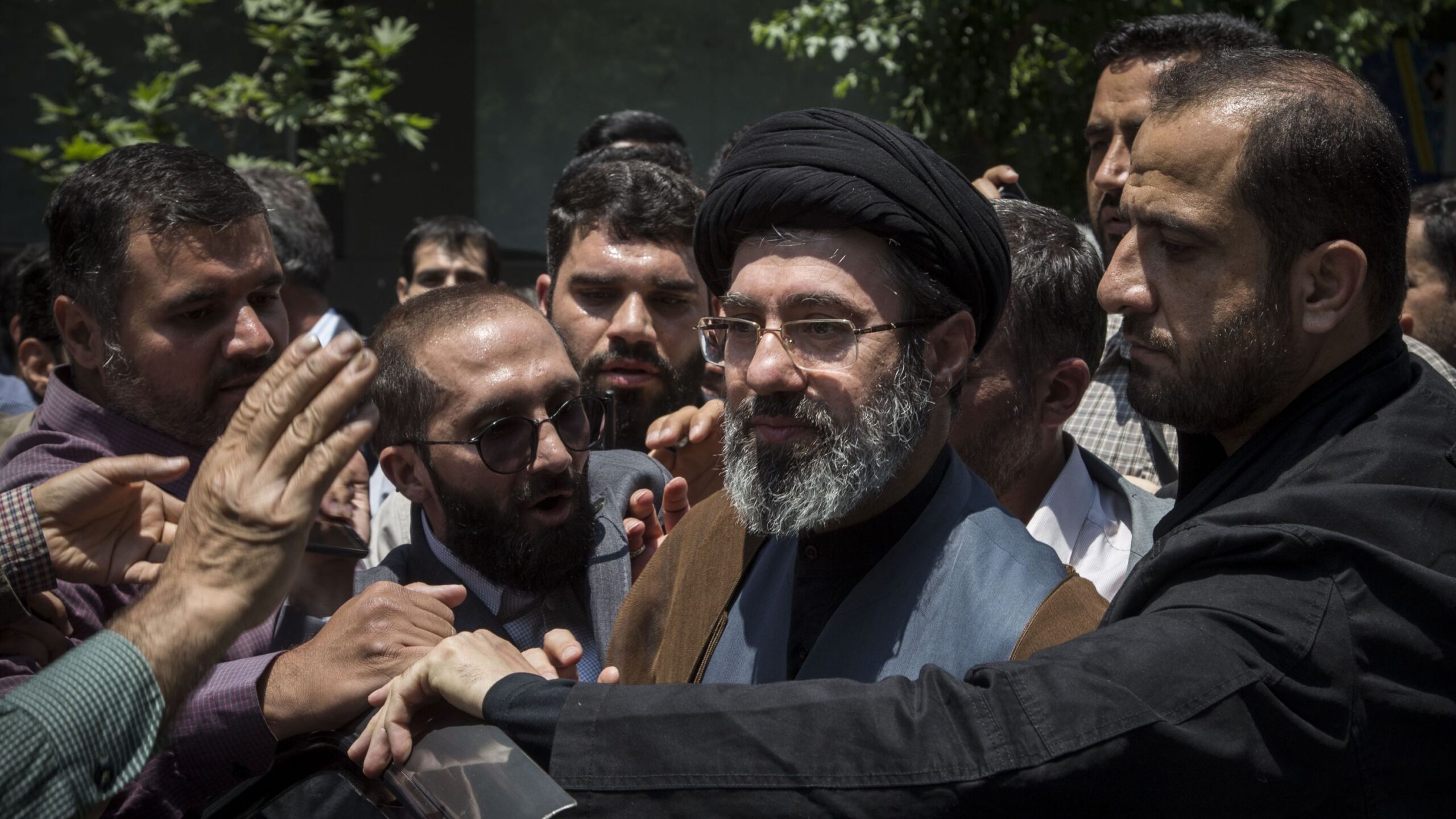
Iran faces a pivotal leadership transition following the death of Supreme Leader Ali Khamenei, with intense speculation surrounding potential successors. The Assembly of Experts has reportedly convened under extraordinary circumstances—amid ongoing US-Israeli attacks on government buildings—to determine the nation’s next ruler.
Mojtaba Khamenei, the 56-year-old son of the late leader, has emerged as a prominent candidate. Widely perceived as a hardline figure within Iranian politics, opposition media outlet Iran International claims he is being championed for the position by the Islamic Revolutionary Guard Corps (IRGC). His potential appointment during sustained foreign attacks could be interpreted as a defiant response to both his father’s killing and international pressure for compromise.
Born in Mashhad in 1969 during the Shah’s regime, Mojtaba came of age during the devastating Iran-Iraq war that claimed nearly one million Iranian lives. His service with the IRGC during the conflict’s final years proved formative, particularly within the Habib Ibn Mazahir Battalion where he established connections with future intelligence leaders including Hossein Taeb, who would later head the IRGC’s Intelligence Organisation.
Despite maintaining a public profile as a theology teacher in Qom and avoiding official government positions, Mojtaba allegedly wielded significant behind-the-scenes influence. During Mahmoud Ahmadinejad’s presidency, he was accused of orchestrating the disputed 2009 election results and subsequent crackdowns on protesters. At the time, an Iranian politician told The Guardian that “Mojtaba is the commander of this coup d’état,” noting widespread anger among conservative clerics and political establishments over his covert influence.
Further controversy surrounds Mojtaba’s substantial international wealth. A Bloomberg investigation revealed he owns luxury UK properties valued over $138 million through shell companies, including multiple residences on London’s exclusive ‘Billionaire’s Row,’ alongside investments in Tehran, Dubai, and Frankfurt.
His potential succession faces multiple objections: as the previous leader’s son, many view appointment as contradicting republican principles in a system that overthrew monarchy; his lack of public office experience presents another complication; and a Tehran Times article from January 2025 cited Ali Khamenei himself as “resolutely opposed” to hereditary succession, characterizing Western narratives of dynastic transition as attempts to discredit Iran’s institutions.
With Iran’s political environment increasingly volatile, predicting long-term leadership remains exceptionally uncertain.