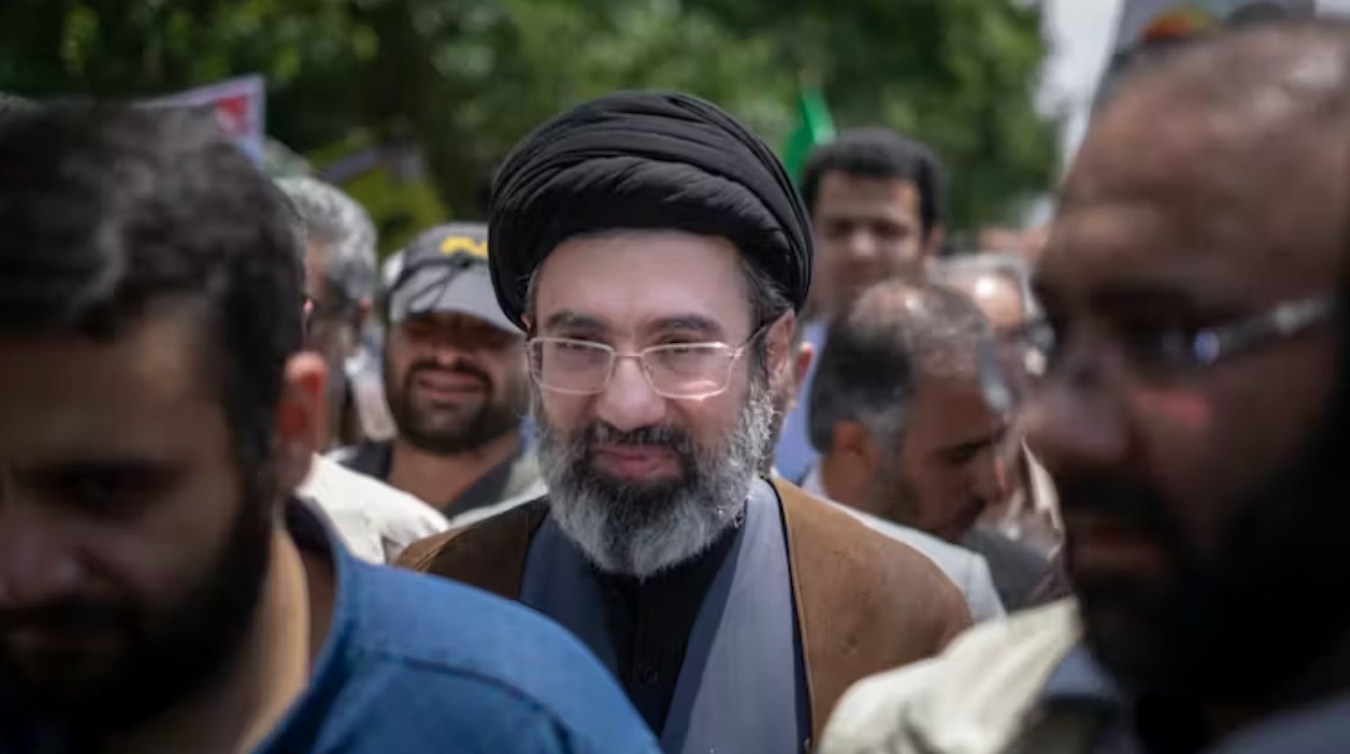
The passing of Iran’s Supreme Leader Ali Khamenei during Ramadan has created a pivotal moment in the nation’s history, potentially reshaping the Islamic Republic’s future trajectory. His anticipated successor, son Mojtaba Khamenei, embodies both continuity and contradiction within the revolutionary system established in 1979.
Mojtaba Khamenei, a cleric who has operated predominantly behind the scenes, has cultivated influence through his position within the Office of the Supreme Leader rather than through public political office. His career has been characterized by his role as a powerbroker and gatekeeper rather than as a visible political figure. Beginning with brief military service during the Iran-Iraq war at age 17, he gradually emerged into public awareness during the late 1990s as his father’s authority solidified.
His political identity rests on two foundational pillars: deep connections with Iran’s security apparatus, particularly the Islamic Revolutionary Guard Corps (IRGC), and steadfast opposition to reformist policies and Western engagement. Critics associate him with the suppression of protests following the contested 2009 presidential election and suggest he has exercised influence over state media narratives. These affiliations led to his sanctioning by the Trump administration in 2019 for allegedly operating in an official capacity without formal government position.
The constitutional process for selecting a new supreme leader falls to the Assembly of Experts, an 88-member clerical body that evaluates candidates based on religious, political, and leadership qualifications. However, the assembly’s neutrality is questionable, as its members undergo vetting processes influenced by the supreme leader’s circle, and its deliberations remain opaque. This creates a system where formal procedures mask underlying power dynamics.
Mojtaba’s religious credentials have been a subject of scrutiny. Traditionally requiring significant religious standing, he only attained the necessary title of ayatollah in 2022—a promotion widely interpreted as grooming for succession. This development appears contradictory to the revolution’s anti-dynastic founding principles, potentially transforming the Islamic Republic’s image from a system of jurist guardianship toward a theocratic monarchy.
The circumstances of Ali Khamenei’s death during Ramadan carry profound religious significance within Shia Islam, evoking historical parallels to the assassination of Imam Ali ibn Abi Talib during Ramadan in 661 CE. This context could bolster narratives of martyrdom and resistance, potentially enhancing Mojtaba’s religious legitimacy through association with these powerful symbolic traditions.
Analysts suggest that a transition to Mojtaba Khamenei would likely reinforce existing security-oriented policies rather than produce dramatic ideological shifts. His leadership style is expected to emphasize closer alignment with the IRGC, hardened domestic control, and tactical rather than transformative engagement with Western powers. The manner of his father’s death in airstrikes attributed to US-Israeli operations would likely intensify confrontational posturing toward both nations, though pragmatic considerations would continue to guide decisions affecting regime survival.