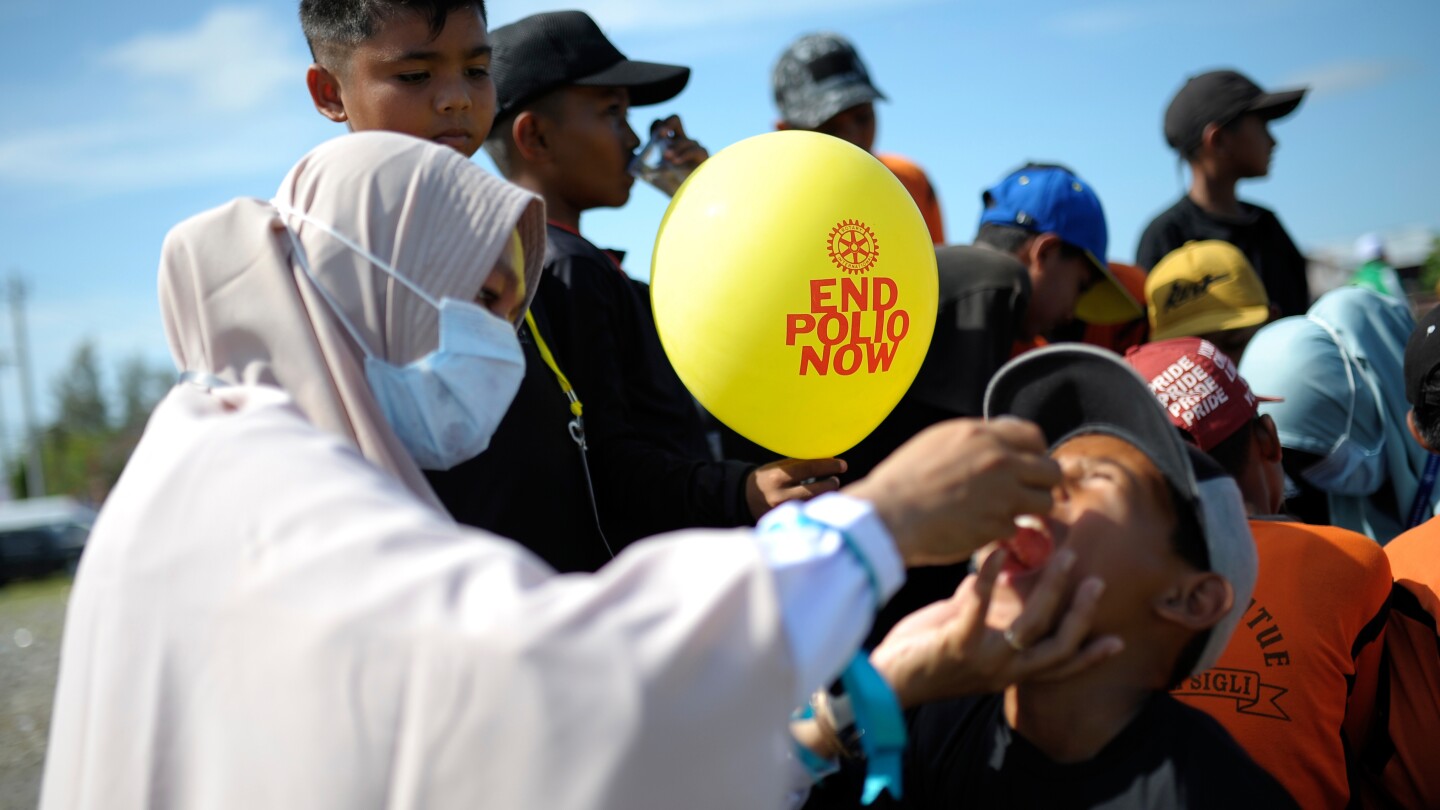
Indonesia has successfully overcome its recent polio outbreak, as declared by the World Health Organization (WHO) on Friday. This milestone follows nearly three years of rigorous efforts to combat the resurgence of the highly contagious disease, which had been officially eradicated in the country in 2014. The outbreak emerged in 2022 in Aceh province, driven by low immunization rates and poor environmental conditions. At the time, only 50.9% of infants in Aceh received polio vaccinations, a figure significantly lower than the national average. Misinformation about vaccine compatibility with religious beliefs further hindered immunization efforts, compounded by the government’s focus on COVID-19 vaccinations. Over the next two years, cases spread to multiple provinces, including Banten, West Java, Central Java, East Java, North Maluku, Central Papua, Highland Papua, and South Papua. In response, nearly 60 million additional doses of polio vaccine were administered to children. The last confirmed case was reported in South Papua in June 2024, and no poliovirus has been detected since. WHO’s declaration marks a critical step toward global polio eradication. Indonesian Health Minister Budi Gunadi Sadikin attributed the success to the dedication of health workers and community commitment, while WHO’s Western Pacific Regional Director Saia Ma’u Piukala emphasized the need for continued vigilance. Sadikin pledged to maintain Indonesia’s polio-free status through strengthened immunization programs, enhanced surveillance, and cross-sectoral collaboration. UNICEF Indonesia Representative Maniza Zaman highlighted the importance of sustained momentum to ensure all children receive necessary immunizations.
WHO declares end of Indonesia’s poliovirus outbreak following yearslong vaccination campaign