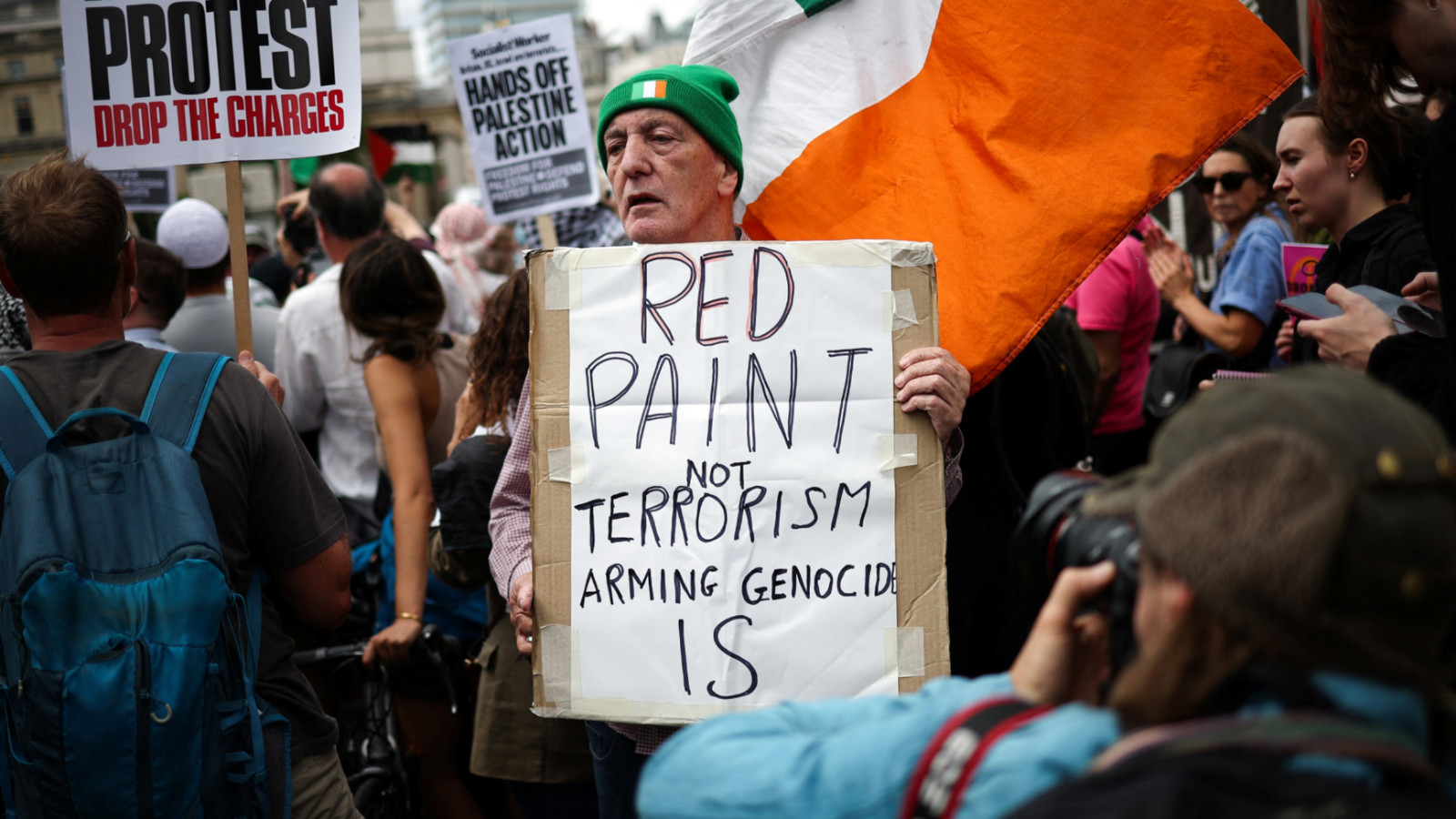
In a landmark judicial ruling, the UK High Court has declared the government’s proscription of the activist network Palestine Action as a terrorist organization to be unlawful. Justice Victoria Sharp delivered the judgment on Friday, determining that the ban constituted a disproportionate infringement on fundamental human rights, specifically the freedoms of expression and assembly protected under the Human Rights Act.
The court acknowledged that while a minimal number of the group’s activities could be classified as terrorism under statutory definitions, the overwhelming majority of its 385 documented actions were lawful. This assessment aligned with an evaluation from the government’s own Joint Terrorism Analysis Centre (JTAC), which found only three actions meeting the terrorism threshold.
The controversial ban, instituted in July by then-Home Secretary Yvette Cooper, had criminalized membership and public support for Palestine Action with penalties of up to 14 years imprisonment. Its implementation resulted in approximately 3,000 arrests nationwide, primarily involving individuals holding silent vigil placards opposing genocide and supporting the group. Statistics revealed an astonishing 660% increase in terrorism arrests following the proscription, with 86% connected to Palestine Action support.
Founded in 2020, Palestine Action employs direct action tactics targeting corporations it identifies as enablers of Israel’s military-industrial complex. Their primary focus has been Elbit Systems, Israel’s largest arms manufacturer with significant UK operations. The group’s campaigns have reportedly cost the defense contractor billions through canceled contracts and divestments, including Barclays’ withdrawal of investments and the UK Ministry of Defence terminating £280 million in contracts.
The ruling emerged from a judicial review initiated by co-founder Huda Ammori, potentially invalidating thousands of arrests. However, the ban remains temporarily in effect pending an appeal launched by current Home Secretary Shabana Mahmood, who expressed disappointment with the decision and vowed to continue the legal fight.
Human rights experts including UN officials had previously warned that the broad application of counter-terrorism legislation created a ‘chilling effect’ on free speech and violated international human rights standards. The case highlights ongoing tensions between national security priorities and civil liberties in the UK’s protest landscape.