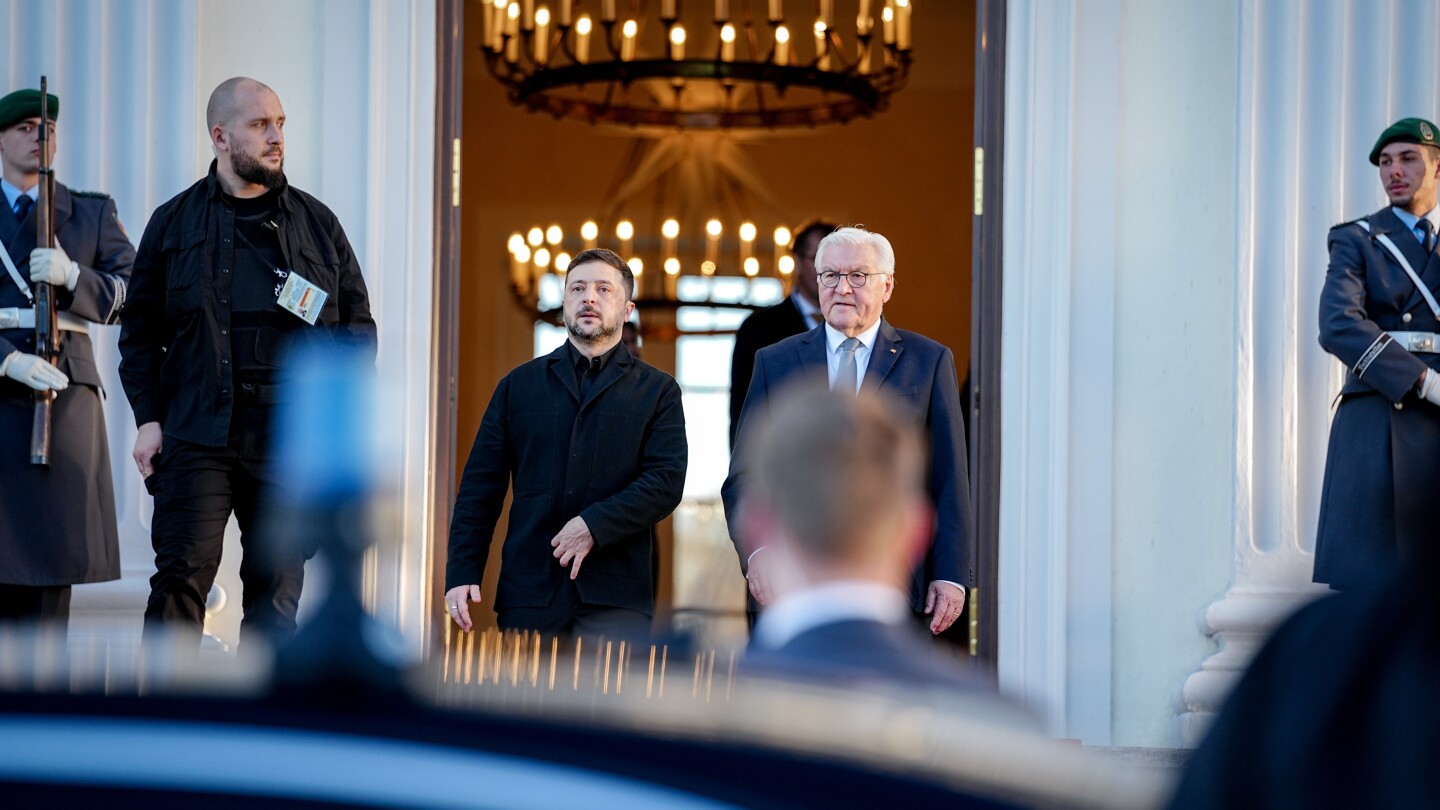
Diplomatic efforts by the United States to broker an end to the nearly four-year conflict in Ukraine have reached an impasse, with fundamentally incompatible positions on territorial sovereignty preventing meaningful progress. The deadlock emerged following two days of intensive negotiations between Ukrainian President Volodymyr Zelenskyy and U.S. special envoy Steve Witkoff, accompanied by Jared Kushner, former President Trump’s son-in-law.
The discussions, which included a five-hour session on Sunday and subsequent meetings in Berlin on Monday, yielded what Witkoff described on social media platform X as ‘significant progress.’ However, neither American nor Ukrainian officials provided substantive details about the closed-door deliberations.
Moscow’s conditions for peace remain unequivocal: Russia demands international recognition of its claimed sovereignty over four occupied regions—Donetsk, Luhansk, Zaporizhzhia, and Kherson—plus the Crimean peninsula annexed in 2014. Additionally, the Kremlin insists Ukraine withdraw forces from certain eastern territories not currently under Russian control. Further requirements include Ukraine abandoning NATO aspirations, imposing military capacity limitations, granting official status to the Russian language, and recognizing the Russian Orthodox Church. The Kremlin explicitly warned that any NATO troop deployments would be considered ‘legitimate targets.’
Conversely, Ukraine maintains its willingness to cease hostilities along current frontlines but refuses to formally relinquish sovereignty over occupied territories. President Zelenskyy has specifically rejected a proposed American compromise suggesting Ukrainian withdrawal from Donetsk to establish a demilitarized economic zone. While expressing openness to suspend NATO membership pursuits in exchange for equivalent security guarantees from Western nations, Zelenskyy has consistently accused Russia of deliberately prolonging negotiations to consolidate territorial gains.
The diplomatic landscape is further complicated by former President Trump’s evolving stance. Trump has demonstrated increasing frustration with Zelenskyy, publicly urging acceptance of territorial concessions to Russia based on Moscow’s perceived military advantage. Echoing Russian positioning, Trump has controversially advocated for wartime presidential elections in Ukraine—a move currently prohibited under martial law—while simultaneously receiving praise from Putin for peace initiatives despite Moscow’s rejection of certain American proposal elements.