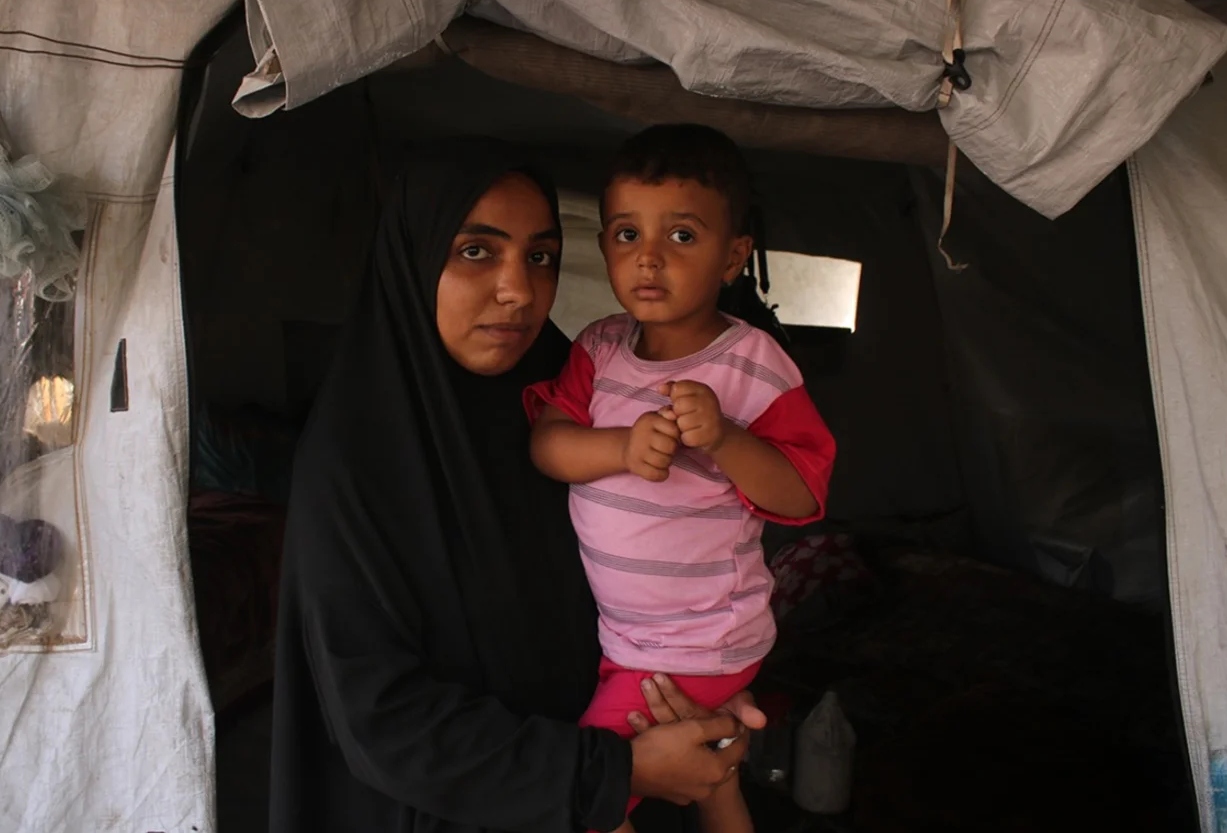
In the rubble-strewn courtyard of a decimated school in Gaza City’s al-Zaytoun neighborhood, four-year-old Zain al-Halawani maintains his daily vigil at the tent entrance, awaiting a father who will never return. His mother, 25-year-old Nada al-Halawani, watches with a heart heavy with the knowledge that her son’s childhood mirrors her own—growing up parentless in a conflict zone.
This poignant scene encapsulates the invisible humanitarian crisis unfolding among Gaza’s most vulnerable populations. Since Israel’s military offensive began in October 2023, official statistics reveal over 16,000 women have been widowed and more than 44,000 children orphaned amidst a death toll exceeding 71,424 Palestinians. These numbers only hint at the profound social catastrophe emerging from the rubble.
The personal tragedies are countless. Ashraf al-Halawani, Zain’s father, was killed by an Israeli sniper while attempting to reach an aid distribution point last September. His body remains unrecovered, officially categorized among Gaza’s 11,000 missing persons. For Nada, this administrative limbo compounds her tragedy—without a death certificate, she cannot register for essential aid distributions that require paternal documentation.
Twenty-seven-year-old Rawand Salim embodies another dimension of this crisis. After losing her husband Mohammed during a February 2025 ceasefire violation, she now navigates the impossible calculus of survival—selling precious wedding jewelry to feed her children, standing in endless lines for contaminated water and meager food portions, and witnessing the psychological deterioration of her young sons.
The trauma manifests physically and emotionally in Gaza’s children: psoriasis outbreaks, hair loss, weakened immune systems, and severe anxiety disorders. Six-year-old Abdelrahman Salim’s attempt to excavate his father’s grave with bare hands represents the profound psychological damage inflicted upon an entire generation.
Compounding these personal tragedies is the systematic destruction of Gaza’s support infrastructure. More than 80% of educational institutions lie in ruins, including specialized schools operated by the Al-Salah Charitable Society that previously provided orphans with free education, meals, and psychological support. Local and international aid organizations have either been destroyed by military operations or forced to suspend services indefinitely.
The United Nations has documented Israel’s ‘systematic obliteration’ of Gaza’s education system—a crucial lifeline for vulnerable populations. Meanwhile, Israel’s continued blockade severely restricts humanitarian aid, creating what UN experts term a ‘policy of starvation’ that disproportionately affects female-headed households.
Despite these overwhelming challenges, Gaza’s widows demonstrate extraordinary resilience. Nada al-Halawani dreams of pursuing graduate studies to provide better opportunities for her son, while Rawand Salim finds solace in her children’s gradual emotional recovery through educational initiatives. Their stories reveal not only the depth of human suffering but also the remarkable endurance of maternal love amidst unimaginable adversity.
As one widow poignantly observed: ‘The world has forgotten about us. Our children have seen horrors no child should ever witness. They are all I have—I give them all my love, time, and effort just to see them smile, to give them a chance for a better future.’