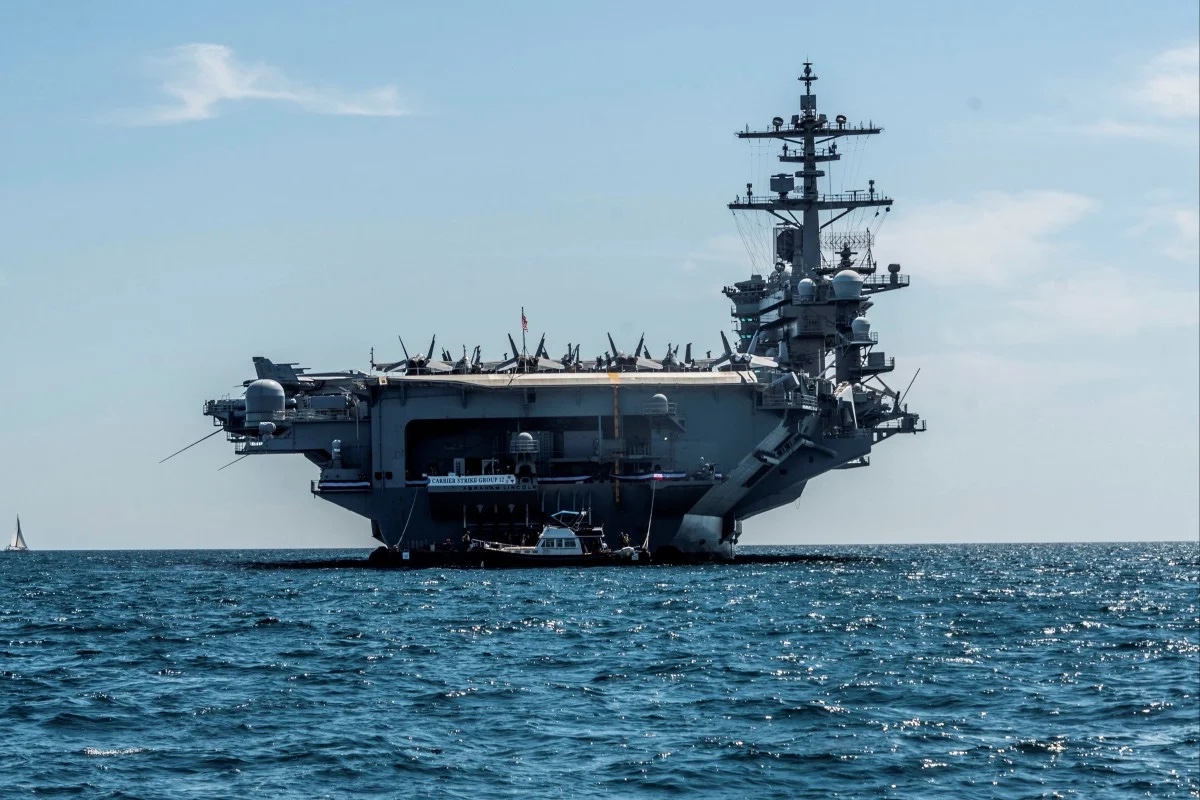
The longstanding geopolitical tension between the United States and Iran has entered another predictable cycle of military posturing and diplomatic maneuvering. Current tensions, ignited by Iran’s severe suppression of domestic protests and the US deployment of the USS Abraham Lincoln carrier strike group to the Persian Gulf, follow a familiar pattern of escalation and de-escalation that has characterized four decades of bilateral relations.
While President Trump threatens severe action against Iran, his administration simultaneously engages in backchannel negotiations through Omani intermediaries. Iran’s Supreme Leader Ali Khamenei warns of regional war while his foreign minister pursues what he characterizes as “fair and equitable” negotiations. Regional powers including Turkey, the UAE, and Saudi Arabia find themselves scrambling to prevent a conflict that none desire.
Historical precedent suggests this confrontation will likely conclude not with military conflict but with a reluctant return to the status quo, framed by both sides as strategic victory. The persistent American fantasy that maximum pressure combined with military threats would force Iranian capitulation has repeatedly proven flawed. The Trump administration’s 2018 withdrawal from the Joint Comprehensive Plan of Action (JCPOA) and subsequent maximum pressure campaign failed to cripple Iran—instead driving Tehran to enrich uranium to near-weapons-grade levels.
The June 2025 Israeli-American strikes on Iranian nuclear facilities similarly failed to eliminate Iran’s nuclear program, instead potentially accelerating Tehran’s determination to acquire deterrent capability. Current proposals for additional carrier deployments and sustained bombing campaigns ignore the fundamental contradiction of demanding negotiations from a position of weakness while simultaneously pursuing military aggression.
Operational realities further complicate military options. Even a sustained air campaign against Iranian nuclear and military facilities—potentially requiring weeks of operations—would trigger formidable retaliation. Tehran’s missile arsenal can reach every US base from Qatar to Iraq, while its proxies retain capacity to strike across the region. The Strait of Hormuz, through which 20% of global oil passes, remains particularly vulnerable.
The critical question overlooked by Washington planners remains: what happens after bombing stops? Historical parallels from American military interventions in Lebanon (1983), Iraq (2003), and Libya (2011) consistently demonstrate outcomes worse than the original problems they aimed to solve. Rather than producing a pliant regime, military action would likely strengthen hardliners, accelerate nuclear weapons development with domestic political legitimacy, and transform a manageable adversarial relationship into a genuine blood feud.
Despite Iran’s domestic upheaval and genuine legitimacy challenges, American military action would likely rally Iranians around the flag rather than empower democratic forces—a fundamental misunderstanding of nationalism’s power. Regional actors, despite differences with Tehran, show no enthusiasm for full-scale US-Iran war, recognizing such conflict would destabilize the entire region, disrupt global energy markets, and potentially draw in Russia and China.
The actual resolution will likely emerge through the unglamorous diplomatic engagement already underway in Muscat. While comprehensive solutions remain unlikely given the complex US-Iran relationship, temporary arrangements addressing immediate concerns represent the most realistic pathway forward. These might include restrictions on Iranian enrichment in exchange for limited sanctions relief, understandings about regional behavior, and mechanisms to prevent military incidents from escalating.
This outcome won’t satisfy hawks or hardliners but represents a preferable alternative to unwinnable military conflict. Recent polling shows 85% of Americans oppose war with Iran, a statistic unlikely to change despite renewed claims that “this time will be different.”
The Trump administration faces a critical choice between continuing the fantasy that threats and pressure will produce Iranian collapse—risking catastrophic conflict—or embracing the messy reality that sustainable arrangements with adversarial powers require mutual accommodation rather than unilateral demands. This doesn’t mean abandoning American interests or ignoring Iranian malign activities, but rather pursuing core security concerns—preventing nuclear weapons and protecting American personnel—through sustainable policies rather than unenforceable maximalist positions.
The current crisis will likely conclude where most such crises end: with both sides stepping back from the brink while claiming achieved objectives, as fundamental tensions remain unresolved. Iran will continue enriching uranium at levels maintaining nuclear threshold capability without crossing into weapons production, while the US maintains military presence and sanctions alongside episodic diplomatic engagement.
This unsatisfying conclusion reflects the reality that some geopolitical problems cannot be solved—only managed. In the Middle East, where American attempts at problem-solving have consistently worsened situations, management begins to resemble wisdom. The alternative—another American war against a more formidable regional adversary than previously faced—would ironically accelerate precisely what Iran most desires: American disengagement from a region where US military presence has become more liability than asset.
Ultimately, dealing with Iran requires not the fantasy of military dominance but the hard work of diplomatic engagement, regional coalition-building, and patient acceptance of outcomes short of total victory. The current confrontation will eventually end through diplomatic channels—the only question remains how much damage will be inflicted before all parties accept this reality.