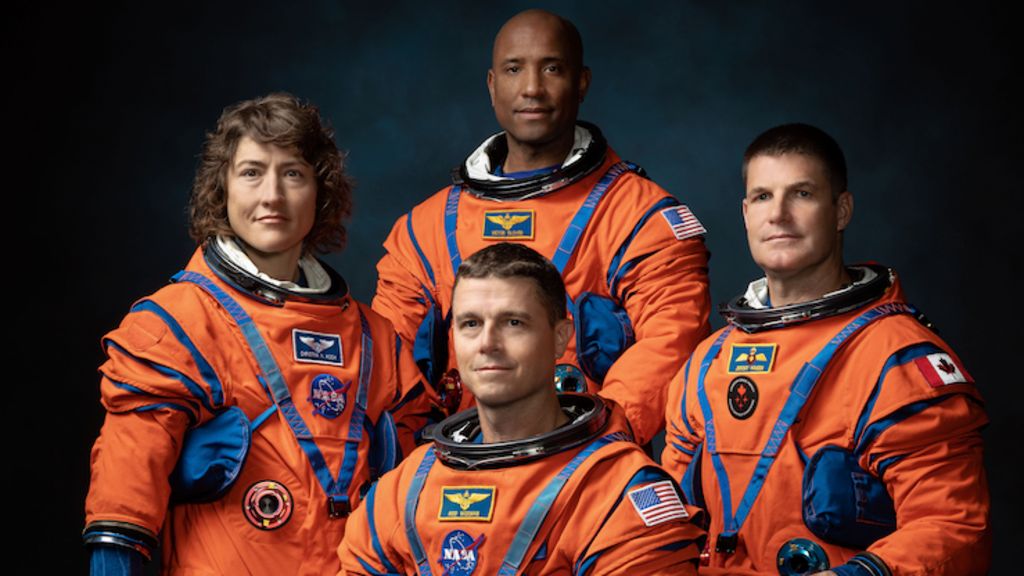
NASA is preparing to launch humanity’s first crewed lunar mission in over half a century as early as February 6th, 2026. The Artemis II expedition represents a monumental leap in space exploration, aiming to send astronauts farther into space than any previous human mission.
The space agency’s ambitious timeline begins with the meticulous rollout of its colossal Space Launch System (SLS) rocket and Orion spacecraft from the Vehicle Assembly Building to Launch Pad 39B. This four-mile journey aboard the crawler-transporter-2, scheduled for January 17th, will require up to twelve hours. Following placement, engineers will initiate comprehensive pad preparations, establishing critical connections for electrical systems, fuel environmental controls, and cryogenic propellant feeds.
A crucial wet dress rehearsal scheduled for late January will test the rocket’s fueling procedures. Should technical issues emerge, NASA may return the spacecraft to the VAB for additional work. If all systems perform optimally, the mission will target one of multiple launch windows in February, March, or April 2026, carefully synchronized with lunar orbital mechanics.
The diverse four-member crew comprises NASA astronauts Reid Wiseman (commander), Victor Glover (pilot), and Christina Koch (mission specialist), alongside Canadian Space Agency astronaut Jeremy Hansen. Their ten-day journey will mark the inaugural crewed flight of both SLS and Orion, featuring extensive testing of spacecraft systems beyond Earth orbit.
Artemis II serves as the critical precursor to Artemis III, which aims to land astronauts on the lunar surface no earlier than 2027-2028. The mission faces several unresolved elements, including the final selection of a lunar lander—either SpaceX’s Starship or Blue Origin’s craft—and the completion of new Axiom spacesuits.
This renewed lunar initiative contrasts sharply with the Apollo program’s Cold War motivations. Artemis embodies an international effort focused on establishing sustainable human presence, with future missions planning construction of the Gateway lunar space station and involving astronauts from Europe and Japan.
The global space race intensifies as China targets a 2030 south pole landing, Russia discusses lunar ambitions despite technical challenges, and India aims for crewed missions by 2040 following its successful Chandrayaan-3 landing.