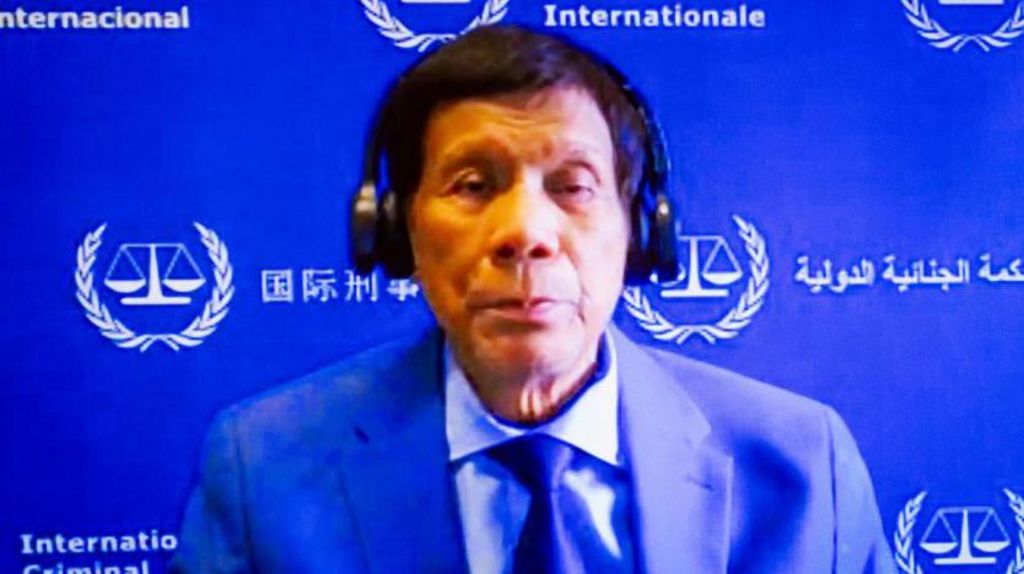
The International Criminal Court (ICC) has commenced a pivotal four-day hearing to determine whether former Philippine President Rodrigo Duterte should face trial for crimes against humanity, marking an unprecedented judicial reckoning for his brutal anti-narcotics campaign. Prosecutors allege Duterte orchestrated a systematic killing program that resulted in tens of thousands of extrajudicial executions during his tenure as mayor of Davao and later as president from 2016-2022.
ICC prosecutor Mame Niang presented evidence alleging Duterte’s direct involvement in at least 76 murders, with charges encompassing murder, attempted murder, and crimes against humanity spanning November 2011 to March 2019. The court heard how Duterte’s ‘Operation Double Barrel’ allegedly utilized police officers and hired assassins to ‘neutralize’ individuals branded as criminals, primarily targeting urban poor communities while largely ignoring high-level drug traffickers.
The 80-year-old former leader, who remains detained in The Hague since his dramatic arrest last March, waived his right to attend the proceedings, maintaining his innocence while rejecting the court’s jurisdiction. His lawyer cited health reasons and continued non-recognition of the ICC’s authority, echoing Duterte’s statement that the charges constitute ‘an outrageous lie.’
This legal confrontation stems from a complex political unraveling between the Philippines’ two most powerful families. The once-formidable alliance between Duterte and current President Ferdinand Marcos Jr.—forged during the 2022 elections that saw Marcos win the presidency with Duterte’s daughter Sara as vice-president—has deteriorated into open hostility. Analysts suggest Marcos’s reversal on ICC cooperation, after initially refusing collaboration, enabled Duterte’s extradition amid their escalating power struggle.
The case represents the first ICC prosecution of an Asian former head of state and tests the court’s ability to hold leaders accountable for domestic policies when national judicial systems fail to act. Human rights monitors estimate up to 30,000 fatalities during Duterte’s drug war, though the precise death toll remains uncertain. The court must now decide within 60 days of the hearing’s conclusion whether sufficient evidence exists to proceed to full trial, potentially setting a landmark precedent for international justice.