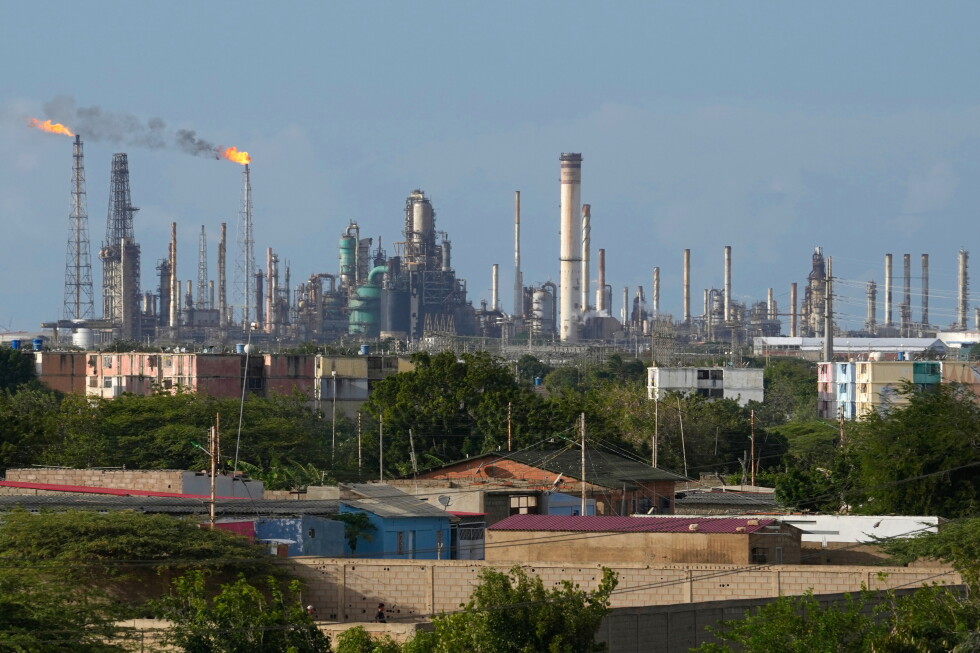
Weeks after U.S. forces conducted a controversial overnight raid that removed former Venezuelan President Nicolás Maduro from power and brought him to New York to face federal drug trafficking charges, U.S. President Donald Trump has made a dramatic announcement: what he calls “the biggest oil deal in world history” for Venezuela’s massive untapped crude reserves. Beyond a single social media post from Trump, however, the White House has released almost no additional verified information about the agreement, leaving policy experts, industry analysts and Venezuelan citizens with far more questions than answers.
According to limited details shared by acting Venezuelan President Delcy Rodríguez and an anonymous U.S. official who spoke on condition of anonymity, the agreement creates a new joint private company between the U.S. government and an undisclosed Venezuelan private operator. This new entity has been granted 100-year drilling rights to 17 undeveloped Venezuelan oil fields holding 65 billion barrels of proven oil reserves. The deal grants the U.S. 55% of the company’s effective output, split between an official ownership stake and discounted rights to purchase crude at production cost. All U.S.-sourced oil from the venture will be allocated to the nation’s Strategic Petroleum Reserve and military fuel supplies. The unnamed U.S. official confirmed that the new firm would become the second-largest corporate holder of proven oil reserves globally, trailing only Saudi Aramco. Rodríguez has framed the agreement as a critical catalyst for Venezuela’s economic recovery, arguing the deal could attract up to $100 billion in new investment to the country’s oil sector and generate more than $209 billion in tax revenue for the Venezuelan government over the life of the contract. Trump added that the deal was negotiated by U.S. Secretary of State Marco Rubio, Defense Secretary Pete Hegseth, and Rodríguez.
For Trump, the deal aligns with two key policy and political priorities: advancing his long-stated goal of unlocking Venezuelan energy resources for U.S. use, and easing persistent high gas prices ahead of November’s U.S. midterm elections. Ongoing conflict in Iran has disrupted Persian Gulf oil shipments, keeping global crude prices elevated and pushing U.S. domestic gas prices far above 2023 levels. As of Saturday, AAA data put the U.S. national average for a gallon of regular gas at $4.08, up from $3.20 per gallon one year prior. Trump has publicly claimed the deal will bring down gas costs for American consumers, but energy experts uniformly push back on that near-term promise.
Venezuela’s oil extraction and transportation infrastructure has been decaying for decades, requiring billions of dollars in investment and years of reconstruction before any meaningful production increase can occur. “This could be helpful in the long run, but it’s not going to do anything to change the price of gasoline at the retail station for Labor Day weekend,” explained Amy Myers Jaffe, director of the Energy, Climate Justice and Sustainability Lab at New York University. That assessment is shared by other industry analysts, who note that critical details about funding for infrastructure repairs remain entirely unaddressed by both sides of the agreement. No full text of the deal has been released to the public, and officials have not confirmed which entity will cover the upfront costs of modernizing the sector.
The announcement has already sparked sharp division within Venezuela, where national sovereignty over oil resources has been a core nationalist principle for decades. Many Venezuelans view the deal as an outright betrayal of that long-held commitment. In an on-the-record interview at a Caracas market Saturday, local resident Douglas Borjas expressed fierce criticism of the agreement, arguing that acting leaders had traded national resources to retain power. “Venezuela has resources that can be exploited, but for the benefit of the people, not for the benefit of the corrupt elite,” Borjas said. The criticism extends to prominent Venezuelan economists and former officials based abroad: Harvard University professor and former Venezuelan planning minister Ricardo Hausmann labeled the agreement a “shameful deal” in a social media post, arguing that Rodríguez lacks constitutional and legitimate authority to sign such an agreement on Venezuela’s behalf. “Venezuelans will not respect this illegitimate deal and no major US oil company will take it seriously because they know it will not last,” Hausmann wrote.
A long list of critical questions about the deal remains unresolved months after the Maduro raid and days after Trump’s announcement. The identity of the private Venezuelan operator involved in the joint venture has not been disclosed, and the breakdown of the U.S.’ 55% output share—how much comes from direct ownership versus discounted purchases—remains unclear. Persuading major U.S. oil firms to participate in the venture also remains an open question, given the country’s ongoing political uncertainty and crumbling infrastructure. Chevron, the only U.S. oil company currently producing crude in Venezuela, declined to comment on the deal, though the firm has been holding independent talks to expand its existing investments in the country separate from Trump’s announcement.
David Oxley, chief climate and commodities economist at Capital Economics, noted that the agreement could theoretically double U.S. proven oil reserves and reduce American dependence on crude imports from Canada and Mexico. But Oxley cautioned that significant logistical barriers stand in the way of that outcome, adding that previous reserve estimates under former Venezuelan President Hugo Chávez likely inflated the actual size of Venezuela’s untapped deposits. Even with full legal and security guarantees from U.S. and Venezuelan acting authorities, Oxley concluded that “it is not clear that U.S. oil companies would be eager to invest,” noting that “there simply might be more enticing commercial opportunities on offer elsewhere.”