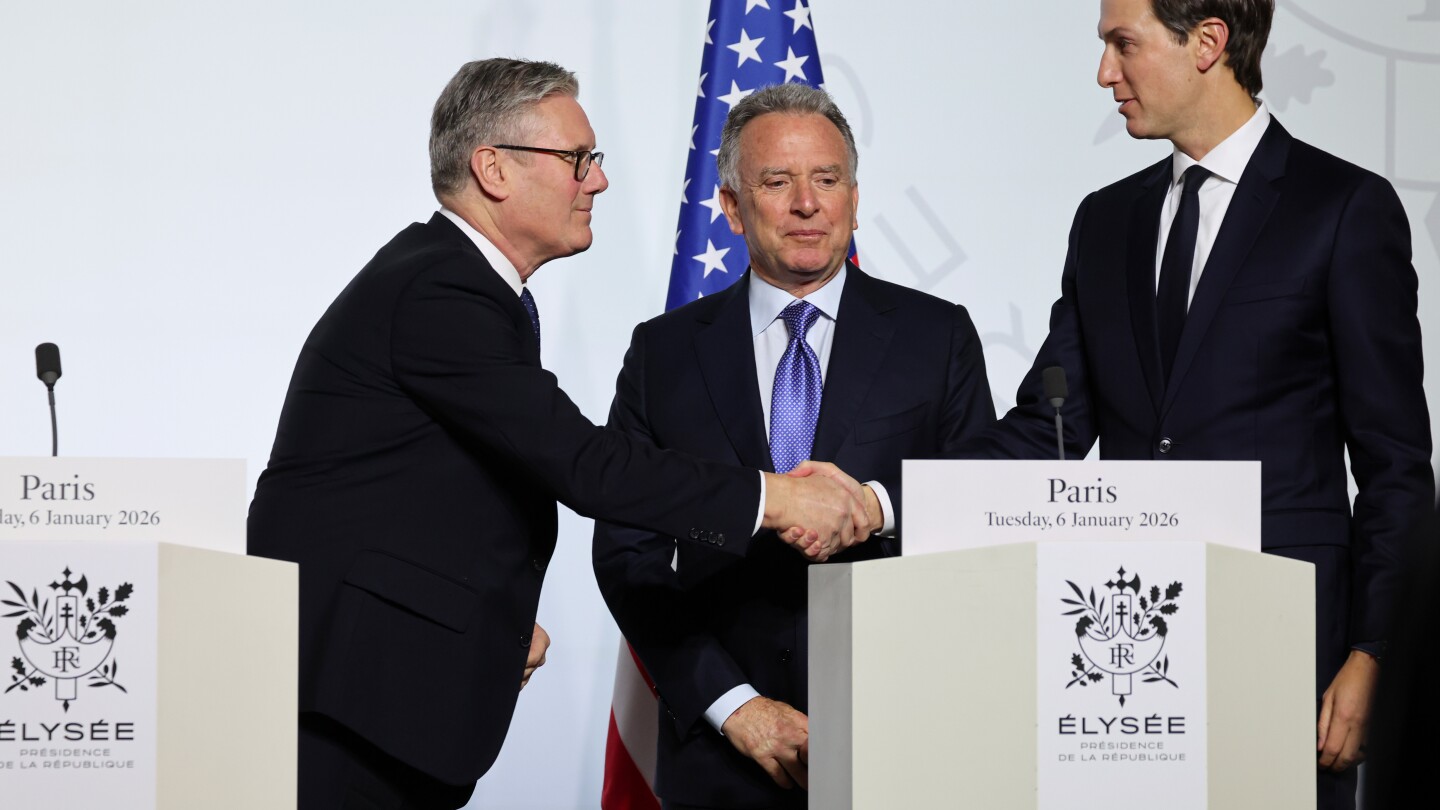
PARIS — In a significant diplomatic development, Western nations have united to establish a comprehensive security architecture aimed at safeguarding Ukraine against potential future Russian aggression. The high-level gathering in Paris brought together leaders from European countries, Canada, and senior officials from both the European Union and NATO, alongside U.S. representatives, marking the most substantial collective effort to date in planning Ukraine’s long-term security.
The consensus framework, endorsed by participating nations, outlines multilayered security guarantees designed to take effect following any ceasefire or peace settlement with Russia. Central to this agreement is the recognition that Ukraine’s armed forces will serve as the primary deterrent against future attacks, with international partners committing to sustained military assistance and arms provisions even after active hostilities conclude.
French President Emmanuel Macron characterized the joint statement as a “significant step” toward resolving Russia’s ongoing invasion, though Moscow officials remained silent regarding the Paris meeting. The proposed security measures encompass five critical components: ceasefire monitoring mechanisms, continued support for Ukrainian armed forces, potential deployment of multinational forces across land, sea, and air domains, agreed response protocols for any future Russian aggression, and establishment of long-term defense cooperation with Ukraine.
British Prime Minister Keir Starmer revealed that the United Kingdom and France plan to establish military installations throughout Ukraine to facilitate weapons storage and equipment protection, though any European troop deployments would require legislative approval in respective nations. U.S. envoy Steve Witkoff affirmed American support for the security guarantees without specifying military contributions.
Ukrainian President Volodymyr Zelenskyy acknowledged progress in the talks while emphasizing that individual national ratifications must precede implementation. He noted that participants had identified leadership countries for various security elements and determined necessary force structures, though operational details, financing arrangements, and monitoring mechanisms remain unresolved.
Prime Minister Starmer cautioned that “the hardest yards are still ahead,” highlighting continued Russian attacks and Vladimir Putin’s apparent unwillingness to pursue peace. The discussed security measures would only activate following a ceasefire or comprehensive settlement and subsequent domestic approval processes—a complexity Zelenskyy acknowledged by noting that not all nations are prepared to commit forces, with some preferring weapons, technology, or intelligence support instead.
Russia maintains that ceasefire discussions cannot occur without a comprehensive settlement and has explicitly rejected any NATO troop presence on Ukrainian territory. Ukrainian officials have repeatedly warned that any ceasefire lacking enforceable guarantees could provide Moscow opportunity to regroup and launch renewed offensive operations.
The Paris framework currently lacks binding commitments, leaving Ukraine dependent on allies’ political will to transform conceptual plans into operational realities. Potential obstacles include legislative approval requirements, unresolved force structure details, financing uncertainties, and transatlantic coordination challenges—all factors that could substantially delay or dilute the proposed security assurances.
The participation of 35 representatives, including 27 heads of state or government, underscored the coalition’s breadth, though Zelenskyy observed that the coalition’s very existence depends on specific nations enhancing their engagement. For Ukraine, the paramount concern remains that deterrence mechanisms remain theoretical while active warfare continues.