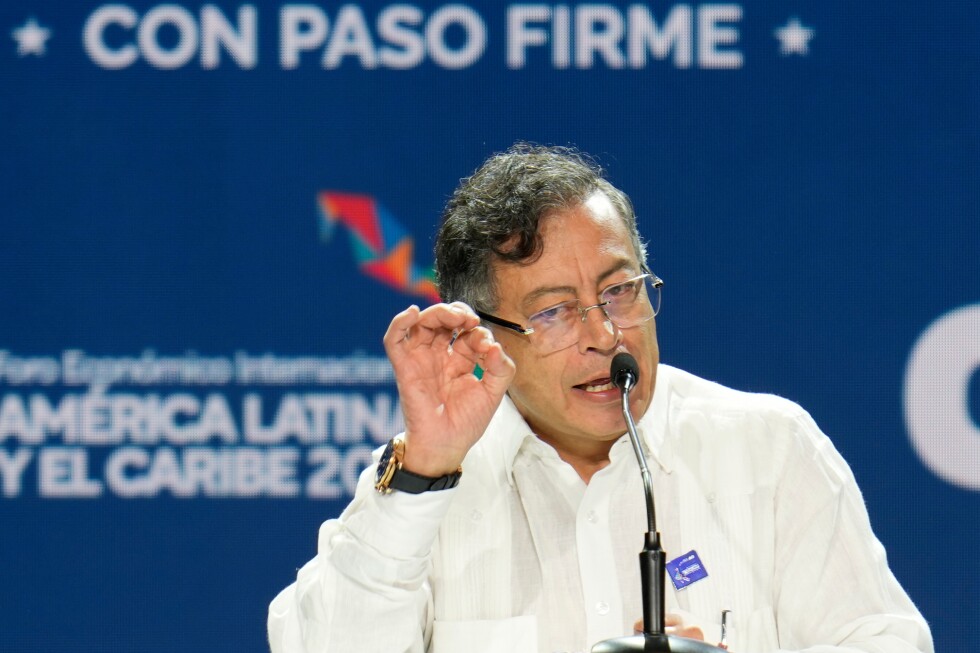
WASHINGTON — In a remarkable diplomatic pivot, U.S. President Donald Trump is preparing to welcome Colombian President Gustavo Petro to the White House, marking a dramatic de-escalation following months of heightened tensions between the two nations. This high-stakes encounter comes after a period of extraordinary public friction that included personal insults, economic threats, and fundamental policy disagreements.
The relationship between these two leaders reached a breaking point when Petro characterized Trump as an ‘accomplice to genocide’ in Gaza, while the U.S. president retaliated by labeling Petro a ‘drug lord.’ This verbal warfare escalated into concrete actions: the imposition of U.S. sanctions against Colombia, withdrawal of financial assistance, threats of reciprocal tariffs, and even implied military action.
A critical turning point emerged in early January when Trump accepted a diplomatic overture from Petro, subsequently describing their conversation as a ‘great honor.’ This phone discussion, focused on addressing drug trafficking concerns and other bilateral disagreements, established the foundation for Tuesday’s anticipated summit.
At the core of the discussions will be contrasting approaches to narcotics enforcement. The United States maintains its traditional emphasis on aggressive eradication and supply-side control strategies. Conversely, the Petro administration advocates for interdiction efforts, demand reduction initiatives, and creating economic alternatives for small-scale coca farmers.
This philosophical divergence culminated in 2025 with the U.S. formally designating Colombia as non-cooperative in anti-drug efforts—the first such classification in three decades. Despite Petro’s emphasis on record drug seizures and claims of stabilized coca cultivation, United Nations data reveals a 65% surge in potential cocaine production during his administration, exceeding 3,000 metric tons annually.
The Venezuela situation further complicated bilateral relations. Petro vehemently condemned the January 3rd U.S. operation in Caracas that captured President Nicolás Maduro and his wife, denouncing it as an ‘act of aggression’ and comparing it to Nazi Germany’s bombing of Guernica. However, his subsequent hour-long discussion with Trump significantly softened his tone, creating diplomatic space for reconciliation.
According to Gimena Sánchez-Garzoli of the Washington Office on Latin America, Trump’s engagement with Petro served to address growing regional concerns about U.S. operations in Venezuela. Both leaders are expected to explore collaborative actions against drug trafficking networks and coordinated efforts against the National Liberation Army (ELN) guerrilla group operating along the Venezuela-Colombia border.
Signaling improved relations ahead of the summit, Colombia’s Foreign Ministry announced the resumption of deportation repatriation flights from the United States—a stark reversal from last year’s near trade war triggered by Colombia’s refusal of U.S. military deportation flights. This conflict was only resolved after Trump threatened substantial tariffs and visa cancellations.
Elizabeth Dickinson of the International Crisis Group noted, ‘There’s significant potential for mutual cooperation and shared success.’ She added that the optimal outcome would be ‘a cordial, pragmatic relationship where both countries return to their historical pattern of quiet, effective cooperation on shared security threats. The less noise surrounding this relationship, the better.’