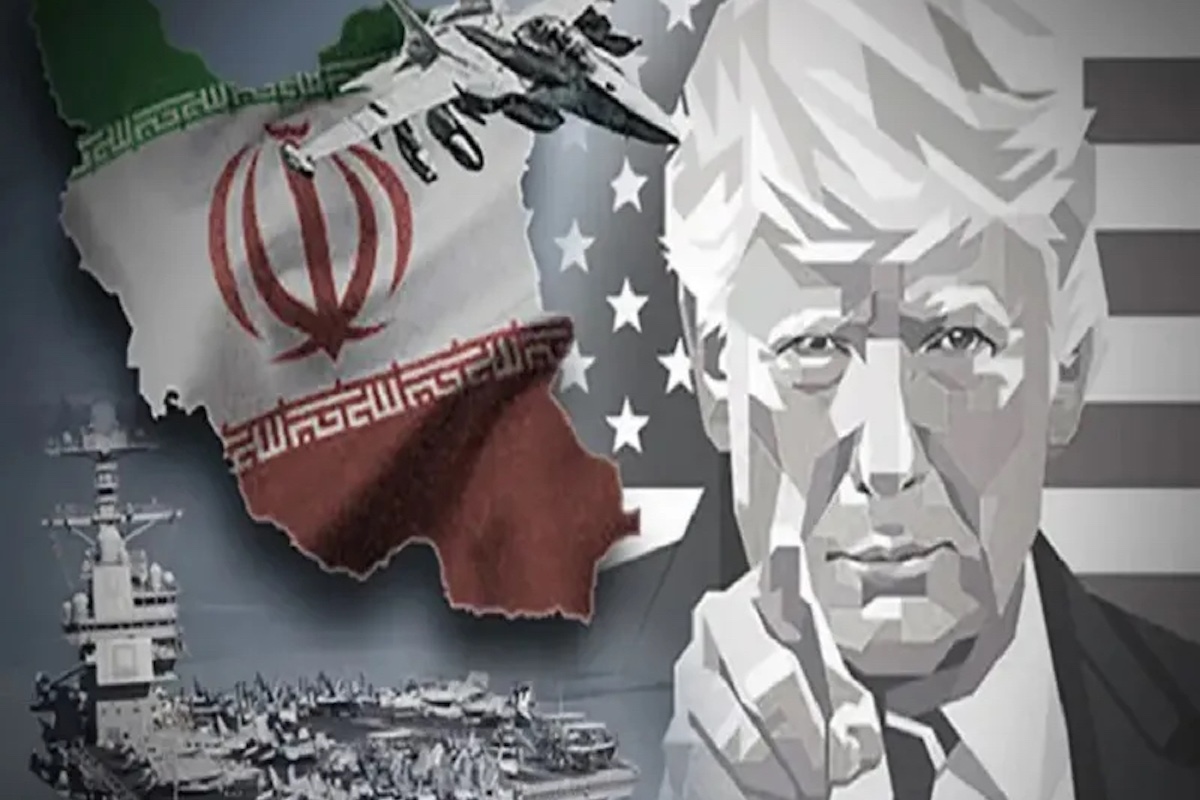
Tensions between the United States and Iran appear to have eased temporarily following widespread reports of a two-week ceasefire agreement, a deal that has yet to be officially confirmed by either government and that averted an open military confrontation after former U.S. President Donald Trump threatened to destroy Iran if hostilities escalated.
Contradiction and confusion have marked public messaging around the reported deal: CNN and other major international outlets cited a statement from Iran’s Supreme National Security Council confirming the truce, but Trump quickly dismissed that account as fabricated. Instead, the former president shared a cryptic post from Iranian Foreign Minister Seyed Abbas Araghchi on X to his Truth Social platform, leaving the full terms of any potential agreement unconfirmed and open to interpretation.
Regardless of the ambiguity surrounding the ceasefire’s details, direct negotiations between Washington and Tehran are scheduled to resume this Friday, April 10, in Islamabad. This moment of temporary de-escalation offers an opportunity to break down five critical preliminary observations about the strategic landscape shaping the talks:
1. Israel will align its actions with U.S. leadership
While Israeli leaders have long pushed for the U.S. to pursue shared strategic goals against Iran through military action, analysts agree the country will not openly obstruct the ceasefire process. Israel risks alienating its closest ally and being left to face Iran alone if it derails the truce, leading it to formally accept the current agreement. This cooperation in turn clears the way for Friday’s planned negotiations to move forward as scheduled.
If talks do stall, however, Israel may choose to provoke Iran into resuming full-scale hostilities if it assesses that the U.S. will join the conflict on its side. No such provocation is likely as long as negotiations show signs of progress.
2. Multiple competing demands will shape security negotiations
Iran’s core non-negotiable demand centers on a U.S. military drawdown in the Persian Gulf, ranging from a return to pre-conflict force positions to a full withdrawal from the region. On the opposing side, the U.S. and Israel are pushing for two key concessions: the elimination of Iran’s stockpiles of enriched uranium, and at minimum the implementation of strict international monitoring of Iran’s nuclear program alongside binding limits on its ballistic missile development.
The U.S. has also retained the leverage of reimposing sweeping sanctions, including harsh secondary restrictions, if hostilities resume. Beyond the U.S.-Iran dynamic, broader regional military shifts are already underway: the United Arab Emirates is moving toward a formal military alliance with Israel, while other Gulf states are consolidating their military coordination under the leadership of Saudi Arabia.
3. The petroyuan is unlikely to be accepted in any final deal
One widely reported Iranian demand that is expected to be dropped from any final peace agreement is the requirement that all payments for safe transit through the Strait of Hormuz be made in Chinese yuan, a system referred to as the petroyuan. U.S. negotiators are strongly opposed to any arrangement that would elevate the yuan as a competitor to the petrodollar system that underpins the global oil market.
Instead, the U.S. is pushing for a framework where Iran splits transit payments with Oman in U.S. dollars as a form of reparation, a structure that would further strengthen the petrodollar’s dominant position. Washington is also expected to demand that Iran gradually reduce its oil sales to China to zero as a core condition for permanent sanctions relief, even if that commitment is only agreed to informally.
4. A history of broken negotiations raises fears of another trap
Iran has repeatedly warned the international community that the U.S. launched two separate military attacks against Iranian targets while negotiations were ongoing in past conflicts, leaving Tehran deeply skeptical of American commitments. This history leaves open the possibility that a third attack could come during the current ceasefire period.
In this scenario, Trump’s earlier threat to destroy Iran may have been issued without prior coordination with Israel and Gulf Arab monarchies, leaving those allies more vulnerable to immediate Iranian retaliation than they would have been with advance preparation time. Even if regional leaders would prefer to avoid this sequence of escalation, the two-week ceasefire window gives them critical time to shore up their defenses against any potential sudden shift.
5. The permanent threat of catastrophic global change remains
If the U.S. follows through on its threat to completely destroy Iran as a functional state, Iranian leaders have made clear they will use all military capabilities at their disposal to bring down Gulf Arab monarchies alongside them. A full-scale regional war would halt energy exports from the Persian Gulf indefinitely, throwing the entire Afro-Eurasian landmass into widespread economic and political chaos. This scenario would play out as the U.S. withdraws its formal military presence to a “Fortress America” strategy focused on the Western Hemisphere, from which it would pursue a divide-and-rule strategy for competing powers in the Eastern Hemisphere.
This “Sword of Damocles” hanging over the global order — the constant risk of radical, catastrophic change — remains in place and cannot be ignored amid temporary de-escalation.
Both Washington and Tehran have publicly declared victory in the recent conflict, but the war cannot be considered fully over until a permanent bilateral agreement is reached. Analysts note that any final deal may incorporate key elements from a proposal put forward by former Iranian Foreign Minister Mohammad Javad Zarif, published in *Foreign Affairs* just last week. Until that deal is finalized, it remains far too early to name a definitive winner. The true outcome of the conflict will only be clear once the fates of Iran’s enriched uranium stockpile, its nuclear and missile programs, its oil exports to China, and the proposed petroyuan system are resolved. This article was originally published on Andrew Korybko’s Substack and republished with edits for clarity here.