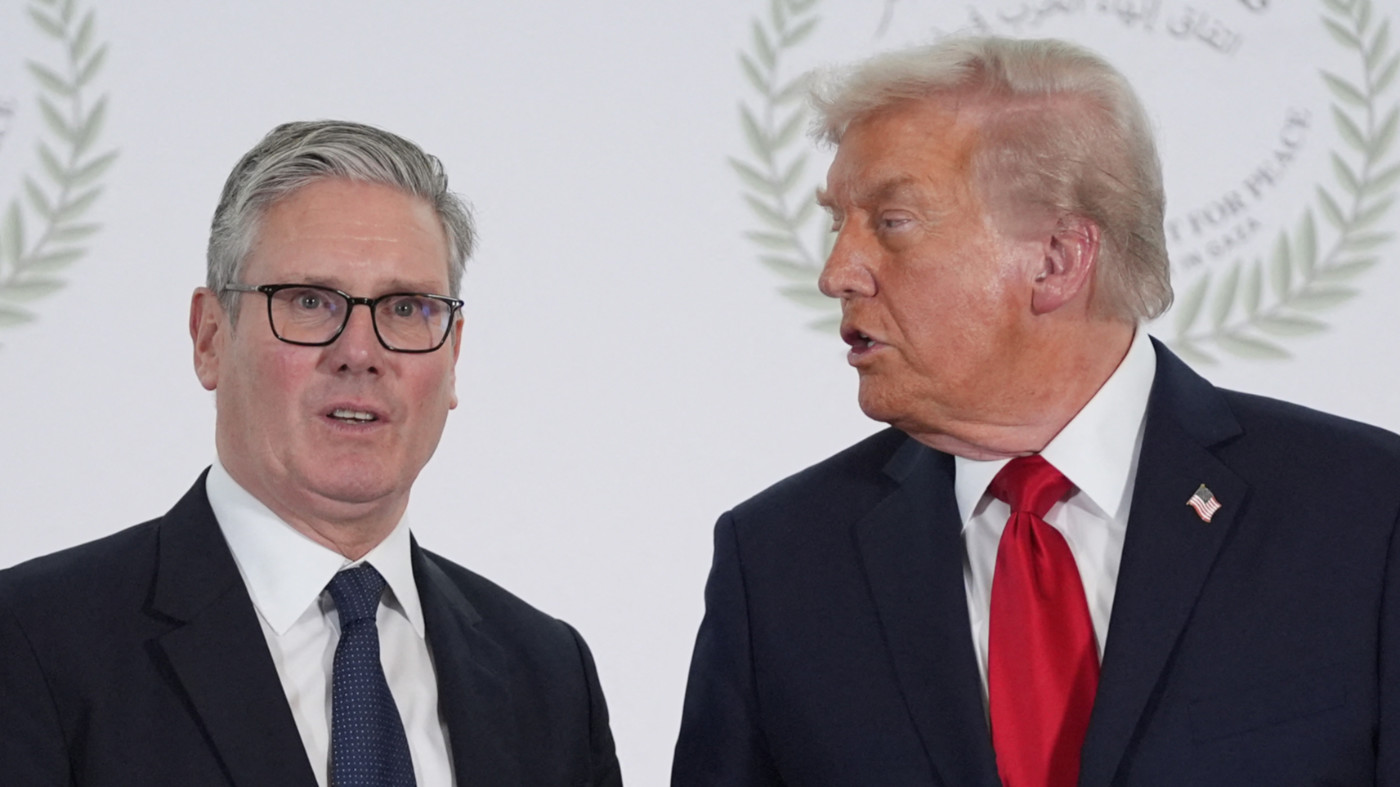
In a striking diplomatic confrontation, former US President Donald Trump has publicly criticized UK Prime Minister Keir Starmer for refusing to permit American military strikes against Iran to originate from British bases. The March 3rd remarks saw Trump labeling London as “uncooperative” while dismissively comparing Starmer to Winston Churchill, marking the latest in a series of tensions since Trump’s 2025 return to office.
This contemporary friction echoes historical disagreements that have periodically tested the famed ‘special relationship’ between the two nations. The term, popularized by Churchill during his 1946 ‘Sinews of Peace’ address in Missouri, has often masked underlying strategic divergences that emerge when national interests collide.
Historical precedents reveal consistent patterns in transatlantic disputes. In 1946, President Truman’s unilateral advocacy for Jewish refugee settlement in Palestine angered Prime Minister Attlee, ultimately contributing to Britain surrendering its mandate to the UN. The 1956 Suez Crisis created perhaps the most severe strain when President Eisenhower opposed Anglo-French military action, employing economic pressure that forced a humiliating withdrawal.
Nuclear dependency created another flashpoint in 1962 when President Kennedy’s cancellation of the Skybolt missile program threatened Britain’s deterrent capability, resolved only through the Nassau Agreement that provided Polaris missiles. Similarly, President Johnson’s pressure for UK involvement in Vietnam met with steadfast refusal from Prime Minister Wilson, despite intense diplomatic pressure.
More recent disagreements include Reagan’s invasion of Grenada without consulting Thatcher, Clinton’s visa grant to Sinn Féin’s Gerry Adams despite Major’s objections, and Obama’s criticism of Cameron’s post-intervention management in Libya. The 2021 Afghanistan withdrawal further highlighted strategic differences, with UK officials criticizing the US timeline and agreement.
These historical episodes demonstrate that while the US-UK alliance remains fundamentally strong, it consistently navigates tensions arising from differing geopolitical priorities, domestic political constraints, and evolving global power dynamics. The relationship’s resilience lies not in absence of conflict but in its capacity to manage disagreements while maintaining core security cooperation.