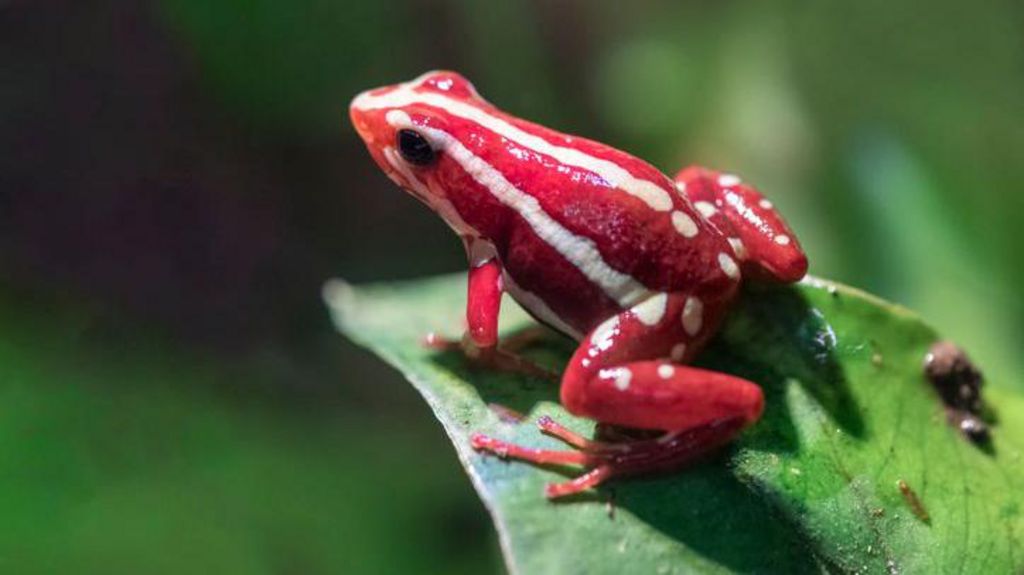
In a coordinated declaration, the United Kingdom alongside several European allies has formally attributed the death of Russian opposition leader Alexei Navalny to a rare neurotoxin derived from South American poison dart frogs. Official statements indicate that laboratory analysis confirmed traces of epibatidine, an exceptionally potent compound, within samples taken from Navalny’s body. The allies asserted that the Russian state singularly possessed the “means, motive and opportunity” to deploy such an obscure biological agent.
The Kremlin has vehemently rejected these allegations. Russian state-run news agency Tass quoted government spokesperson Maria Zakharova dismissing the findings as a baseless “information campaign” engineered to divert attention from Western political issues. The Russian embassy in London further decried the announcement as “feeble-mindedness” and “necro-propaganda.”
Epibatidine, as explained by toxicology expert Jill Johnson, is a natural compound isolated from the skin of Ecuadorian poison dart frogs, notably the Anthony’s poison arrow frog and the Phantasmal poison frog. It is estimated to be 200 times more potent than morphine. Professor Alastair Hay, an environmental toxicologist at the University of Leeds, detailed its mechanism: the toxin overstimulates nicotinic receptors in the nervous system, which can lead to muscle paralysis, respiratory failure, and ultimately death by suffocation. Its presence in human blood is a strong indicator of deliberate administration.
The rarity of this toxin underscores the gravity of the accusation. Epibatidine is not found naturally in Russia. Its production is contingent on a specific ecological chain; the frogs synthesize it only by consuming a precise diet of alkaloid-rich insects in their native habitats of Ecuador and Peru. Consequently, frogs in captivity do not produce the toxin. Johnson emphasized that finding a wild frog producing the exact required compound is “almost impossible,” and known cases of human epibatidine poisoning are virtually nonexistent outside of controlled laboratory accidents, which were non-fatal.
Navalny died two years ago in a Siberian penal colony, where he had been imprisoned for three years following his return to Russia. Official Russian accounts claimed he felt unwell after a walk before collapsing and dying of natural causes—a narrative staunchly contradicted by his widow, Yulia Navalnaya, who has consistently stated her husband was murdered. This latest accusation from European nations reignites international scrutiny on the Kremlin’s alleged involvement in the dissident’s death.