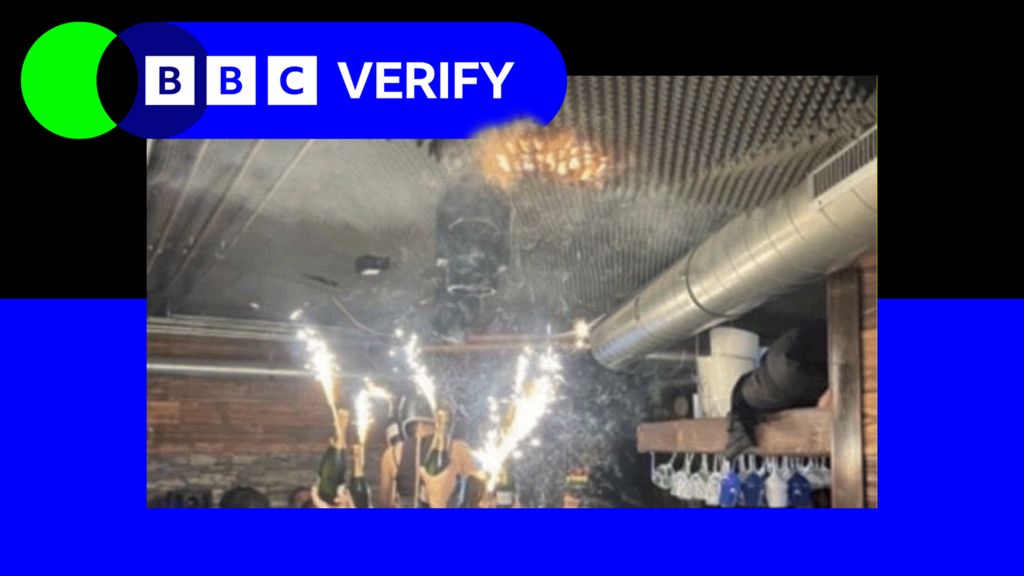
Swiss authorities are investigating the catastrophic New Year’s Eve fire at Le Constellation bar in Crans-Montana that claimed 40 lives and injured 119 people. Official reports indicate that champagne bottle sparklers held dangerously close to the ceiling ignited the blaze in the basement venue. However, the extreme rapidity of the fire’s spread has raised critical questions about safety protocols and construction materials.
Forensic analysis of verified video evidence shows revelers celebrating with pyrotechnic-adorned bottles moments before combustion. BBC Verify authenticated footage showing flames erupting directly from ceiling areas where sparklers made contact. The subsequent fire progression suggests a devastating ‘flashover’ phenomenon where superheated gases triggered near-instantaneous combustion throughout the space.
Fire safety experts identified potentially combustible polyurethane acoustic foam lining the ceiling as a major contributing factor. Dr. Peter Wilkinson of Loughborough University warned that untreated PU foam ‘can exhibit rapid flame spread and produce dense, toxic smoke.’ Professor Edwin Galea of Greenwich University added that fire-retardant treatments can degrade over time, compromising safety.
The investigation now encompasses multiple failure points: questionable safety inspections of the two-level establishment, potential exit route deficiencies, and the venue’s historical use of sparklers despite obvious risks. Videos from 2024 reveal staff routinely serving champagne with active pyrotechnics, suggesting established but hazardous traditions.
While the bar owners claim compliance with regulatory inspections, authorities confirm examining whether emergency exits were functional during the crisis. Witness accounts describe chaotic escapes through narrow stairwells that became fatal bottlenecks during the panic.
The Office Cantonal du Feu faces scrutiny over inspection frequencies for entertainment venues, with experts noting annual checks should be mandatory for comparable establishments. As forensic teams continue analyzing the tragedy, the case has triggered global reevaluations of nightlife safety protocols during high-risk celebrations.