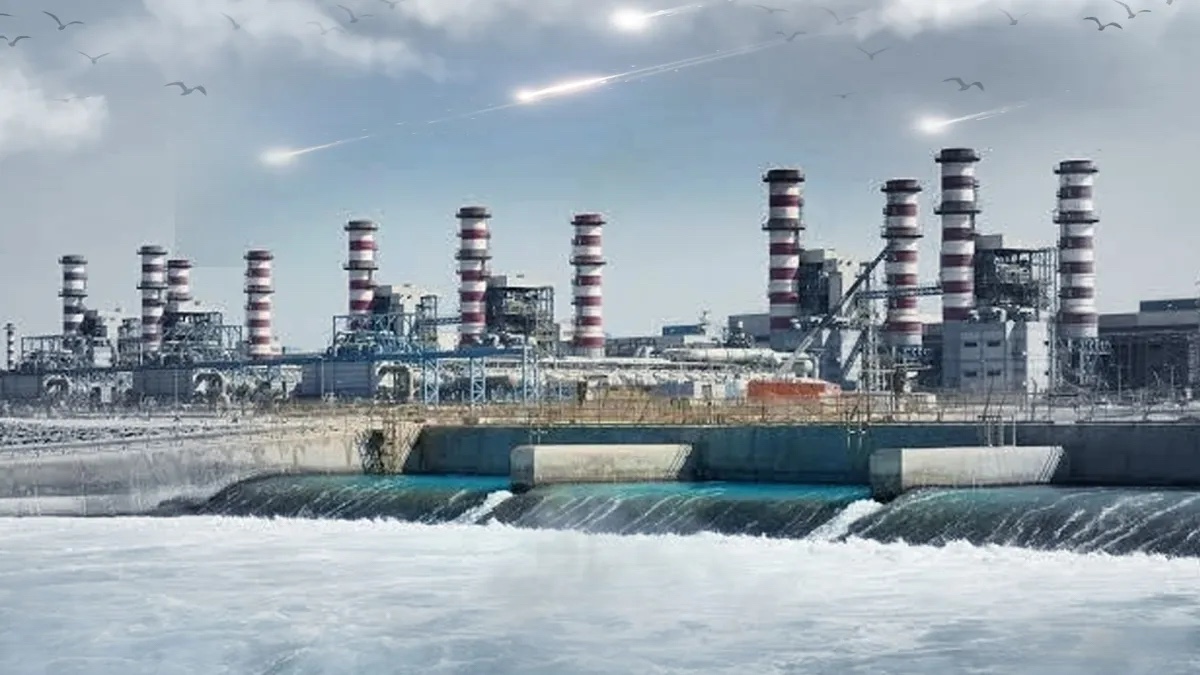
The geopolitical landscape of Gulf security is undergoing a fundamental transformation as water infrastructure emerges as a critical vulnerability in regional conflicts. This shift follows a recent US missile strike on an Iranian desalination facility on Qeshm Island, which Tehran claims establishes a ‘dangerous precedent’ for targeting civilian water systems.
The Gulf Cooperation Council (GCC) states have developed one of the world’s most sophisticated desalination networks, producing nearly half of global desalinated water despite representing less than 1% of the global population. This infrastructure supports modern life across the region: the UAE derives over 80% of its potable water from desalination, while Kuwait depends on it for approximately 90% of drinking water and Saudi Arabia for 70%. Collectively, more than 400 plants generate about 40% of the world’s desalinated water.
Unlike oil infrastructure disruptions that can be mitigated through inventories and price adjustments, attacks on water systems would create immediate and catastrophic consequences. Within hours of disruption, governments would face crises in hospitals, sanitation systems, firefighting capacity, food processing, and residential water supply. The psychological impact would be equally devastating, as populations in these hyper-arid states understand their tap water is directly tied to plant operations.
The vulnerability is structural and multidimensional. Gulf water infrastructure is centralized, coastal, and tightly integrated with energy grids. According to the Middle East Institute, this creates strategic vulnerabilities to both military and cyberattacks. Even limited strikes on seawater intakes, grid connections, or control systems could trigger cascading failures without destroying entire facilities.
Iran’s asymmetric capabilities make this threat particularly acute. With estimated monthly drone production of approximately 10,000 units, Iranian drones have already demonstrated the ability to penetrate Gulf air defenses. Desalination plants represent attractive targets—fixed, coastal, high-value, and politically sensitive—where relatively inexpensive drone campaigns could generate disproportionate coercive pressure.
However, targeting water infrastructure would constitute a profound strategic miscalculation for Tehran. Such attacks would likely collapse remaining Gulf neutrality, accelerate collective defense arrangements, and create a broad-based anti-Iran coalition. Whereas oil facility strikes can be framed as economic coercion, attacks on water systems would be universally perceived as direct assaults on civilian survival.
The policy response requires moving beyond missile defense systems to include deeper water storage, mobile desalination capacity, hardened infrastructure, cyber resilience, and geographic diversification. Most critically, it demands regional cooperation—potentially through an integrated desalination grid stretching from Oman’s Indian Ocean coast to Saudi Arabia’s Red Sea—to create deterrence through redundancy.
This evolving threat represents a fundamental shift in conflict dynamics from deterrence-by-punishment to deterrence-by-deprivation, moving the confrontation from strategic assets to household survival thresholds. As water becomes the Gulf’s hidden strategic chokepoint, the very functionality of modern Gulf cities could become the central stake in regional conflicts.