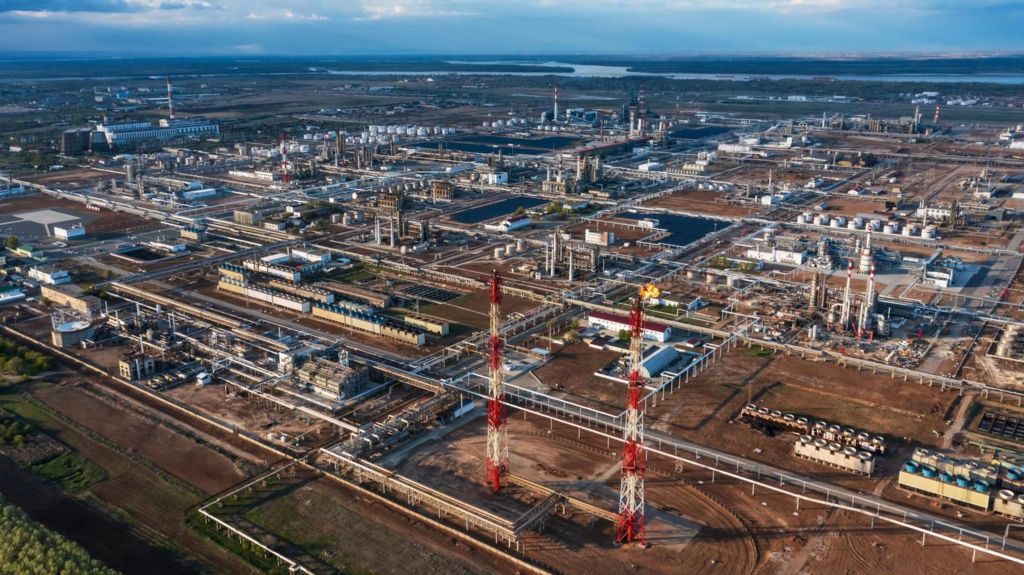
In a significant escalation of economic measures, US President Donald Trump announced stringent new sanctions targeting Russia’s two largest oil producers, Rosneft and Lukoil. The move, unveiled via Trump’s Truth Social platform, aims to pressure Moscow into ending its ongoing conflict in Ukraine. US Treasury Secretary Scott Bessent emphasized that these companies are critical financiers of the Kremlin’s military operations, describing the sanctions as a response to Russian President Vladimir Putin’s refusal to halt what he termed a “senseless war.”
The sanctions, administered by the US Department of the Treasury’s Office of Foreign Assets Control (OFAC), effectively blacklist Rosneft and Lukoil, which together account for nearly half of Russia’s crude oil exports. Rosneft, a state-controlled entity led by Putin’s close ally Igor Sechin, is responsible for almost half of Russia’s oil production, contributing 6% of global output. Lukoil, a privately held firm, also plays a pivotal role in Russia’s energy sector. Combined, the two companies export approximately 3.1 million barrels of oil daily.
Trump’s decision follows similar measures by the UK and comes just a day after he indefinitely postponed a planned meeting with Putin in Budapest. The US president expressed frustration over the lack of progress in peace negotiations, stating, “Every time I speak to Vladimir, I have good conversations and then they don’t go anywhere.”
Experts suggest the sanctions have dual objectives: to cripple Russia’s industrial capacity to wage war and to coerce Moscow into accepting peace terms. Dr. Stuart Rollo of the University of Sydney’s Centre for International Security Studies noted that while the sanctions may not immediately alter the military balance in Ukraine, they could force Russia to reconsider its stance as economic pressures mount. Michael Raska of Nanyang Technological University added that shrinking profit margins may compel Russia to choose between socio-economic stability and financing a protracted conflict.
The sanctions are expected to have far-reaching implications, not only for Russia but also for its major oil importers, including China and India. Both nations have significantly increased their reliance on Russian energy since the Ukraine war began. Trump has urged these countries to halt purchases of Russian oil, warning of potential secondary sanctions. Indian state refiners are reportedly reviewing their trade documents to ensure compliance, while Reliance, India’s top buyer of Russian oil, is recalibrating its imports.
The announcement has already caused global oil prices to surge, with Brent crude rising by 5%. While the long-term impact on oil prices remains uncertain, the immediate effect underscores the interconnectedness of global energy markets and the potential for further economic disruptions.