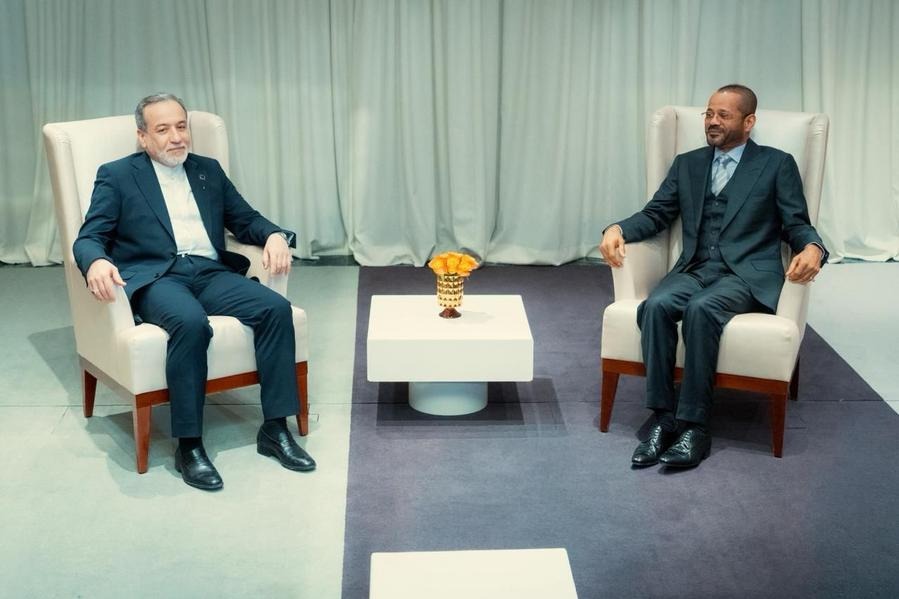
Geneva has become the focal point for renewed diplomatic efforts as an Iranian delegation, headed by Foreign Minister Seyed Abbas Araghchi, arrives for a second round of indirect nuclear negotiations with the United States. Scheduled for Tuesday, these critical discussions are being facilitated by Omani mediators, continuing the dialogue initiated in Muscat on February 6th.
The American contingent is led by President Donald Trump’s special envoy Steve Witkoff alongside senior advisor Jared Kushner. This meeting occurs against a backdrop of escalating military posturing and fundamental disagreements that have plagued US-Iranian relations since the collapse of the 2015 nuclear accord.
The core positions of both nations remain substantially divergent. Washington maintains that any viable agreement must encompass a complete prohibition on uranium enrichment, disposal of existing enriched material, constraints on long-range missile development, and cessation of support for regional proxy forces. These demands have found vocal support from Israeli Prime Minister Benjamin Netanyahu, who has expressed skepticism about potential diplomatic breakthroughs.
Tehran, while expressing willingness to reach a “fair and equitable” arrangement that would provide sanctions relief, has firmly established two non-negotiable boundaries: preservation of its right to peaceful nuclear energy and maintenance of its defensive missile capabilities. Iranian President Masoud Pezeshkian has repeatedly emphasized that Iran does not pursue nuclear weapons and is prepared to undergo verification processes, while simultaneously rejecting what he characterizes as excessive demands and aggression.
The current impasse originates from the disintegration of the Joint Comprehensive Plan of Action (JCPOA), which began when the Trump administration unilaterally withdrew from the agreement in 2018 and reinstated comprehensive sanctions. Iran responded by incrementally reducing its compliance, eventually enriching uranium to 60% purity—far exceeding the JCPOA’s 3.67% limit—while maintaining the peaceful nature of its nuclear program.
The diplomatic landscape further deteriorated following Israel’s surprise strikes on Iranian facilities in June 2025 and subsequent military engagements, during which American forces targeted Iranian nuclear installations. The International Atomic Energy Agency had previously documented Iran’s possession of 440.9 kg of uranium enriched to 60%, a stockpile deemed unacceptable by American and Israeli authorities.
Military tensions have intensified considerably in recent weeks, with the United States deploying the USS Abraham Lincoln carrier strike group to waters near Iran and President Trump confirming the dispatch of the USS Gerald R. Ford, the world’s largest aircraft carrier, to the region. Anonymous American officials have revealed preparations for potential military operations against Iran, while reports indicate Trump’s commitment to support Israeli strikes on Iranian missile facilities should negotiations fail.
Iran has responded with unequivocal warnings of forceful retaliation against any aggression, specifically highlighting the vulnerability of American military bases throughout the Middle East. The Islamic Revolution Guard Corps commenced live-fire exercises in the strategically vital Strait of Hormuz, demonstrating combat readiness and the capability to leverage Iran’s geopolitical position to protect its national interests.