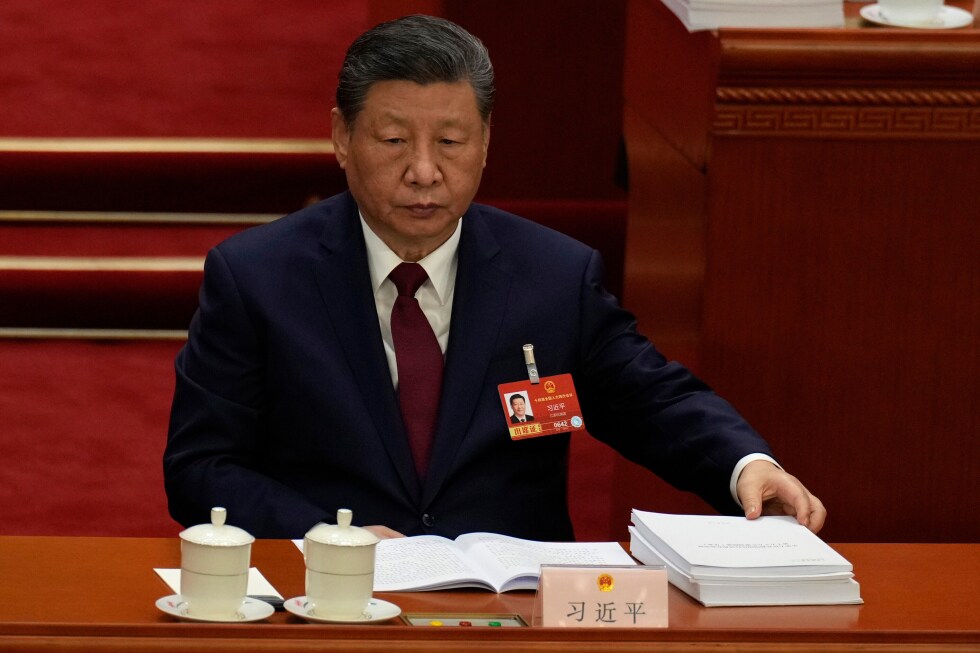
BEIJING — China’s recently concluded National People’s Congress revealed a nuanced dual-track economic approach that balances immediate domestic concerns against ambitious long-term technological objectives, with significant implications for global markets.
The government’s immediate priority for 2026 focuses squarely on stimulating domestic consumption to counter current economic sluggishness that has dampened both consumer and business confidence. This near-term strategy acknowledges the pressing need to address economic headwinds through internal market reinforcement.
Concurrently, China’s five-year development blueprint emphasizes technological sovereignty as the cornerstone of its economic transformation. The comprehensive plan targets breakthroughs in artificial intelligence, quantum computing, biotechnology, new energy solutions, and next-generation 6G networks. This technological push aligns with President Xi Jinping’s vision of establishing China as a global power capable of competing with the United States across trade, technology, and geopolitical spheres.
The strategic emphasis on technology has intensified amid ongoing trade tensions with the United States, particularly following restrictions on advanced semiconductor exports. In response, China has accelerated efforts to develop domestic capabilities in critical technologies, including commercial aviation (through its C919 passenger jet program), semiconductor manufacturing, and rare earth processing where it already maintains global dominance.
Despite export growth providing economic stability, record trade surpluses approaching $1.2 trillion have raised international concerns about manufacturing job losses elsewhere. This external pressure has reinforced China’s determination to rebalance its economy toward domestic consumption while maintaining aggressive technological investment.
Economic analysts note that while the announced 4.5-5% growth target for 2026 suggests potential economic cooling, substantial government subsidies will continue flowing to high-tech manufacturing sectors. However, this approach risks recreating the oversupply dynamics seen previously in solar and wind industries, potentially exacerbating global trade imbalances while further widening the gap between China’s manufacturing capacity and domestic demand.