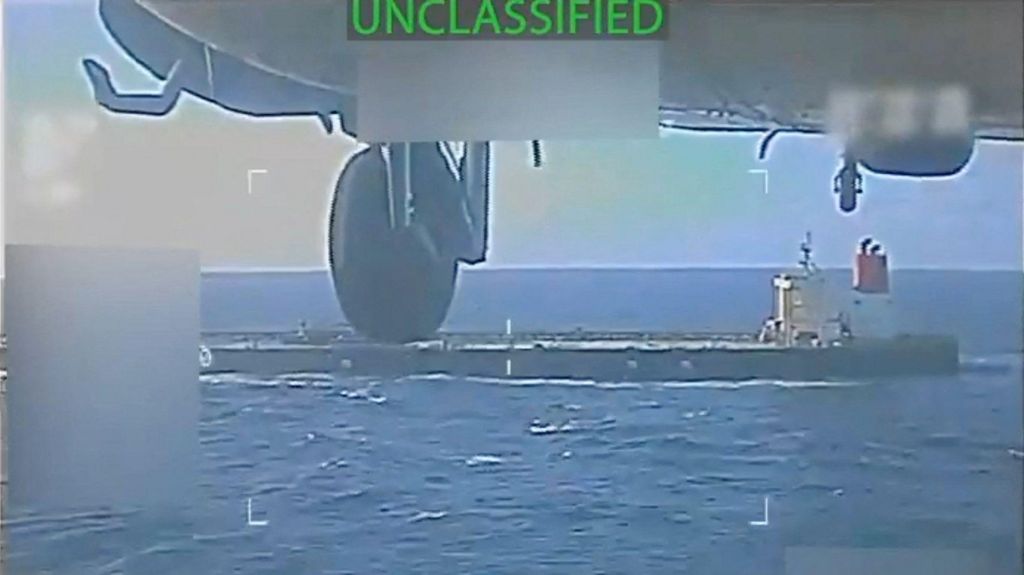
In a significant escalation of geopolitical tensions, former President Donald Trump has declared a comprehensive naval blockade against Venezuela, specifically targeting sanctioned oil tankers attempting to enter or exit the country. This decisive move follows the recent seizure of The Skipper, a vessel intercepted off Venezuela’s coast on December 10th, which exemplifies the sophisticated “ghost fleet” operations enabling Caracas to circumvent international sanctions.
Venezuela, despite possessing the world’s largest proven oil reserves, has faced crippling US sanctions against its state-run oil company PDVSA since 2019. These measures initially caused crude exports to plummet by over 50%, from approximately 1.1 million barrels per day to 495,000 by year-end 2019. However, through innovative evasion tactics, Venezuela has remarkably restored exports to around 920,000 barrels daily as of November—a substantial recovery though still far below its 1998 peak of 3 million barrels.
The ghost fleet phenomenon, utilized by Venezuela alongside other sanctioned oil producers Russia and Iran, represents a growing challenge to global sanctions regimes. Financial intelligence firm S&P Global estimates that one-fifth of global oil tankers now transport sanctioned crude, with 10% exclusively dedicated to Venezuelan oil.
These vessels employ multiple deception strategies: frequently changing names and flags (The Skipper previously operated as Adisa and Toyo), disabling Automatic Identification Systems to conceal locations, and even assuming identities of scrapped vessels—so-called “zombie ships.” Additional tactics include ship-to-ship transfers in international waters to obscure oil origins and flying flags from jurisdictions with lax oversight, such as Panama, Comoros, and Malta.
According to Transparencia Venezuela’s October report, 71 foreign tankers were observed at PDVSA ports, with 15 under sanctions and 9 linked to ghost fleets. Notably, 24 vessels operated with deactivated location signals, while many lingered for over 20 days without docking—unlike authorized vessels that typically complete operations within six days.
The deployment of the USS Gerald Ford aircraft carrier, the world’s largest, to conduct the recent seizure demonstrates heightened US military presence in Caribbean waters. This development suggests President Nicolás Maduro’s reliance on ghost fleet operations may face substantial constraints moving forward, potentially altering the dynamics of Venezuela’s oil export capabilities and the effectiveness of international sanctions.