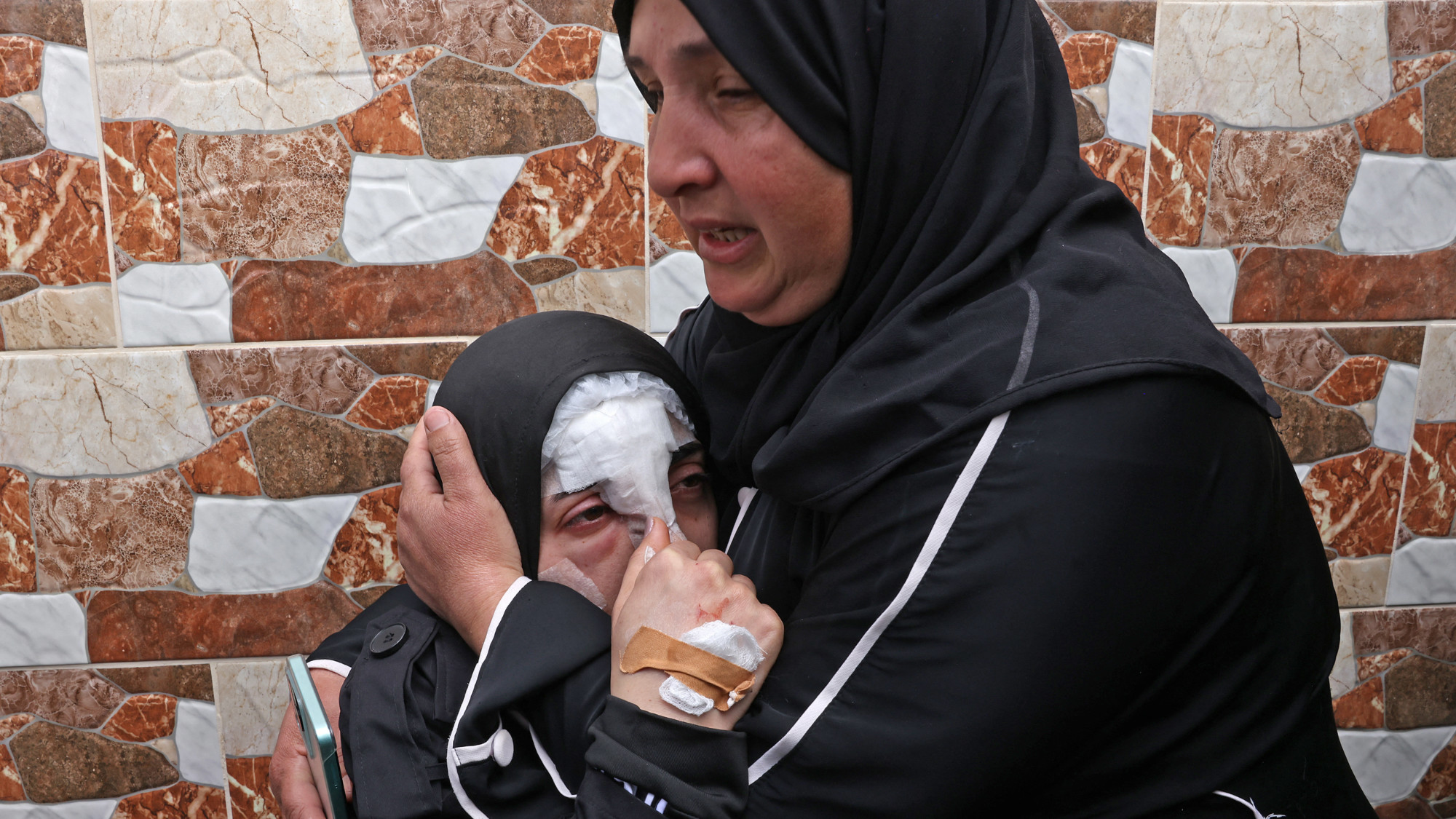
A silent trauma has gripped Hadeel al-Masalmeh, a 23-year-old Palestinian woman who retreats into isolation, refusing to speak after surviving a catastrophic strike that killed her cousin and business partner. The beauty salon they co-owned near Hebron in the occupied West Bank was shattered by missile shrapnel on March 19, claiming four lives including two pregnant women, while Hadeel sustained injuries requiring further surgery.
Her father, Walid al-Masalmeh, describes his once-cheerful daughter as “a different person” who desperately needs psychological support. “What happened was horrific – a tragedy,” he told Middle East Eye, noting how she remains haunted by everyday noises that trigger memories of explosions.
This personal tragedy reflects a broader crisis across the West Bank where Palestinian communities face falling debris from Israel’s interceptions of Iranian missiles. According to Palestinian police spokesman Luay Irziqat, 198 incidents of falling rocket debris were recorded by March 21, resulting in five fatalities and nine injuries since the US-Israeli campaign against Iran began in late February. Property damage has been documented in at least 27 cases.
The defensive measures, primarily protecting Israeli settlements and cities, leave Palestinian towns vulnerable to raining shrapnel. Unlike Israeli communities equipped with sirens and Iron Dome protections, West Bank residents receive no warnings and have no access to shelters.
Settlement expert Jamal Juma asserts this disparity reflects systematic neglect: “Israel has a clear strategic plan based on racism inherent in the Zionist project. They don’t care what happens to Palestinians as a result of rocket fire.”
The Palestinian Civil Defence has advised residents to limit movement and avoid gatherings, while educational institutions have shifted to remote learning. However, many Palestinians accuse authorities of inadequate protection and support.
Shadi Muqbel, a resident north of Ramallah, described how missile fragments destroyed his home on March 4, nearly killing his parents. “I’ve already spent 40,000 shekels to repair damage,” he said. “Where are the authorities? Next time, we could be killed by shrapnel, and no one would care.”
Complicating emergency response, approximately 1,000 Israeli military checkpoints and iron gates across the West Bank impede ambulance and rescue access. Dalia Nimri, a mother from Rawabi, opposes returning to in-person classes: “We are living in a state of war and facing everything alone, without any protection.”
As the conflict continues, Palestinians navigate a landscape of invisible threats where safety remains elusive and protection nonexistent, their lives collateral damage in a broader regional confrontation.