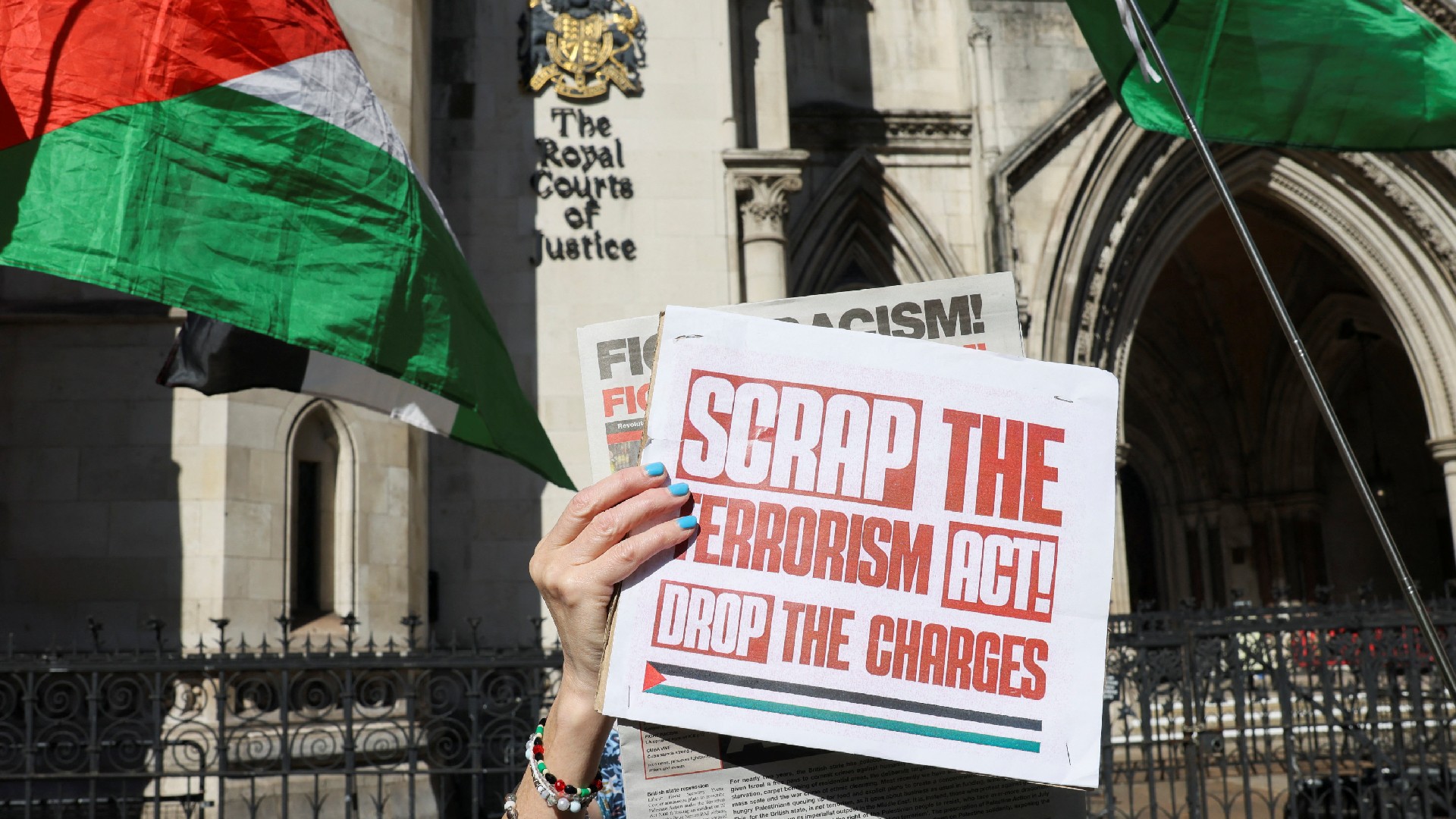
Legal experts have raised significant concerns over the UK government’s plans to prosecute individuals under terrorism charges for supporting the proscribed group Palestine Action, warning that the current trial framework could undermine defendants’ right to a fair trial. Since the Labour government banned Palestine Action in July, over 2,100 people have been arrested at demonstrations opposing the proscription, with 170 now facing charges under the Terrorism Act for holding placards expressing support for the group. Judges have outlined a trial plan that would see defendants tried in groups of five during two-and-a-half-hour hearings, with two sessions per day starting in March 2024. If all arrested individuals are charged, this could result in at least 400 trials. Solicitor Laura O’Brien highlighted the impracticality of this approach, noting that most defendants lack legal representation due to inaccessible legal aid, making it nearly impossible to adequately present their cases within the allotted time. District Judge Michael Snow defended the schedule, asserting that the time is sufficient, but defendants and their legal representatives argue that the rushed process risks prejudicing outcomes. A successful legal challenge by Palestine Action co-founder Huda Ammori could overturn many prosecutions, as the Court of Appeal recently granted her additional grounds to challenge the ban. Critics, including former government lawyer Tim Crosland, argue that the charges under Section 13 of the Terrorism Act require a nuanced examination of context, which the current trial framework does not allow. The unprecedented volume of cases has also strained the judicial system, with Middle East Eye reporting a fourfold increase in Section 13 charges since July compared to the entire post-9/11 period. The scheduling of trials has further created disparities, with defendants in May potentially benefiting from binding legal precedents set by earlier cases, while those in March will not. Solicitor Katie McFadden warned that the court may adopt a deterrent approach, potentially imposing custodial sentences of up to six months on defendants, most of whom are pensioners. The streamlined trial process, intended to save court time, may instead lead to delays and adjournments, further complicating the judicial process.
‘We’re in a new world’: Lawyers warn Palestine Action defendants could be denied fair trial