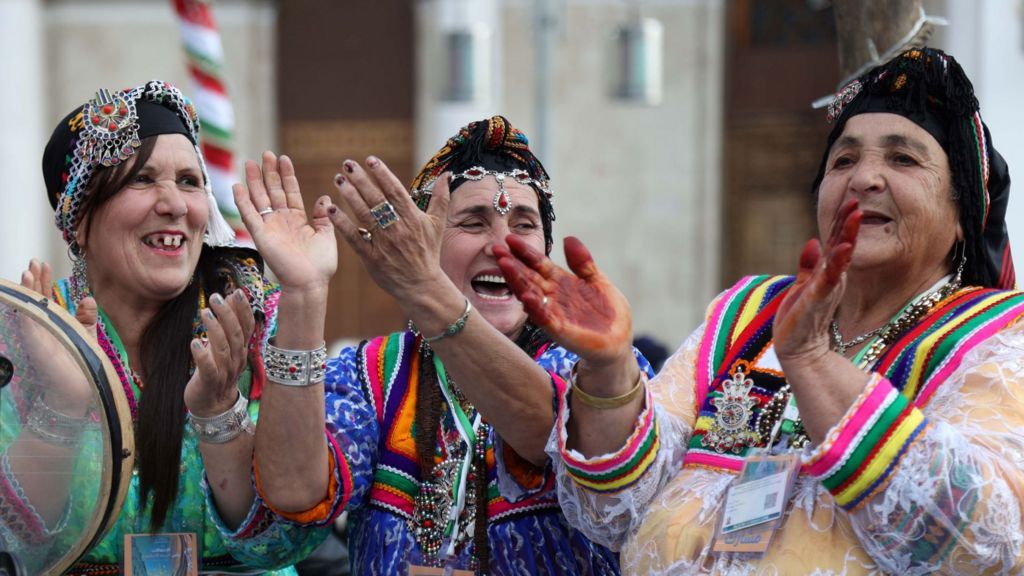
Communities across North Africa are currently immersed in vibrant celebrations marking the arrival of the Amazigh year 2976, a calendar system that predates the Gregorian calendar by nearly a millennium. This ancient chronology commences from 950 BC, coinciding with the ascension of King Sheshonq to the Egyptian throne.
The Yennayer new year festivities, occurring between January 12-14 across Algeria, Morocco, Tunisia, and Libya, feature elaborate family feasts, ceremonial bonfires, and traditional musical performances. The greeting ‘aseggas ameggaz’ (happy new year) echoes through both rural villages and urban centers, with celebrants adorned in intricately embroidered traditional attire.
The Amazigh people, whose name translates to ‘free people’ or ‘noble people,’ represent North Africa’s indigenous inhabitants with a historical presence dating to antiquity. While precise demographic data remains scarce due to insufficient official statistics, estimates suggest tens of millions of Amazigh individuals reside throughout the region, comprising approximately 40% of Morocco’s population.
Yennayer celebrations emphasize familial unity, cultural renewal, and the community’s profound connection to nature. Culinary traditions vary significantly across regions, featuring specialties like Morocco’s ‘ourkemen’ (a savory blend of legumes, spices, and whole grains) and Algeria’s ‘trèze’ (a symbolic mix of sweets, dried fruits, and nuts traditionally showered upon the youngest family member to invoke prosperity).
Beyond private gatherings, the festivities extend to public manifestations including parades, concerts, and carnivals that transform city streets into vibrant displays of cultural heritage. These celebrations hold particular significance given the Amazigh community’s historical marginalization following the 7th-century Arab conquests that imposed Arabic language and Islamic religion across North Africa.
Recent decades have witnessed substantial progress in cultural recognition, with Morocco granting official language status to Tamazight in 2011. Both Algeria (2017) and Morocco (2023) have established Yennayer as an official public holiday, marking a hard-won victory for Amazigh activists after periods of severe repression, including Libya’s ban on Tamazight education under Gaddafi’s regime.
The contemporary observance of Yennayer thus represents not merely a new year celebration but a testament to cultural resilience and the ongoing reclamation of indigenous identity across North Africa.