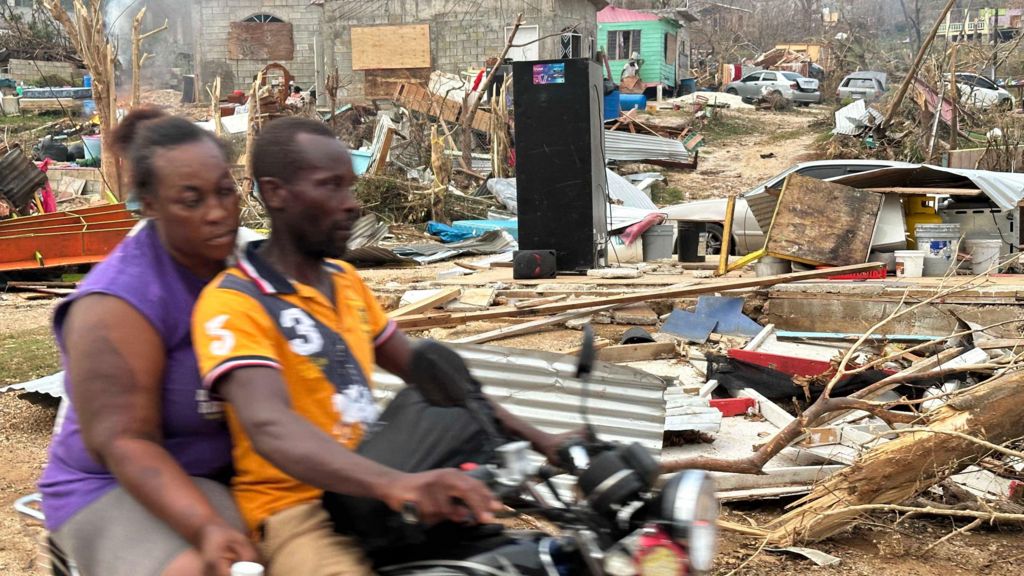
Five days after Hurricane Melissa, the most powerful storm in Jamaica’s modern history, ravaged the island with sustained winds of 185 mph (297 km/h), the coastal communities of Westmoreland Parish remain in ruins. Residents are stranded, with blocked roads, no electricity, running water, or access to food, and little hope of immediate relief. The death toll has risen to at least 28, with fears it could climb further as rescue teams reach more isolated areas. Westmoreland and St Elizabeth parishes, where the storm’s eye struck, are among the hardest hit, with 90% of homes in St Elizabeth destroyed. The devastation is evident in the landscape: roads are littered with debris, trees lie splintered, and buildings are reduced to rubble. Local official Dr. Dayton Campbell confirmed 10 deaths in Westmoreland alone. Amid the chaos, residents like Gary Williams and Roy Perry express frustration and despair, having lost everything. Williams, sitting in front of his roofless home, said, ‘They no turn up,’ referring to promised aid. Perry, who lost his livelihood, remains hopeful, saying, ‘We have to just keep the faith.’ The Jamaican government, criticized for its slow response, has deployed over 200 StarLink devices to restore internet access. Prime Minister Andrew Holness emphasized the priority of clearing debris, restoring essential services, and delivering food and medical supplies. Meanwhile, foreign aid has begun to arrive, with the US Disaster Assistance Response Team on the ground and countries like the UK pledging millions in relief funds. Despite the overwhelming destruction, the resilience of the Jamaican people shines through. Farmer Oreth Jones, who lost his farm, said, ‘We have to give God thanks we’re alive.’ As the island begins its long road to recovery, the spirit of hope and determination remains unbroken.
‘We have no idea what lies ahead’: Aid struggles to reach Jamaican towns devastated by hurricane