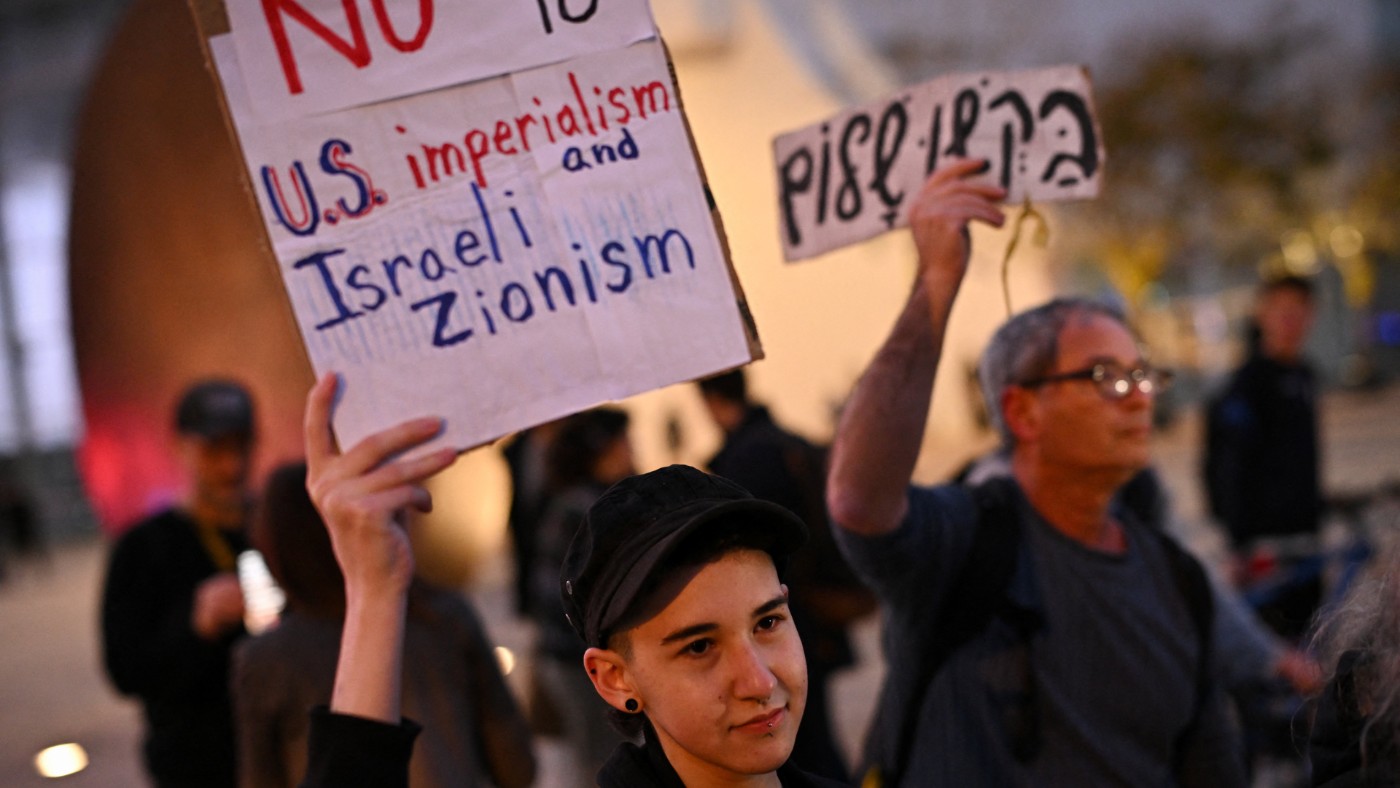
A small but determined anti-war movement is beginning to surface in Israel as the military conflict with Iran enters its third week, presenting a stark contrast to the overwhelming national consensus supporting the campaign. Despite facing widespread public opposition and official scrutiny, dissenting voices are organizing modest demonstrations in major cities including Jerusalem and Tel Aviv.
Recent protests, typically numbering fewer than one hundred participants, have featured activists wearing orange jumpsuits and masks depicting Prime Minister Benjamin Netanyahu while chanting anti-war slogans. These demonstrations have drawn criticism from passersby and faced rapid dispersal by police authorities, with several activists reportedly arrested in Haifa and Tel Aviv.
The dissent emerges against a backdrop of significant human cost. Israeli casualties currently stand at fifteen fatalities, including nine victims of a direct strike on Beit Shemesh, while Iranian and Lebanese casualties number in the thousands with millions displaced across the region.
According to recent polling data from the Israel Democracy Institute, 92.5% of Israeli citizens support Operation Roaring Lion, the codename for the current military campaign. Support among Palestinian citizens of Israel is significantly lower, with 65% expressing opposition.
A coalition of eighty Jewish and Arab organizations recently delivered an open letter to both Netanyahu and U.S. President Donald Trump, criticizing the operation as pursuing “unattainable goals” while lacking “a clear exit strategy.” The letter was coordinated by It’s Time, a peacebuilding coalition whose creative director Mika Almog (granddaughter of former Prime Minister Shimon Peres) argues the conflict has created severe domestic consequences including school closures, economic disruption, and constant danger for Israeli children.
Almog traces regional instability to the unresolved Israeli-Palestinian conflict, noting that seven million Palestinians “living under occupation” without future prospects creates inevitable deterioration. She emphasizes that since the 1995 assassination of Prime Minister Yitzhak Rabin, peace negotiations have not been presented to the public as realistic options.
Political opposition has largely reinforced rather than challenged the government’s position. Main rival Naftali Bennett expressed full support for military leadership, while opposition leader Yair Lapid advocated for destructive strikes on Iran’s oil infrastructure. Mainstream media has predominantly echoed establishment views, with Haaretz columnist Gideon Levy noting that “raising doubts about the war is not legitimate” in current discourse.
Despite the challenging environment, protesters like 23-year-old Orthodox Jew Lawrence Shenkin maintain that “war is a temporary measure with temporary solutions” until genuine peace is achieved. Analysts suggest that if the conflict extends for months, criticism may gain broader traction as domestic costs increase.