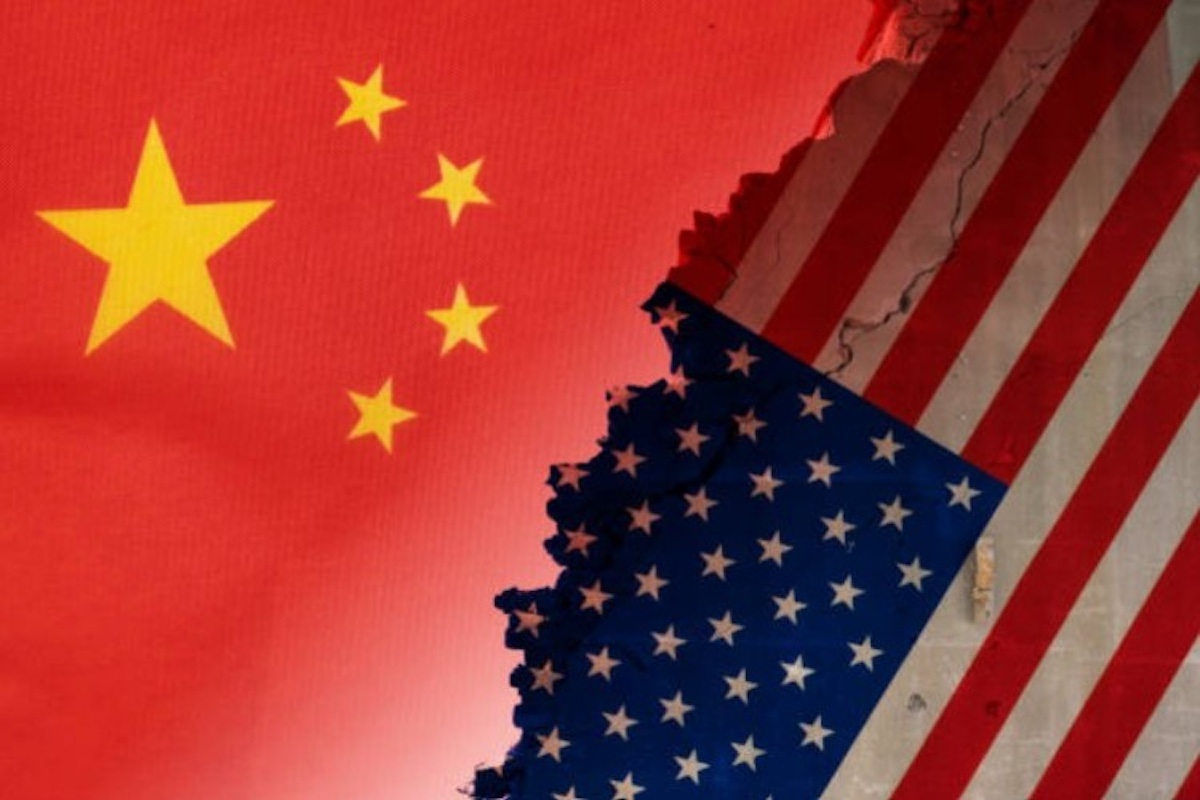
A remarkable consensus emerges across American political leadership regarding China’s economic trajectory, despite apparent foreign policy divergences between administrations. The recently unveiled Trump administration National Defense Strategy (NDS) perpetuates a fundamental bipartisan objective: ensuring China never surpasses the United States as the world’s largest nominal economy.
The document explicitly projects American economic expansion from $30 trillion in 2025 to $40 trillion by the 2030s, positioning the nation to maintain global economic leadership. This ambition echoes previous administration statements, notably President Biden’s 2021 declaration that China would not become the world’s wealthiest nation during his tenure.
This persistent goal reflects Washington’s strategic calculation that nominal GDP supremacy translates directly into global influence. The United States has maintained this economic primacy since surpassing the British Empire in the early 20th century, benefiting from unparalleled industrial capacity, scientific innovation, and financial leverage.
However, analysts identify a critical contradiction in this strategy. Given China’s demographic advantage and developmental momentum, maintaining American economic leadership cannot realistically depend solely on US growth. China’s current nominal GDP stands at approximately 62% of America’s despite having quadruple the population. Several Chinese provinces already demonstrate per capita GDP levels indicating nationwide economic potential.
The practical implementation of this strategy has involved extensive technology controls and pressure campaigns on third countries to limit economic cooperation with Beijing. Senior officials have occasionally revealed the underlying objective, with one Biden administration cabinet member explicitly advocating collaboration with Europe to “slow down China’s rate of innovation.”
This approach faces multiple challenges: nominal GDP represents an imperfect measure of economic power (China surpassed the US in purchasing power parity in 2014), it alienates third countries that depend on Chinese trade, and potentially provokes countermeasures from Beijing. China has already demonstrated willingness to leverage strategic resources like rare earth minerals in economic negotiations.
Experts suggest Washington would benefit more from investing in domestic innovation rather than attempting to constrain China’s growth. Historical precedent indicates that economic leadership transitions need not produce catastrophic outcomes—the United States maintained generally productive relations with Britain after surpassing its economy.