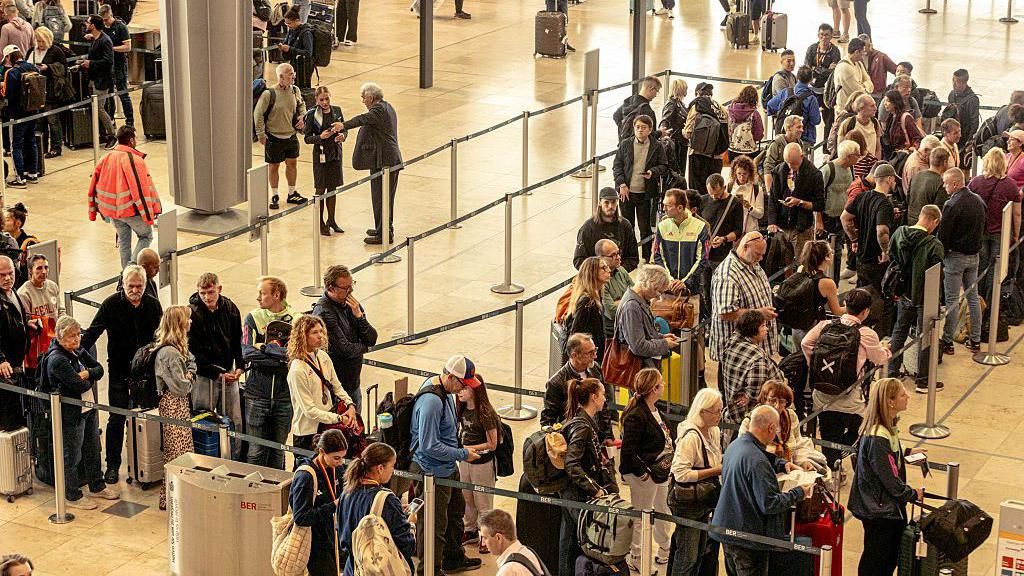
European airports are facing severe congestion and extended waiting times at passport control due to the ongoing implementation of the new Entry-Exit System (EES), with warnings of potential five-to-six-hour queues during upcoming holiday periods. The biometric border system, designed to enhance security, has already caused significant disruptions at major travel hubs including Geneva and Tenerife airports.
Social media videos from Geneva Airport recently documented three-hour queues at passport control during the busy winter ski season. Airport authorities attribute the congestion directly to the new EES implementation, describing it as a ‘major challenge’ for border operations. Similar issues have emerged at Tenerife’s popular winter sun destination, where UK travelers have experienced unpredictable delays ranging from 20 minutes to two hours, with occasional system failures creating additional bottlenecks.
The digital Entry-Exit System represents a fundamental shift from traditional passport stamping, requiring non-EU citizens to register fingerprints and facial biometrics alongside passport scanning upon first entry into the Schengen zone. This registration remains valid for three years. Currently in a phased rollout that began in October, the system is operational at approximately half of border points, processing about one-third of eligible non-EU travelers.
Travel industry representatives report dramatically increased processing times. Olivier Jankovec, Director General of Airports Council International Europe, indicates border control processing has slowed by ‘four to five times’ under EES, with typical waits extending to two hours. He cites insufficient border staff and technical issues with the automated kiosks as primary concerns, warning that the situation could deteriorate significantly during peak travel periods like Easter and summer without intervention.
In response to these challenges, the European Commission has authorized member states to partially suspend EES operations during peak times until September if border situations become ‘unsustainable.’ Markus Lammert, European Commission Spokesperson for Internal Affairs, maintains that the system has operated ‘largely without issues’ while acknowledging ongoing improvement efforts. The Commission reports approximately 23 million entries and exits registered through EES with 12,000 entry refusals to date.
Travel associations emphasize the urgent need for better coordination and contingency planning. ABTA, the UK travel association, notes that border authorities have underutilized their ability to reduce checks when necessary, contributing to unnecessary passenger delays. Industry experts advise travelers to prepare for extended waits during upcoming holiday periods by bringing refreshments and entertainment for children, particularly during peak travel times.