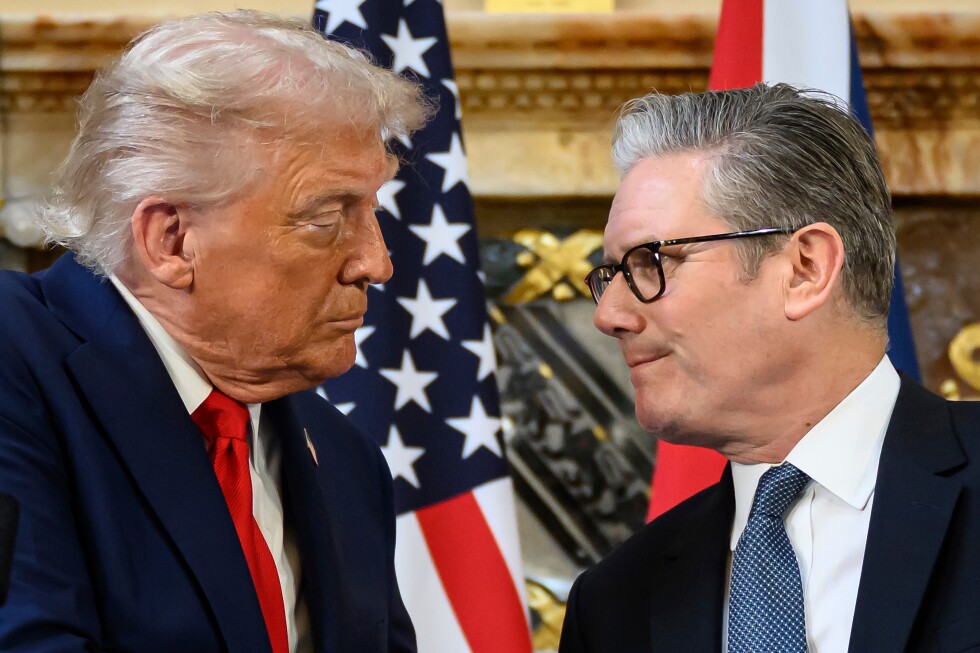
A significant diplomatic rift has emerged between the United States and United Kingdom as President Donald Trump publicly criticized Prime Minister Keir Starmer’s cautious approach to joint military operations against Iran. The tension represents a notable deterioration in the traditionally robust Anglo-American alliance that Starmer had diligently cultivated since Trump’s return to office in 2025.
In a candid interview with British tabloid The Sun, Trump expressed disappointment with Britain’s stance, contrasting it favorably with other European allies. “The UK has been much different from others,” Trump stated, adding that “It’s very sad to see that the relationship is obviously not what it was.” This public admonition follows Starmer’s initial refusal to permit American aircraft to utilize British bases for offensive strikes against Iranian targets, though he later authorized limited use for defensive operations targeting ballistic missile facilities.
The divergence centers on fundamental philosophical differences regarding international law and military intervention. Starmer, drawing upon his legal background as former chief prosecutor for England and Wales, emphasized that “Any UK actions must always have a lawful basis and a viable, thought-through plan” during his address to the House of Commons. His reference to avoiding “regime change from the skies” constituted a subtle but clear critique of Trump’s more aggressive stance.
This confrontation extends beyond the immediate Iran conflict, with previous tensions emerging over Trump’s controversial proposal regarding Greenland and Britain’s decision to transfer the Chagos Islands to Mauritius. Foreign policy experts note that the current administration in Washington has effectively abandoned consistency with international law, creating a fundamental incompatibility with Starmer’s principled approach to governance.
The disagreement has generated mixed reactions within European leadership circles. While NATO Secretary General Mark Rutte expressed full support for Trump’s actions, Spanish Prime Minister Pedro Sánchez condemned the strikes as “unjustifiable and dangerous.” Domestically, Starmer faces pressure from conservative opponents who argue that Britain should stand firmly with its American allies, even as public opinion remains skeptical of military escalation.
Despite the public friction, British officials maintain that the special relationship remains fundamentally strong, with Foreign Office Minister Stephen Doughty asserting that the alliance “has endured, it continues to endure, and it will endure into the future on both economic and security fronts.”